
Fashion is the one industry where the website has to do something unusual — sell an emotion before it sells anything you can actually put in a cart.
A visitor arriving at a fashion brand’s website is not comparing specifications the way they would for a laptop or a mattress. Furthermore, they are deciding whether this brand’s aesthetic, values, and world are ones they want to belong to. Consequently, fashion website design carries more weight per pixel than almost any other industry.
The best fashion websites understand this completely. Moreover, they use photography, typography, whitespace, and navigation not just to display products but to construct an entire sensory experience that makes browsing feel like flipping through a curated magazine rather than scrolling a catalogue.
In this guide, we analyse 8 of the best fashion websites and break down exactly what makes each one work. Furthermore, every example teaches a specific, applicable lesson — whether you run a boutique label or a growing eCommerce brand.
Building a fashion eCommerce store? Read: How to Build an Online Store with WordPress & WooCommerce
What Makes a Fashion Website Genuinely Effective?
Before exploring the examples, understand the five factors that separate outstanding fashion websites from generic online stores:
| Factor | What It Means |
|---|---|
| Photography Quality | Editorial-grade imagery that feels aspirational, not catalogue-flat. |
| Typography and Whitespace | Clean, considered layouts that let products breathe. |
| Navigation Simplicity | Intuitive category structure even with large collections. |
| Brand Storytelling | A clear point of view woven through every page. |
| Shop Integration | Seamless movement from browsing to buying without friction. |
10 Best Fashion Designs to Checkout
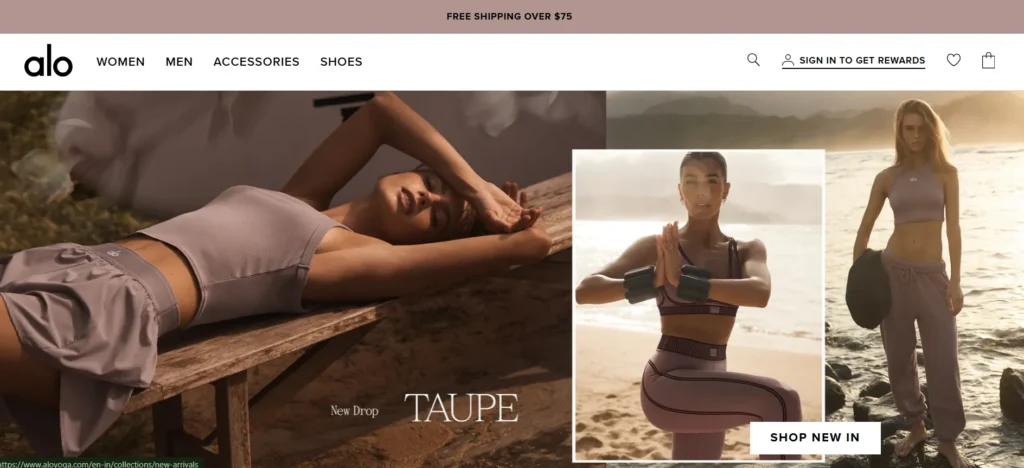
Alo Yoga has transformed from an activewear label into a global lifestyle brand, and its 2025 website is a reflection of that evolution. Combining fashion, wellness, and community, the site offers far more than just product pages — it’s an immersive digital hub designed for both inspiration and conversion. The homepage blends high-energy visuals with calming tones, promoting not only their apparel but also mindfulness content, fitness programs, and wellness events. With smart, AI-powered content modules, visitors are guided through curated collections based on lifestyle goals like “Studio to Street,” “Zen Essentials,” or “Travel Light.”
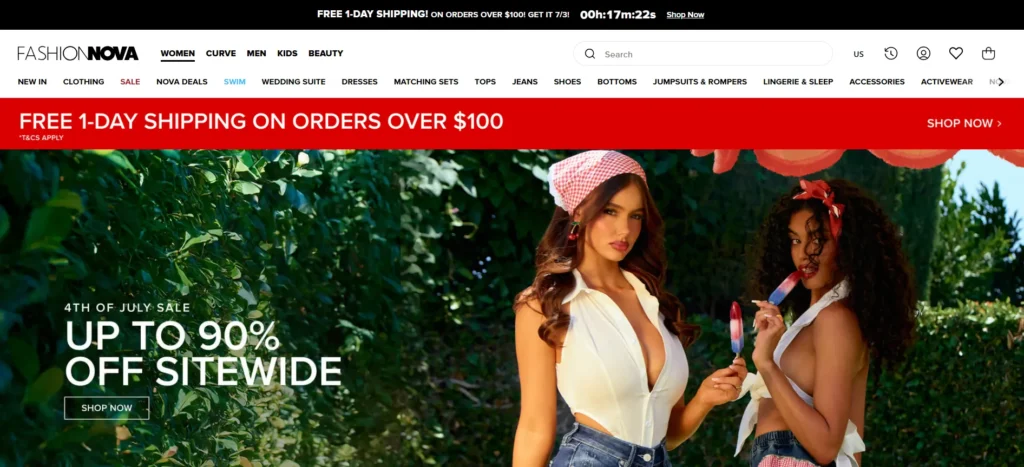
Fast fashion at its most optimized, Fashion Nova’s 2025 website is all about speed and social integration. With TikTok-inspired layouts, influencer-powered campaigns, and real-time product restock alerts, it keeps pace with a young, trend-hungry audience. Their homepage carousel promotes daily deals and hot drops, while the product pages offer user-generated content in the form of styling videos and selfies.
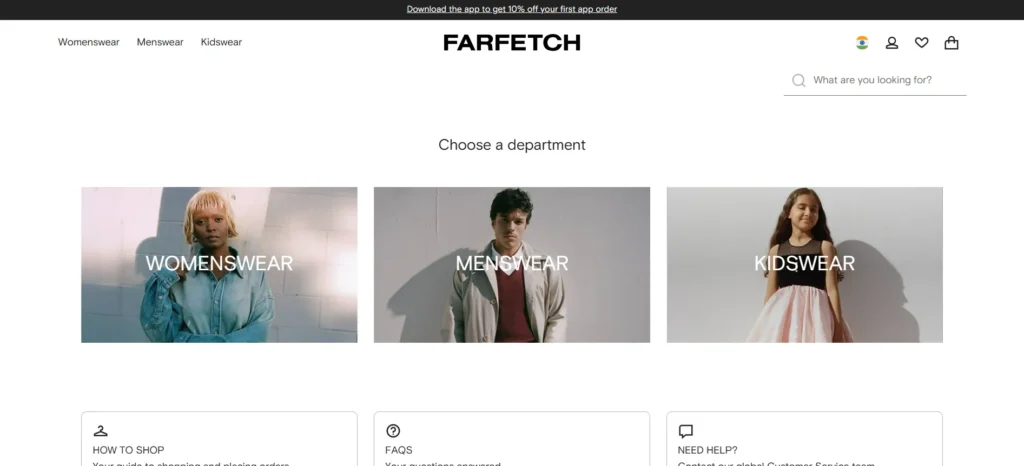
In 2025, Farfetch continues to lead the way with a marketplace-style approach to luxury fashion. The website integrates new sustainability metrics, AI-driven search, and localized content that adjusts based on user region and language. Farfetch’s design balances global scalability with a boutique shopping experience. Their “Pre-Owned” and “Conscious Edit” sections are beautifully designed and easy to navigate.
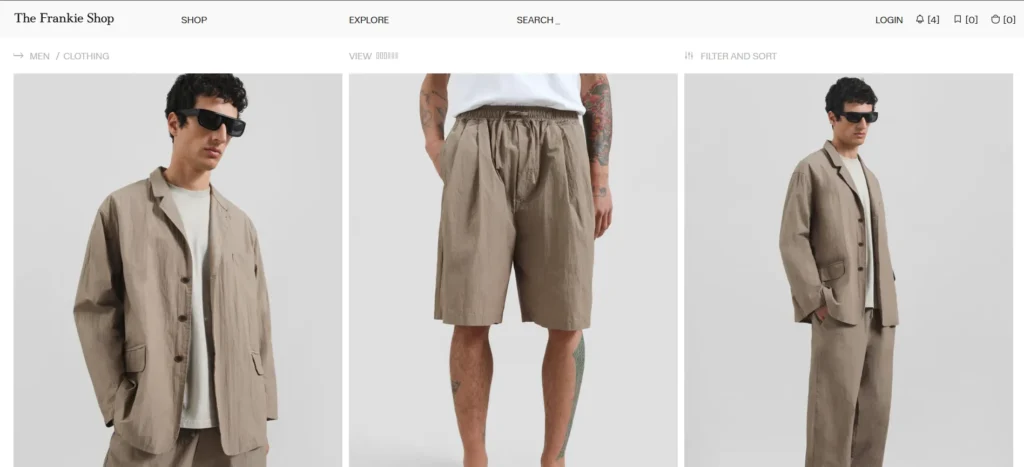
Minimal, chic, and effortlessly cool — The Frankie Shop’s website is a lesson in understated luxury. Their 2025 site uses large visuals, a muted color palette, and clear calls to action that emphasize a seamless shopping experience. With elevated product photography and simplified navigation, it aligns with the brand’s aesthetic identity perfectly. The mobile interface is especially strong, with swipeable lookbooks and gesture-based controls.
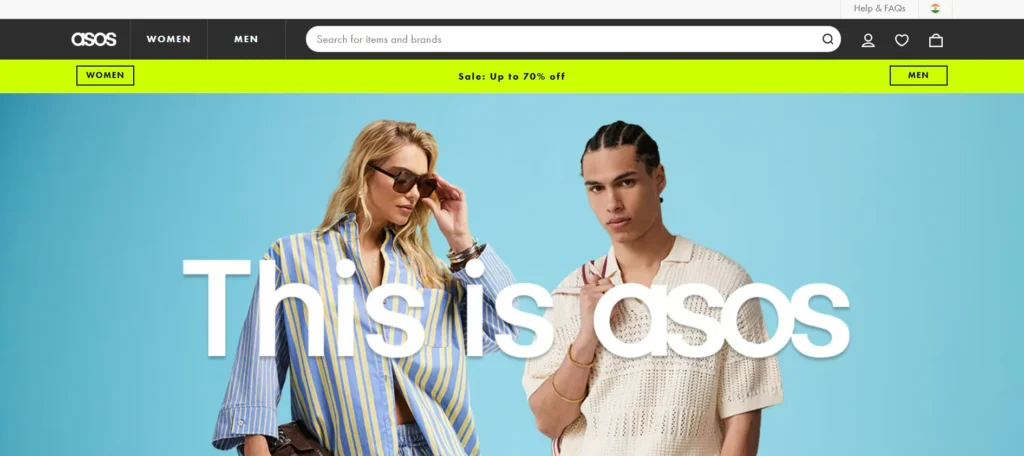
Known for catering to a younger demographic, ASOS’s 2025 website offers vibrant colors, dynamic UI animations, and highly engaging content. The platform shines in personalization — using browsing behavior to suggest fashion styles, edits, and even size recommendations. ASOS has integrated virtual styling sessions via video chat and a fashion quiz to guide users toward personalized wardrobes.
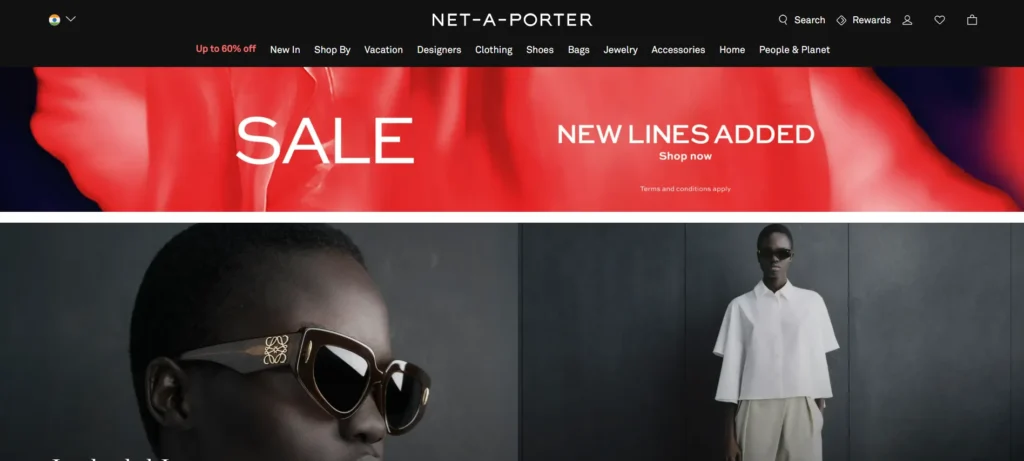
This iconic luxury retailer continues to dominate with a refined digital experience. In 2025, Net-a-Porter showcases its editorial authority with trend guides, designer spotlights, and shoppable video lookbooks. The site’s elegant typography and structured layout deliver a premium experience that mirrors a luxury fashion magazine. Their “Shop the Look” feature is now powered by AI styling tools, offering curated outfit suggestions.
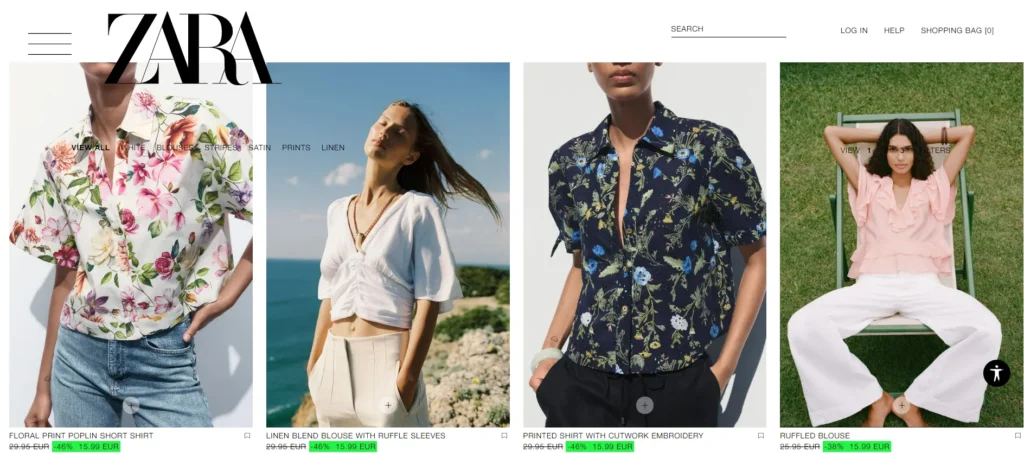
Zara has revamped its online presence in 2025 with AI-powered recommendations and an intuitive mobile-first approach. The clean grid design, ultra-fast product filters, and AR-powered “try before you buy” features make the user experience top-notch. Zara also incorporates real-time stock indicators and sustainability insights on each product page — catering to the modern conscious consumer.
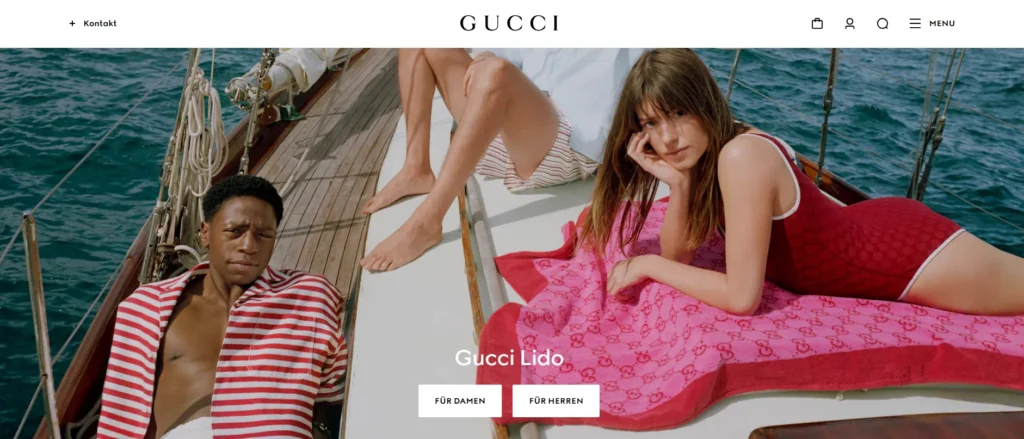
Gucci’s website continues to be a benchmark in digital luxury. In 2025, the brand has doubled down on immersive visuals and interactive experiences. High-quality video content, editorial-style product displays, and fluid navigation make it a fashion-forward masterpiece. The homepage now adapts in real-time based on product launches and campaigns, offering a curated user journey that blurs the line between eCommerce and fashion journalism.
6 Design Principles Every Fashion Website Should Follow
1. Photography Sets the Ceiling for Perceived Quality
Every fashion website in this guide invests heavily in photography because visitors judge product quality through imagery before anything else. Furthermore, editorial-grade photography — considered lighting, styling, and composition — signals a premium brand instantly. Consequently, photography investment consistently delivers the highest return of any design decision a fashion brand makes.
2. Whitespace Is a Design Choice, Not an Absence
Generous whitespace appears across nearly every example in this guide. Furthermore, it gives products room to breathe and signals confidence — a brand crowding every pixel with content often signals the opposite. Moreover, whitespace guides the eye toward what matters most on each page. Consequently, resisting the urge to fill empty space frequently improves conversion more than adding new content would.
3. Navigation Must Scale With Collection Size
Brands with large catalogues — Sezane, Gitman, STAUD — all solve navigation through mega menus and clear category structures. Furthermore, a visitor who cannot find their size or category quickly leaves regardless of how beautiful the homepage looked. Consequently, navigation clarity should scale proportionally as your product range grows.
4. Storytelling Should Feel Woven In, Not Bolted On
The strongest examples — PANGAIA, Taylor Stitch, Conscious Clothing — integrate brand story directly into product pages rather than isolating it on a separate About page nobody visits. Furthermore, material data, production process details, and mission-driven content sit right beside the buy button. Consequently, storytelling that lives where the purchase decision happens converts far more effectively than storytelling that lives elsewhere.
Need help choosing the right eCommerce platform for your fashion brand? Read: Top 11 Reasons Why WooCommerce Is a Good Choice
5. Shop Integration Must Feel Invisible
The best fashion websites move visitors from inspiration to purchase without any jarring transition between editorial content and the shop. Furthermore, shoppable tags within lifestyle imagery and consistent product page design throughout the site remove friction at exactly the moment purchase intent peaks. Consequently, seamless shop integration protects the emotional momentum that photography and storytelling worked to build.
6. Page Speed Protects Every Other Investment
Fashion websites are naturally image-heavy, which makes them particularly vulnerable to slow loading times. Furthermore, a stunning editorial photograph that takes six seconds to load loses the visitor before they ever see it. Consequently, image optimization and fast hosting are not optional extras — they are what makes every other design investment actually visible to visitors.
Comprehensive speed optimization guide for image-heavy websites. Read: 12 Best Speed Optimization Tips for Your WooCommerce Store
Building a Fashion Website on WordPress
While many fashion brands featured in this guide use Shopify, WordPress with WooCommerce remains a genuinely strong alternative — particularly for brands that want to combine editorial storytelling with eCommerce ownership.
Essential WordPress tools for fashion websites:
- Theme: Astra or Kadence — lightweight and fully customizable for editorial layouts
- Page Builder: Elementor Pro — visual design control for magazine-style product pages
- eCommerce: WooCommerce — complete product, cart, and checkout functionality
- Performance: WP Rocket — essential for image-heavy fashion galleries
- SEO: Rank Math — optimizes collection and product pages for organic search
Moreover, WordPress ownership means your photography, brand story content, and customer data all belong to you permanently — unlike hosted platforms where you rent access. Consequently, fashion brands building for the long term often find WordPress delivers stronger cumulative value.
Understand your complete WordPress store budget. Read: WordPress Website Cost: An Actual WordPress Price
Conclusion
The eight fashion websites in this guide succeed because they understand a fundamental truth about the industry — people buy fashion for how it makes them feel, and the website has to create that feeling before the transaction ever happens.
Furthermore, every one of these approaches is achievable regardless of your brand’s size or budget — the underlying principles of photography quality, whitespace, navigation clarity, integrated storytelling, and page speed apply whether you sell ten products or ten thousand.
Therefore, study which of these eight approaches aligns most closely with your own brand’s values and audience. Consequently, your fashion website becomes more than a store — it becomes the first and most persuasive expression of your brand.
Frequently Asked Questions (FAQs)
What makes a fashion website stand out from competitors?
The strongest fashion websites combine editorial-quality photography, generous whitespace, intuitive navigation, and storytelling woven directly into the shopping experience. Furthermore, seamless movement between inspiration and purchase — without jarring transitions — consistently separates memorable fashion sites from generic online stores.
Should a fashion website use Shopify or WordPress?
Both work well, and the right choice depends on priorities. Shopify offers faster setup and managed infrastructure, which is why many brands in this guide use it. Furthermore, WordPress with WooCommerce offers complete ownership, deeper content marketing integration, and often lower long-term costs. Consequently, brands prioritizing storytelling and content alongside commerce frequently find WordPress a stronger long-term fit.
How important is photography for fashion eCommerce?
Extremely important — arguably the single highest-impact investment a fashion brand can make in its website. Furthermore, every example in this guide relies on photography quality to communicate brand positioning before a single word of copy is read. Consequently, budgeting for professional photography consistently delivers stronger returns than most other design line items.
What color palettes work best for fashion websites?
The right palette depends entirely on brand positioning. Muted neutrals communicate Scandinavian minimalism and premium restraint. Bold colors signal confidence and energy. Earthy, warm tones reinforce sustainability and craft narratives. Furthermore, the palette should feel consistent with the actual product and mission rather than following generic trend cycles.
How do fashion websites reduce cart abandonment?
Fashion sites reduce abandonment through clear sizing information, high-quality product photography from multiple angles, transparent shipping and return policies, and a checkout process with minimal steps. Furthermore, integrating storytelling and trust signals — like PANGAIA’s material data — directly on product pages helps resolve hesitation before it reaches the cart stage.