

Rank Math changed that entirely.
Haven’t built your WordPress website yet? Start here: How to Start a WordPress Website Step by Step
What Is Rank Math SEO?
What Rank Math Does That WordPress Cannot Do Alone
- Adds meta titles and descriptions to every page and post
- Generates XML sitemaps automatically
- Adds schema markup for rich results in Google
- Connects to Google Search Console and Analytics
- Provides on-page SEO analysis for every post
- Manages 301 redirects without extra plugins
- Monitors 404 errors across your website
Rank Math Free vs Pro
| Feature | Free | Pro |
|---|---|---|
| Focus Keywords per Post | 5 | Unlimited |
| Schema Types | 15+ | All Types |
| Keyword Rank Tracker | ❌ | ✅ |
| Content AI | ❌ | ✅ |
| WooCommerce SEO | Basic | Advanced |
| Price | Free | Paid |
Before You Install: One Important Step
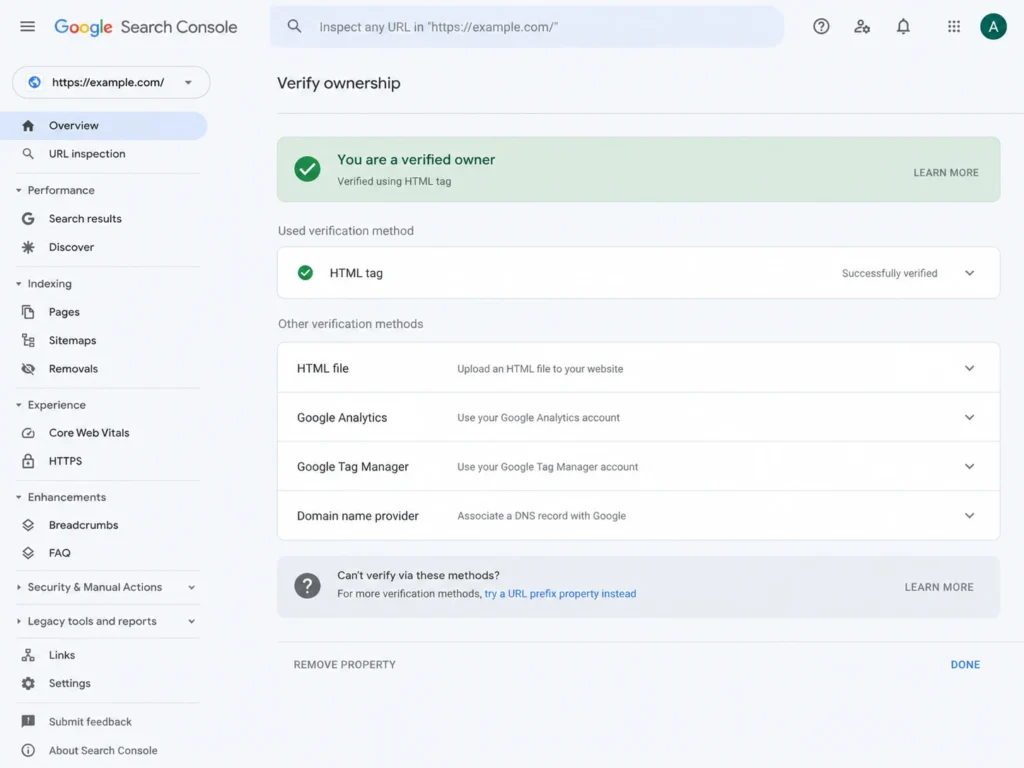
If your website is not yet in Google Search Console:
- Go to search.google.com/search-console
- Click Add Property
- Enter your website URL
- Verify ownership using your preferred method
- Wait for verification to complete
How to set up RankMath
Step 1: Install Rank Math SEO
How to Install
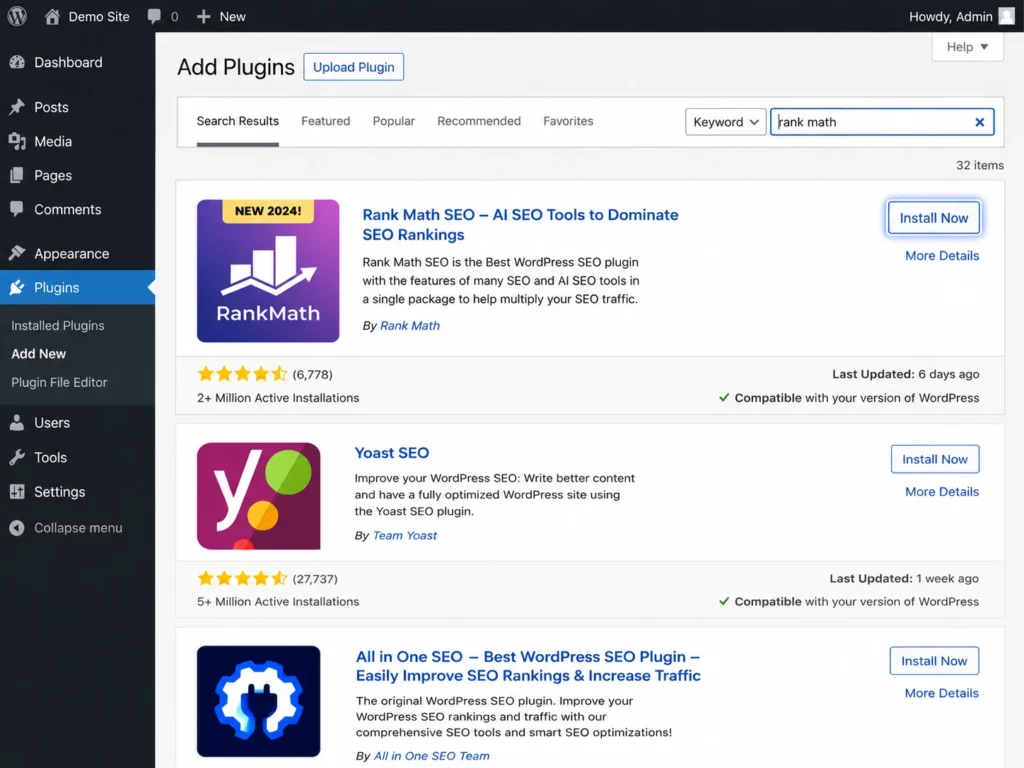
- Log into your WordPress Dashboard
- Go to Plugins → Add New Plugin
- In the search box, type “Rank Math SEO”
- Find the plugin by Rank Math — it shows 3 million+ active installations
- Click Install Now
- Wait for installation to complete
- Click Activate
Make sure your hosting supports PHP 8.x for optimal Rank Math performance. Read: How to Choose the Best WordPress Hosting
Step 2: Connect Your Rank Math Account
How to Connect
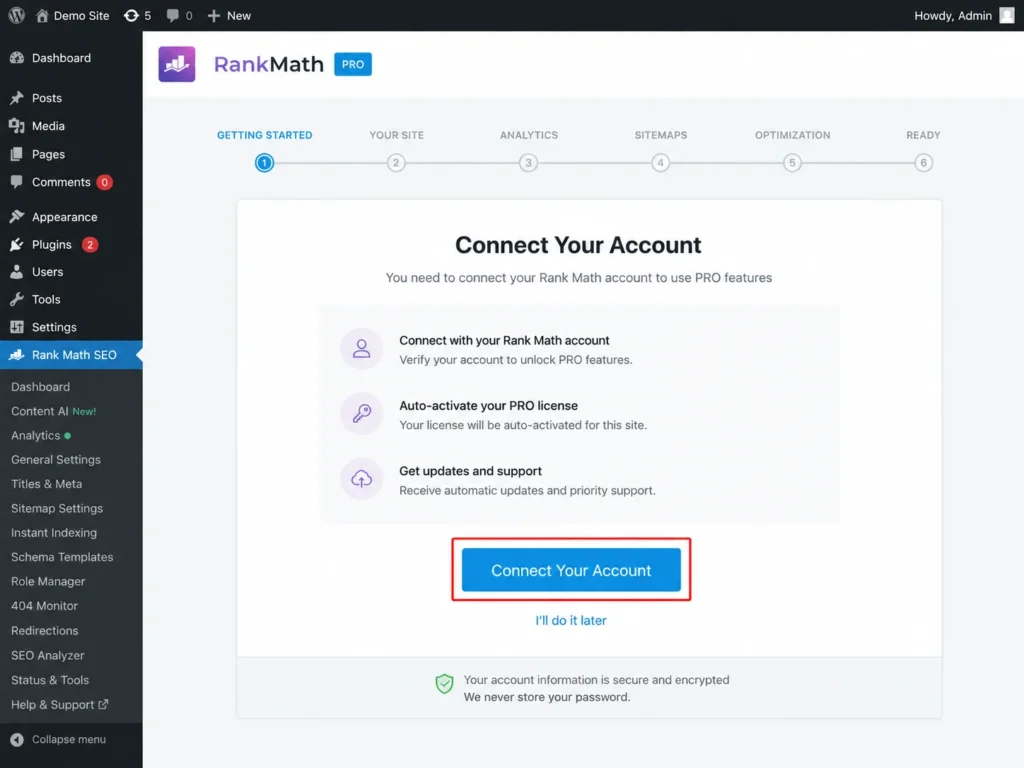
- Click Connect Your Account on the screen that appears
- You will be redirected to the Rank Math website
- Create a free account or log into your existing one
- Click OK, Activate Now
- Rank Math verifies your account and redirects you to the Setup Wizard
Step 3: Complete the Setup Wizard
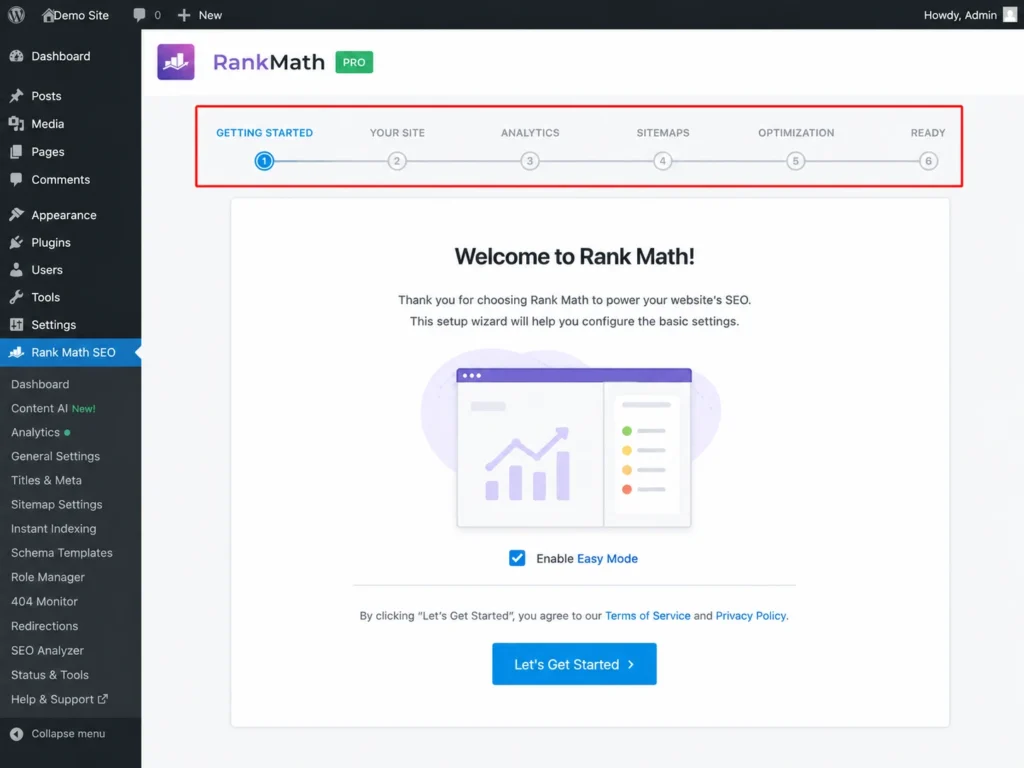
Rank Math offers two setup modes:
Easy Mode — Recommended for beginners. Rank Math applies sensible default settings automatically. Furthermore, you can always switch to Advanced Mode later once you are comfortable with the plugin.
Advanced Mode — Gives you full control over every setting during setup. Best for experienced users who understand SEO configuration in detail.
Step 4: Configure Your Site Information
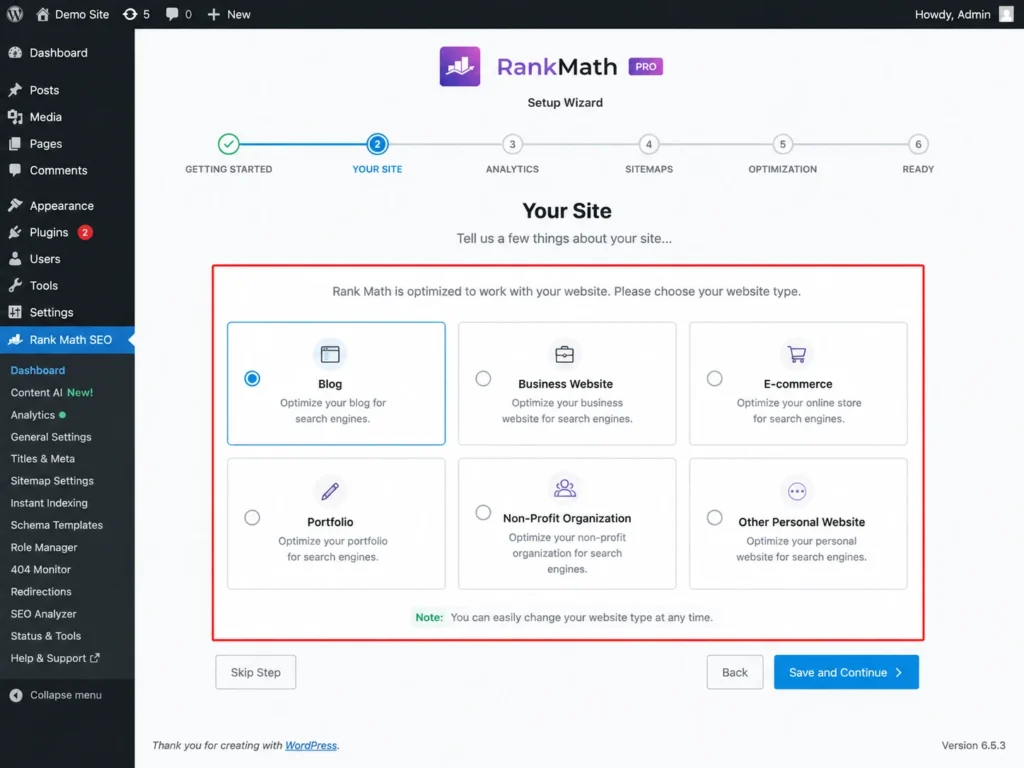
The first wizard screen asks about your website type. Rank Math uses this information to apply appropriate schema markup automatically.
Website Type Options
- Personal Blog — For individual bloggers and content creators
- Business Website — For companies and service providers
- News Website — For publications and media outlets
- Online Store — For WooCommerce and eCommerce websites
- Other — For portfolios, educational sites, and everything else
Social Media Profiles
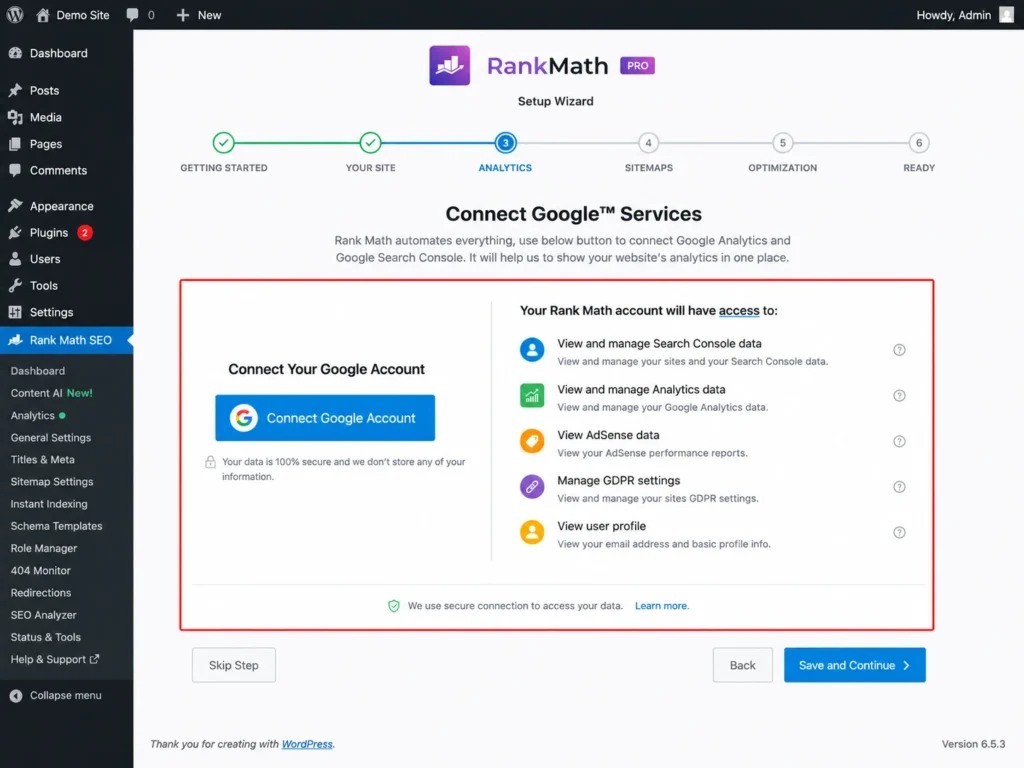
Step 5: Connect Google Analytics and Search Console
Connecting Google Search Console
- Click Connect Google Services
- Select your Google account
- Grant the requested permissions
- Select your Search Console property from the dropdown
- Click Save and Continue
Why This Connection Matters
SSL is required before connecting Search Console properly. Read: Do You Need SSL for Your WordPress Website?
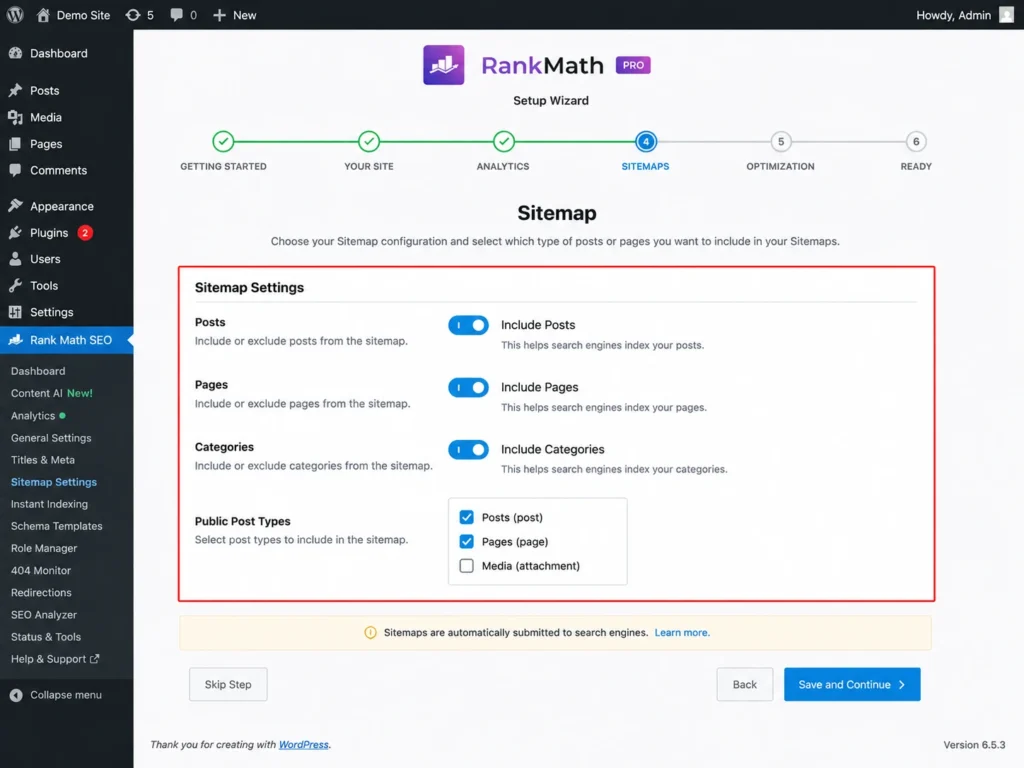
Step 6: Configure Your Sitemap
Sitemap Settings to Configure
Include in Sitemap:
✅ Posts — All blog posts and articles
✅ Pages — All standard website pages
✅ Categories — If you use categories for content organization
❌ Tags — Generally exclude unless you use tags strategically
❌ Author pages — Exclude for single-author websites
Images in Sitemap:
Submitting Your Sitemap to Google
https://yourwebsite.com/sitemap_index.xml
Go to Search Console → Sitemaps → Add Sitemap and enter this URL. Consequently, Google begins crawling and indexing your content faster than without a submitted sitemap.
Step 7: Optimization Settings
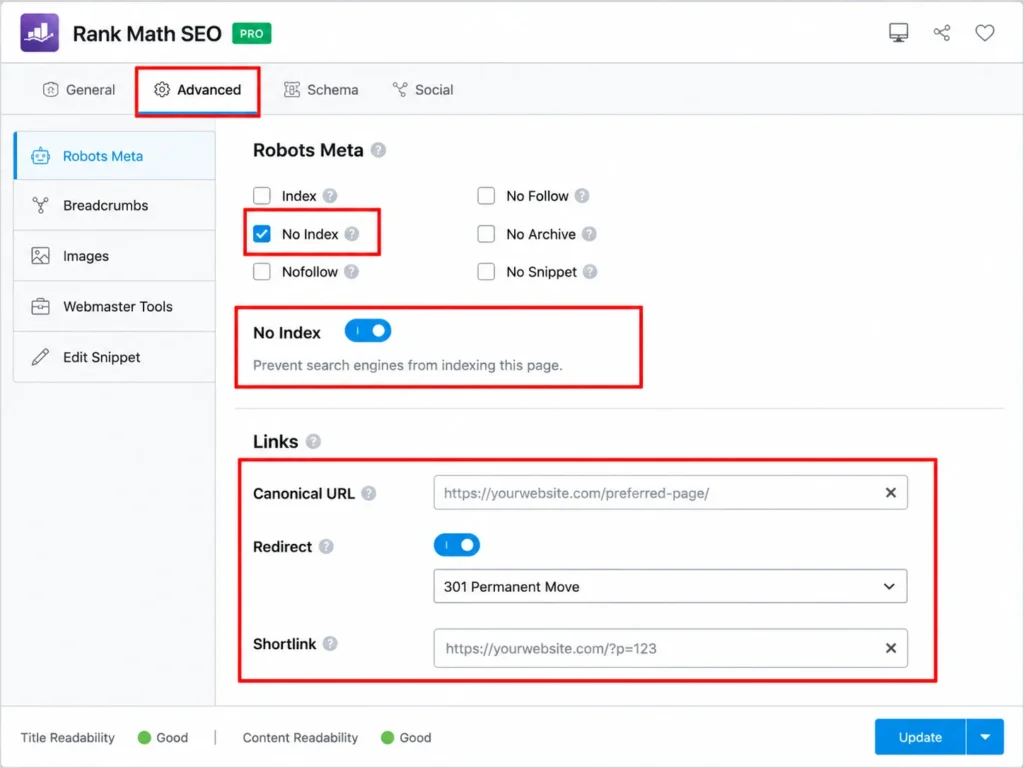
Noindex Settings
- Noindex empty category and tag archives — prevents thin content indexing
- Noindex paginated pages beyond page 2 — reduces duplicate content issues
- Leave individual posts and pages indexable
Link Settings
Open External Links in New Tab — Enable this to keep visitors on your website when they click external links.
Add Nofollow to External Links — Consider enabling this to avoid passing SEO value to external sites you link to commercially.
Strip Category Base — Removes the /category/ prefix from category URLs, making them cleaner. Enable this if you use categories as primary content organization.
Step 8: Configure SEO Settings for Individual Posts
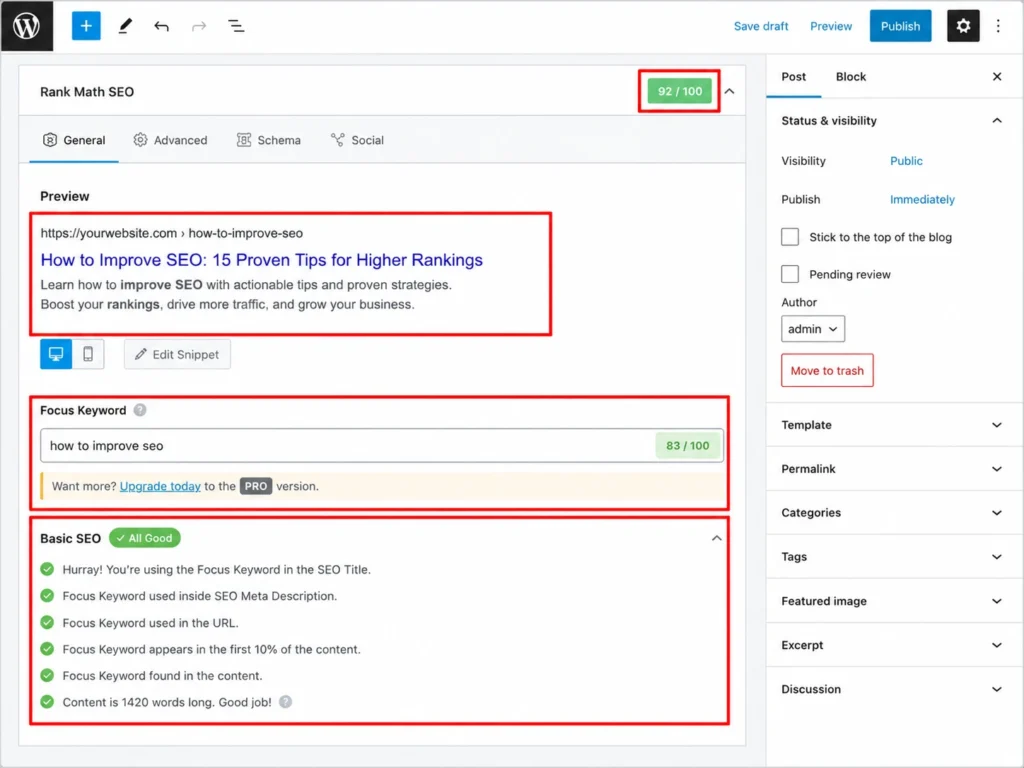
Every post now shows the Rank Math panel with these key sections:
General Tab:
- Focus Keyword — Enter the primary keyword you want this post to rank for
- SEO Title — Customize the title shown in search results (different from your post title)
- Meta Description — Write the 150-160 character description shown under your title in Google
Advanced Tab:
- Canonical URL — Prevent duplicate content issues
- Robots Meta — Control whether Google indexes this specific page
- Schema Markup — Add structured data for rich results
Schema Tab:
- Select the appropriate schema type — Article, How-To, FAQ, Product, Recipe, etc.
- Fill in schema fields to qualify for rich results in Google search
Understanding the SEO Score
Rank Math provides an SEO score from 0 to 100 for every post. Furthermore, the plugin lists specific improvements to make your content more search-friendly. Aim for a score above 80 for competitive topics.
Common score improvements include:
- Adding your focus keyword in the title and first paragraph
- Writing a meta description that includes the focus keyword
- Adding alt text to images
- Including internal links to other pages on your website
- Meeting a minimum word count for the post
Internal linking between posts is one of the most underused SEO techniques. All your posts should link to related content on your website, including guides like Why WordPress Is Still the Best Platform for Small Business Websites
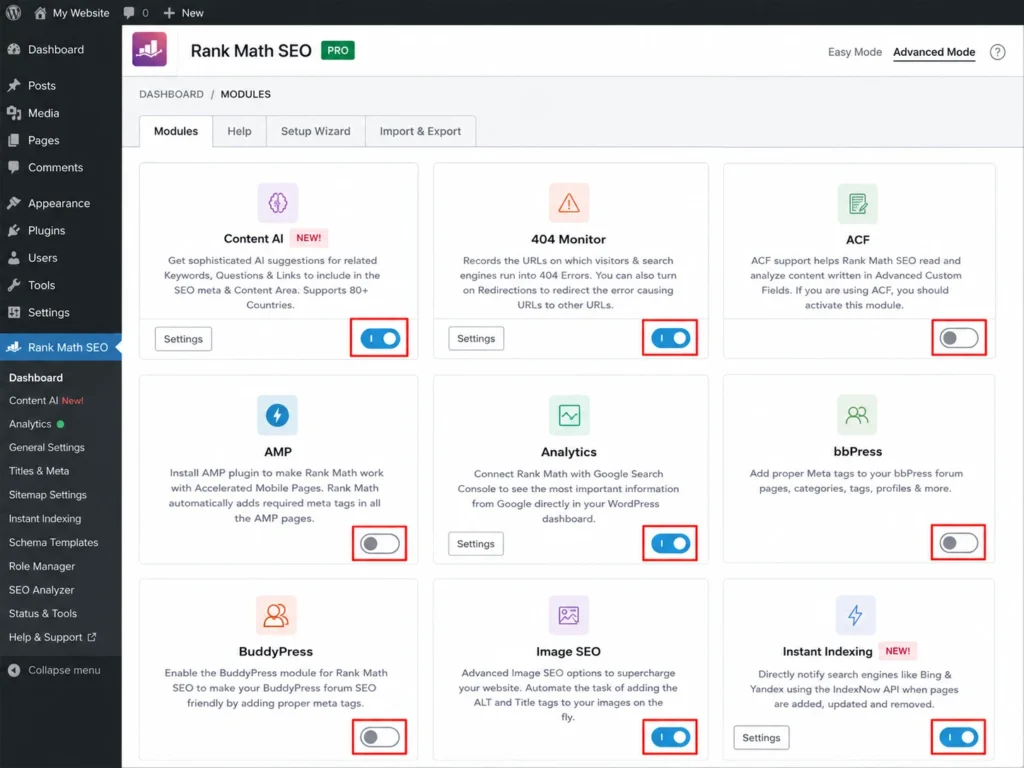
Step 9: Enable and Configure Key Rank Math Modules
Recommended Modules to Enable
404 Monitor — Tracks pages on your website that return 404 errors. Consequently, you can fix broken links before they hurt your SEO rankings.
Redirections — Manage 301 redirects directly from your WordPress dashboard without needing a separate plugin. Moreover, this module is essential when you change URLs or delete pages.
Schema (Structured Data) — Enables rich results in Google search — star ratings, FAQ dropdowns, How-To steps, and recipe cards. Furthermore, rich results significantly improve click-through rates from search results pages.
SEO Analysis — Runs a comprehensive technical SEO audit of your entire website. Consequently, you identify and fix technical issues that hold back your rankings.
Local SEO — Essential for businesses with physical locations. Adds location schema markup that helps your business appear in local search results and Google Maps.
Modules to Use Selectively
Analytics — Connects deeper Google Analytics data. Useful for established websites tracking detailed performance metrics.
Role Manager — Controls which WordPress user roles can access Rank Math settings. Useful for websites with multiple content contributors.
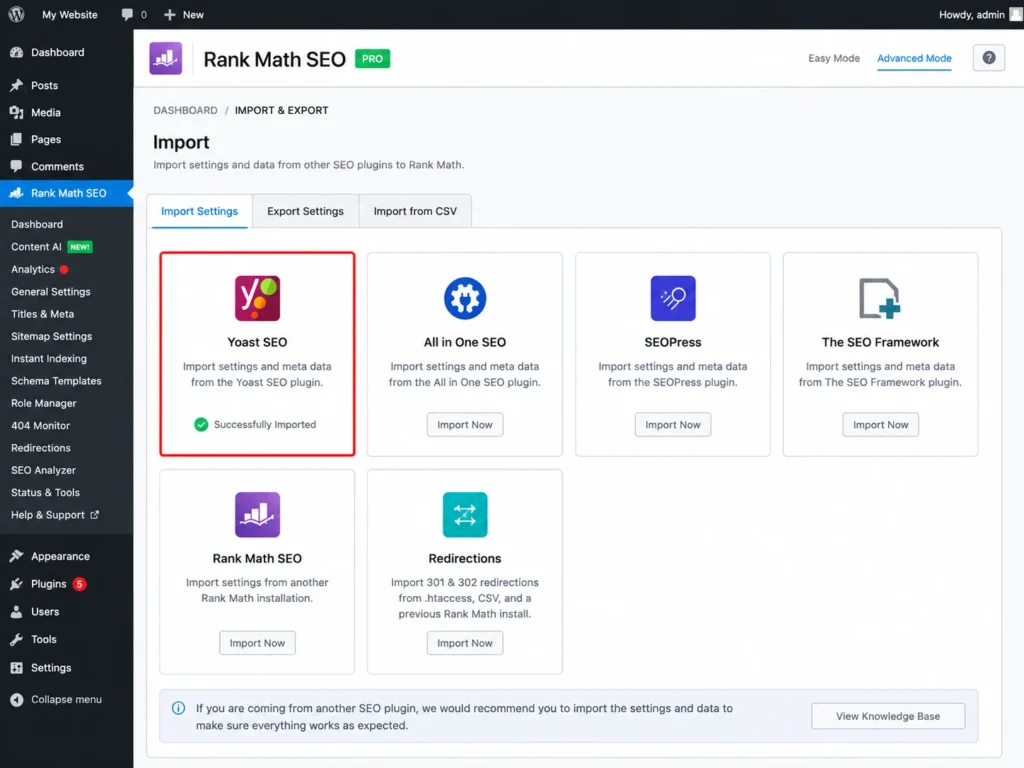
Step 10: Import Settings from Yoast SEO (If Applicable)
How to Import
- Go to Rank Math → Status & Tools → Import & Export
- Select your previous plugin from the dropdown
- Click Import
- Rank Math transfers all meta titles, descriptions, and redirects
Rank Math Settings That Directly Affect Your Rankings
1. Titles and Meta — Rank Math → Titles and Meta
Set your global title format: %title% | %sitename% works well for most websites. Furthermore, write a compelling default meta description format that includes your primary site keyword.
2. Breadcrumbs
3. Open Graph Settings
4. Schema Type Defaults
5. Keyword Tracking (Post Level)
Rank Math vs Yoast SEO: Which Should You Choose?
| Feature | Rank Math Free | Yoast Free |
|---|---|---|
| Focus Keywords | 5 per post | 1 per post |
| Schema Markup | 15+ types | Basic only |
| Redirect Manager | ✅ Included | ❌ Paid only |
| 404 Monitor | ✅ Included | ❌ Not available |
| Search Console Data | ✅ Included | ❌ Paid only |
| Setup Wizard | ✅ Guided | Basic |
| Price | Free | Free |
Your page builder and SEO plugin work together for best results. Read: Best Page Builder Plugins for WordPress (Elementor vs Divi vs Gutenberg)
Conclusion
Frequently Asked Questions (FAQs)
Installing Rank Math in WordPress is straightforward. Go to your WordPress Dashboard → Plugins → Add New Plugin. Search for “Rank Math SEO” and click Install Now. After installation completes, click Activate. Furthermore, Rank Math automatically launches its Setup Wizard after activation — guiding you through all essential configuration steps.
Yes — Rank Math is one of the easiest SEO plugins to install and configure. The entire installation takes under two minutes from the WordPress plugin directory. Moreover, the guided Setup Wizard walks you through every important setting step by step. Consequently, even complete beginners configure Rank Math correctly on their first attempt without needing technical knowledge.
Yes — Rank Math offers a powerful free version that covers the SEO needs of most WordPress websites. The free plan includes 5 focus keywords per post, 15+ schema types, a built-in redirect manager, 404 error monitoring, and Google Search Console integration. Furthermore, these features exceed what most competitor plugins offer in their paid tiers. A Pro version is available for advanced needs like keyword rank tracking and Content AI.
After installing and activating Rank Math, the Setup Wizard launches automatically. First, connect your free Rank Math account. Then configure your website type, add your social media profiles, connect Google Search Console and Analytics, set up your XML sitemap, and configure optimization settings. Furthermore, Rank Math applies sensible defaults throughout — so Easy Mode users can complete the entire setup in under 15 minutes without confusion.
After setup, Rank Math adds a meta box below every WordPress post and page editor. Enter your focus keyword in the Focus Keyword field. Furthermore, fill in your SEO Title and Meta Description for each page. Rank Math then provides a live SEO score from 0 to 100 with specific improvement suggestions. Consequently, you optimize each piece of content before publishing — improving its chances of ranking well in Google search results.