They do not start by calling an agent. They do not drive through neighbourhoods on weekends. Furthermore, they open Google, search for properties in their target area, and form strong opinions about developers, agencies, and agents based entirely on website experience — before speaking to anyone.
Over 80% of real estate searches begin online. Moreover, the websites that convert those searches into genuine leads share specific design characteristics that go far beyond looking attractive. They load fast, communicate trust immediately, make property discovery effortless, and capture visitor information at exactly the right moment.
In this guide, we analyse 10 of the best real estate website designs across different categories — luxury developers, boutique agencies, international platforms, and Indian property brands. Furthermore, each example teaches specific, applicable lessons rather than just showcasing impressive screenshots. Consequently, whether you are building a new real estate website or redesigning an existing one, this guide gives you a clear direction.
What Makes a Great Real Estate Website?
Before exploring the examples, understand what separates outstanding real estate websites from ordinary ones.
| Factor | What to Look For |
|---|
| Visual Trust | Professional photography, consistent branding, and a luxury look & feel. |
| Property Discovery | Advanced search filters, map integration, and well-organized property listing layouts. |
| Lead Capture | Contact forms, callback request options, and newsletter signup forms. |
| Mobile Experience | Touch-friendly navigation, responsive design, and fast loading on mobile networks. |
| Local SEO | Neighbourhood-focused content, schema markup, and location-specific landing pages. |
Keep these five factors in mind as you explore each example below. Furthermore, notice how different websites prioritize different factors based on their target audience and business model.
10 Best Travel Website Designs to Checkout
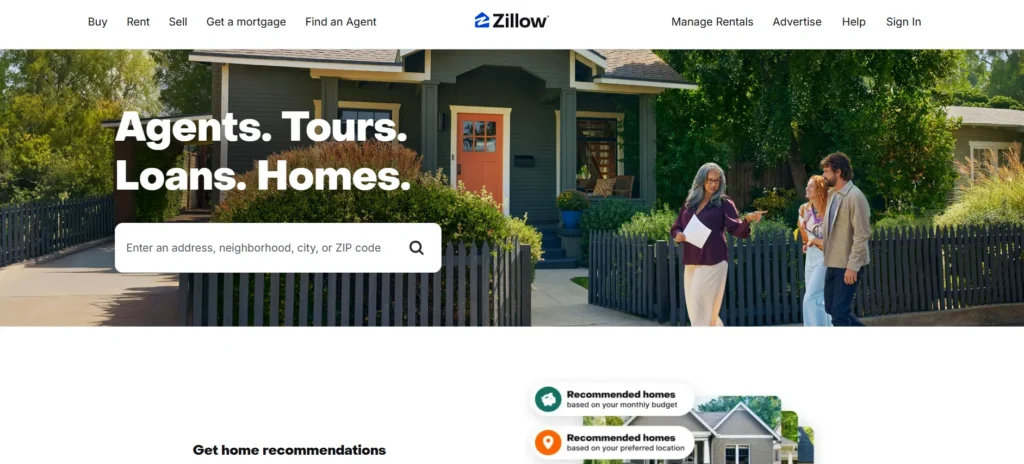
Zillow remains the leading real estate marketplace in the U.S., offering millions of property listings, Zestimates (automated valuations), and mortgage tools. Its AI-powered search filters, 3D home tours, and neighborhood insights make it a favorite among buyers and sellers. Zillow’s acquisition of key competitors has further solidified its dominance in online real estate.
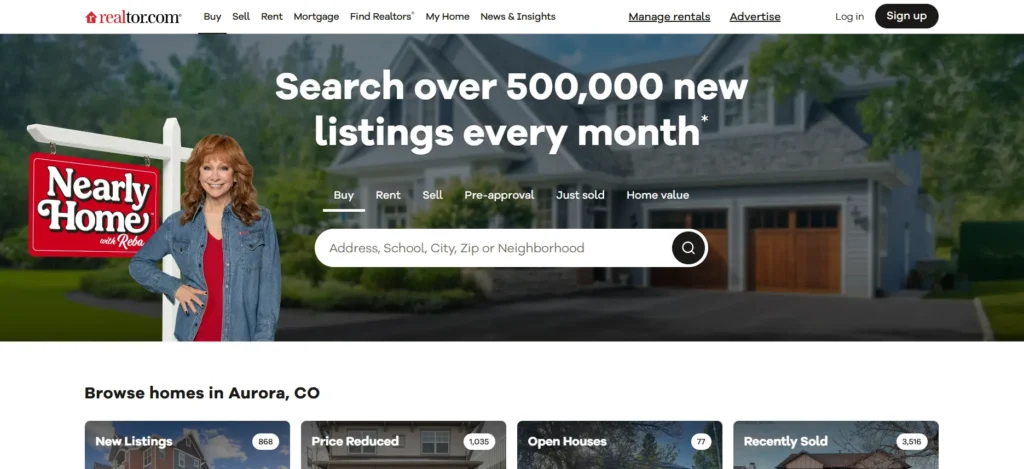
Realtor.com, powered by the National Association of Realtors (NAR), provides accurate, up-to-date listings directly from Multiple Listing Services (MLS). Its “Forecast” feature predicts market trends, while its mobile app offers real-time alerts for new properties. Realtor.com is a trusted resource for first-time buyers and seasoned investors alike.
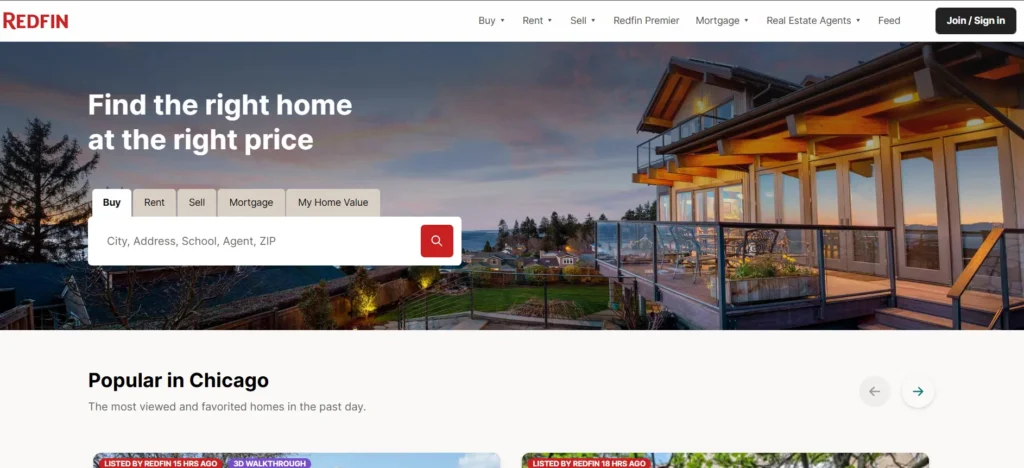
Redfin combines an online property search platform with in-house real estate agents, offering lower commission rates. Its “Hot Homes” feature identifies trending listings, and its AI-driven recommendations personalize the home-buying experience. Redfin’s instant buying service (“RedfinNow”) appeals to sellers seeking quick cash offers.
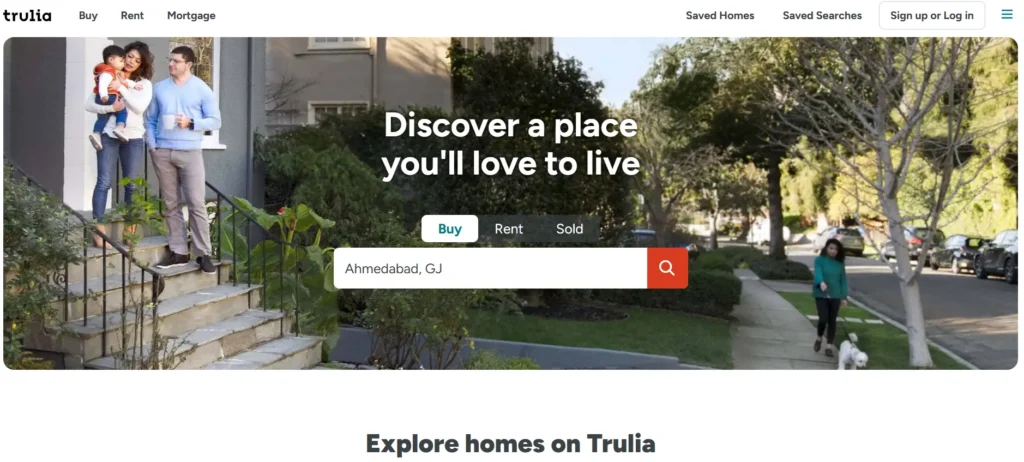
Trulia specializes in neighborhood insights, crime maps, and school ratings, helping buyers make informed decisions. Its user-friendly interface and affordability filters cater to budget-conscious renters and buyers. Integration with Zillow’s database ensures extensive property listings.
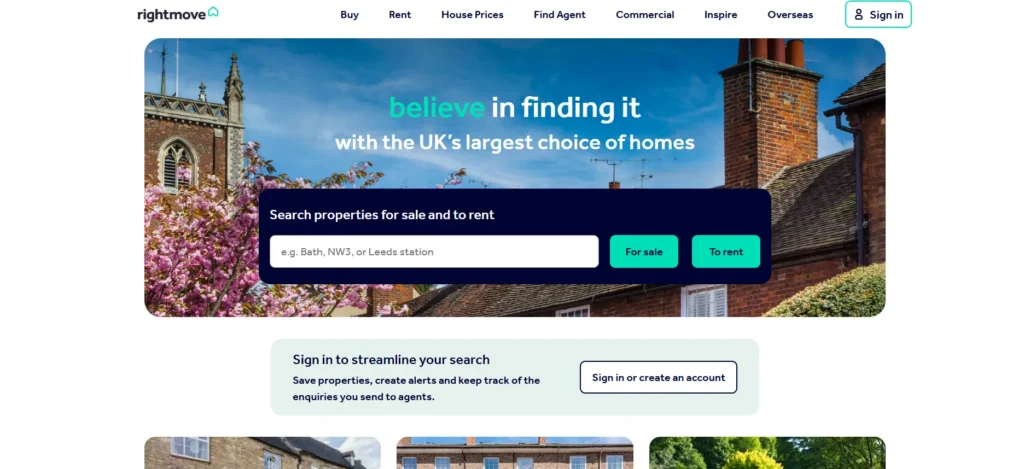
Rightmove dominates the UK market with the largest selection of residential and commercial listings. Its “Sold Prices” feature helps buyers gauge market value, while its mortgage calculator simplifies financial planning. Rightmove’s virtual tours and video walkthroughs enhance remote property viewing.
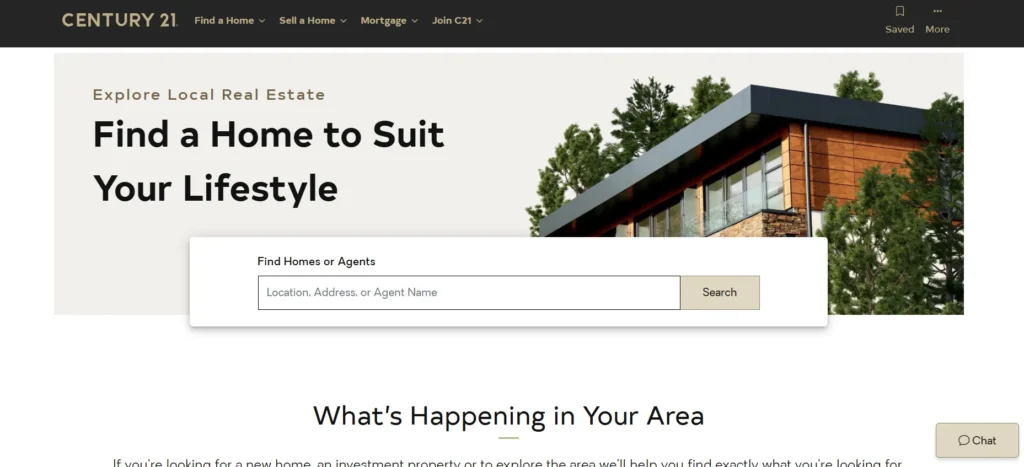
Century 21’s website connects users with local agents across 80+ countries. Its global reach makes it ideal for international buyers and expats. The platform features luxury listings, investment properties, and relocation services.
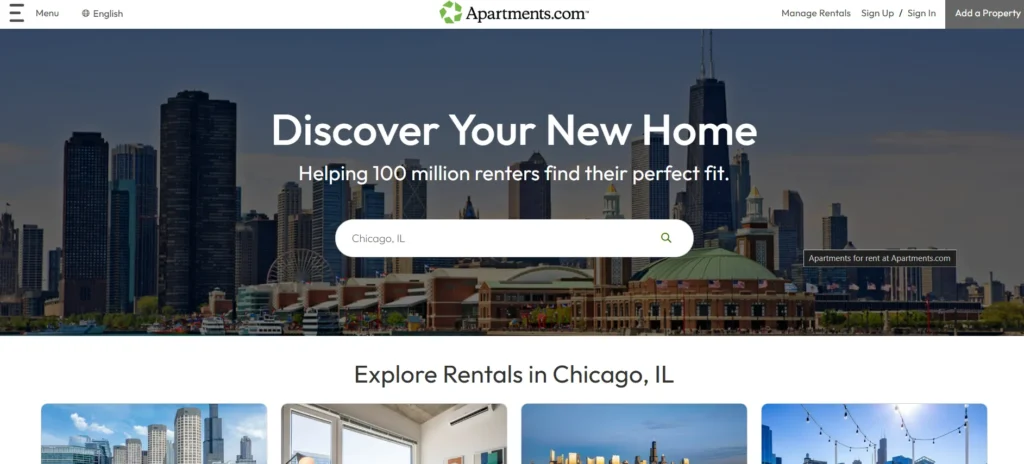
Apartments.com is the go-to site for renters, offering verified listings, virtual tours, and lease tools. Its “Rentometer” helps users compare rental prices, while its roommate-matching feature adds convenience for shared living.
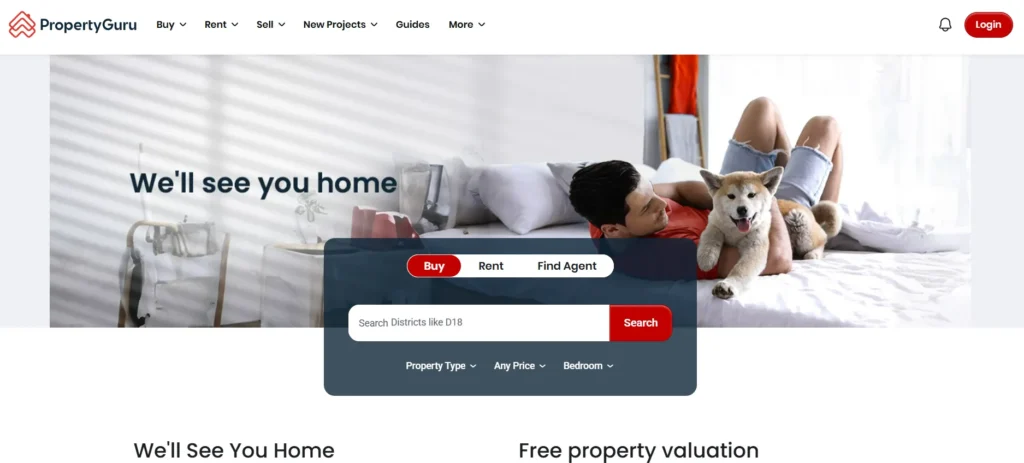
PropertyGuru is the top real estate site in Singapore, Malaysia, and Thailand. Its AI-powered recommendations and affordability tools help buyers navigate competitive markets. The platform also offers home loan comparisons and legal advice.
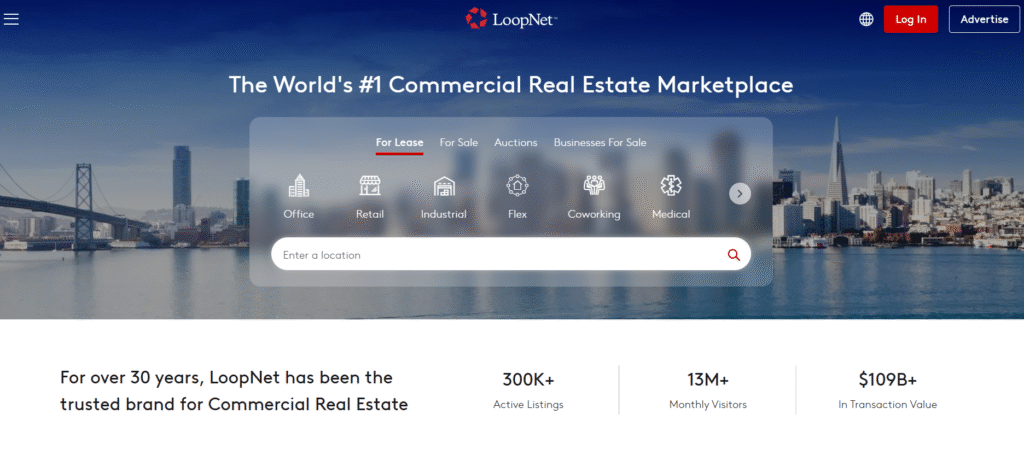
LoopNet specializes in office spaces, retail properties, and industrial listings. Its advanced search filters cater to investors and business owners. The platform also provides market analytics and financing options.
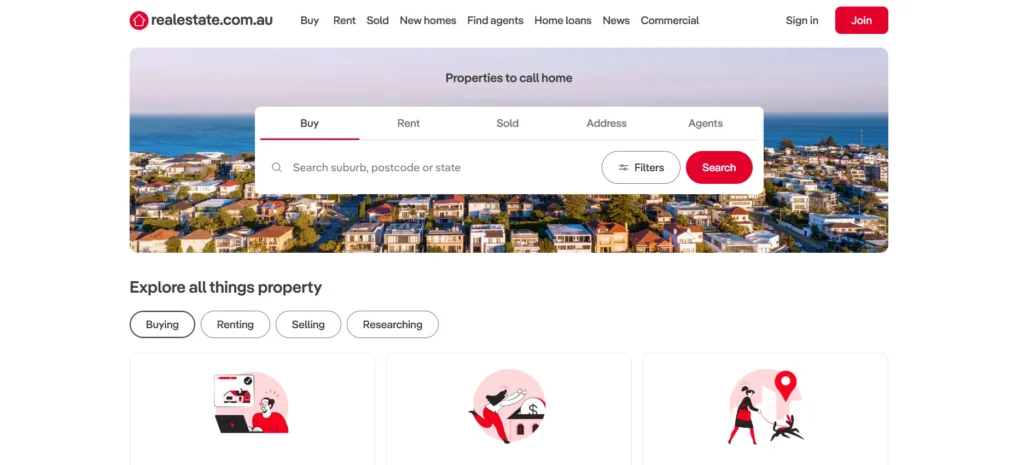
This platform covers sales, rentals, and new developments across Australia. Its “Sold Data” feature and auction results provide transparency in a competitive market.
8 Design Principles Every Real Estate Website Should Follow
After studying all ten examples, eight design principles appear consistently across every successful real estate website:
1. Mobile-First Design Is Non-Negotiable
Over 80% of real estate searches happen on mobile devices. Furthermore, Google uses mobile-first indexing — your mobile experience determines your search rankings. Consequently, any real estate website that does not prioritize mobile performance loses the majority of potential leads before they arrive.
2. Photography Quality Sets the Standard
Property photography is not supporting content — it is the primary communication tool. Furthermore, professional photography tells buyers more about quality, lifestyle, and value than any written description. Moreover, websites with amateur photography signal low standards regardless of actual property quality. Consequently, investing in professional photography pays back through improved conversion rates on every page.
3. Lead Capture Must Be Easy and Everywhere
A real estate website that does not capture visitor contact information fails at its primary job. Furthermore, lead capture opportunities should appear naturally throughout the browsing experience — after property searches, on individual listing pages, after neighbourhood guides, and in the site footer. Consequently, visitors who are not ready to call still have an easy path to express interest.
4. Property Search Must Be Fast and Intuitive
Visitors who cannot find relevant properties within seconds leave. Furthermore, search filters for property type, location, price range, and bedroom count should be immediately accessible — not buried in a secondary navigation menu. Moreover, map-based search dramatically improves the property discovery experience for buyers who think geographically. Consequently, investing in a well-designed search interface directly improves the metrics that matter most.
5. Trust Signals Build Confidence Before Contact
Property transactions involve significant financial and emotional stakes. Furthermore, trust signals — agent credentials, developer track record, completed project statistics, testimonials, and awards — reduce the anxiety buyers feel before making contact. Moreover, displaying these signals prominently throughout the website rather than only on a dedicated “About” page normalizes trust building throughout the browsing session. Consequently, visitors arrive at the inquiry form already confident rather than still hesitant.
6. Page Speed Directly Affects Lead Generation
Slow real estate websites lose visitors before they see a single property. Furthermore, large image files, unoptimized video, and excessive plugin weight all contribute to loading delays that hurt both user experience and search rankings. Consequently, performance optimization is as important as visual design for real estate websites where every lost visitor represents a potentially significant transaction.
7. SSL and Security Build Buyer Confidence
Real estate websites collect sensitive personal information — names, phone numbers, email addresses, and sometimes financial information. Furthermore, a “Not Secure” warning in the browser address bar immediately undermines the trust that real estate transactions require. Consequently, SSL is not a technical detail — it is a trust signal that directly affects whether visitors complete your contact forms.
8. Consistent Branding Across Every Page
Brand consistency signals professionalism and attention to detail — qualities buyers want in a developer or agent handling a major transaction. Furthermore, inconsistent fonts, colors, or visual quality between pages creates subconscious doubt about organizational competence. Consequently, establishing clear brand standards and applying them consistently across every page and touchpoint builds the cumulative trust that converts browsers into buyers.
Essential Tools for WordPress Real Estate Websites
WordPress is an excellent foundation for real estate websites. Furthermore, dedicated real estate plugins add property listing management, advanced search filters, map integration, and lead management without custom development.
Essential Tools for WordPress Real Estate Websites
Real Estate Plugins:
- WP Real Estate — property listings, search filters, agent profiles
- Essential Real Estate — IDX integration, advanced search, Google Maps
- Estatik — property management, lead capture, mortgage calculator
Performance:
- WP Rocket — caching, image optimization, speed improvement
SEO:
- Rank Math — local SEO, schema markup, meta optimization
Security:
- Wordfence — firewall, malware scanning, login protection
Moreover, pairing a real estate plugin with a lightweight theme and quality hosting delivers a professional property website without the cost of custom development. Consequently, independent agents and boutique agencies build competitive online presences at a fraction of enterprise development costs.
Conclusion
The ten real estate websites in this guide succeed for a common reason — they earn visitor trust before asking for anything in return.
Cinematic photography communicates quality. Neighbourhood content demonstrates local knowledge. Agent personality builds personal connection. AI personalization shows understanding. Furthermore, each approach addresses a specific buyer fear — am I making the right choice? — through design rather than sales pressure.
Moreover, the technical elements that support this trust — fast loading, mobile optimization, secure connections, and intuitive search — ensure visitors can actually experience the design quality these brands have invested in.
Therefore, use these examples as your inspiration. Identify which design principles apply most directly to your specific market, audience, and property category. Consequently, your real estate website becomes a genuine lead generation asset rather than a digital brochure that impresses nobody and converts even fewer.
Frequently Asked Questions (FAQs)