As the global technology job market evolves at a genuinely rapid pace, choosing which programming languages to master has never mattered more for aspiring developers and engineers.
Furthermore, employers continue seeking professionals with skills that support thriving domains — artificial intelligence, cloud computing, data science, cybersecurity, and full-stack development. Consequently, aligning your technical learning with genuine market demand, rather than simply following whatever feels trendy, determines whether your effort translates into real career opportunities.
The good news is that you do not need to learn every language simultaneously. Furthermore, each language on this list opens doors to genuinely different career paths — data science, web development, enterprise systems, mobile apps, cloud infrastructure, or security-critical systems. Consequently, understanding what each language is actually good for helps you choose deliberately rather than guessing.
In this guide, we break down the ten programming languages most likely to open doors in the coming years, along with the specific career paths each one supports. Furthermore, whether you are a complete beginner or an experienced developer considering your next skill investment, this guide gives you a clear starting point.
How to Choose the Right Language for Your Career Goals
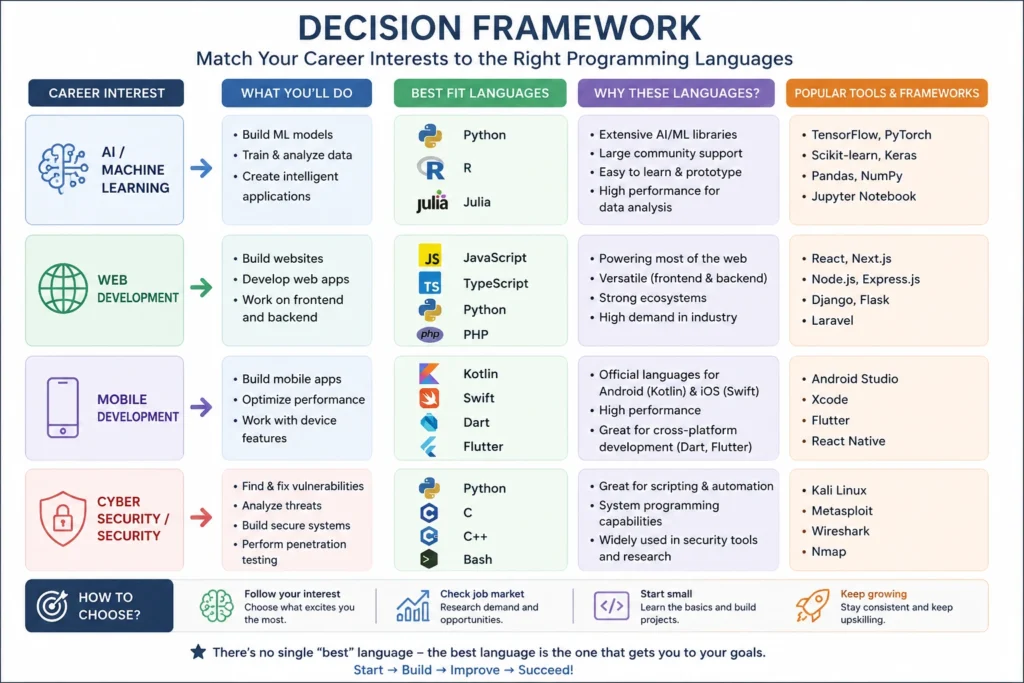
Furthermore, before diving into specific languages, it helps to think about which career direction genuinely interests you first. Furthermore, a language is a tool for a specific type of work — choosing based on your target career path produces far better learning outcomes than choosing based purely on popularity rankings.
Consequently, use this quick reference to identify which languages align with your actual career interests before committing significant learning time to any single one.
| Career Interest | Languages to Prioritize |
|---|
| AI, Machine Learning, Data Science | Python, SQL |
| Web Development (Front-End) | JavaScript, TypeScript |
| Web Development (Back-End) | PHP, JavaScript, Java |
| Enterprise Software | Java, C#, TypeScript |
| Mobile App Development | Kotlin, JavaScript |
| Cloud and DevOps | Go, Python |
| Systems and Security | Rust, C++ |
| Game Development | C++, C |
10 Best Programming Languages to Learn
1. Python — The Versatile Foundation for AI and Data
Python remains entrenched as one of the most sought-after languages worldwide. Furthermore, its simplicity, flexibility, and extensive libraries make it genuinely indispensable for AI, machine learning, data analysis, and backend development. Its broad adoption by startups and large corporations alike makes Python a go-to choice for anyone seeking versatile roles.
Career Paths: Data scientist, machine learning engineer, backend developer.
Why Learn It First: Furthermore, Python’s genuinely readable syntax makes it one of the most beginner-friendly languages available, while its depth in AI and data science libraries means it scales with you well into advanced, specialized work.
2. JavaScript — The Backbone of the Web
JavaScript remains the backbone of web development and is genuinely essential for front-end roles. Furthermore, whether building interactive user interfaces or full-stack applications with modern frameworks, its ubiquity on the web ensures strong, lasting employment prospects.
Career Paths: Front-end developer, full-stack engineer, UX-focused programmer.
Why Learn It First: Furthermore, JavaScript runs natively in every web browser, meaning you can start building and testing genuinely interactive projects immediately without complex setup — a significant advantage for hands-on learners.
3. TypeScript — JavaScript, Made Enterprise-Ready
An increasingly popular superset of JavaScript, TypeScript adds static typing to projects, genuinely improving code quality and maintainability. Furthermore, it has seen rapid adoption in enterprise and large-scale applications, making it a compelling skill for developers navigating today’s job market.
Career Paths: Full-stack developer, software engineer.
Why Learn It Next: Furthermore, once you are comfortable with JavaScript, TypeScript adds a genuinely valuable layer of safety and structure that large development teams increasingly require, making you significantly more employable for enterprise-scale projects.
4. SQL — The Universal Language of Data
While not a traditional programming language, SQL remains fundamental for anyone working with databases. Furthermore, with data-driven roles genuinely on the rise, understanding SQL is essential for backend development and data engineering work across virtually every industry.
Career Paths: Database developer, data engineer, business intelligence analyst.
Why It Belongs on Every List: Furthermore, virtually every application that stores data eventually needs SQL somewhere in its stack, making it one of the most universally applicable skills regardless of which other languages you ultimately specialize in.
5. Java — The Enterprise Standard
Java remains deeply embedded in enterprise environments. Furthermore, its stability and scalability make it genuinely indispensable for large systems and Android applications. A strong command of Java can secure opportunities across many established sectors.
Career Paths: Enterprise software engineer, Android developer, systems architect.
Why It Endures: Furthermore, Java’s decades-long track record in banking, insurance, and large corporate systems means genuinely stable, long-term career demand — industries that move slowly rarely abandon proven, reliable technology.
6. Go — Built for Cloud-Native Infrastructure
Go (Golang) has been gaining genuine momentum for cloud-native development, networking tools, and high-performance backend systems. Furthermore, its growing use in infrastructure and distributed systems positions it as an attractive language for engineers targeting cutting-edge technical roles.
Career Paths: DevOps engineer, backend developer, cloud software specialist.
Why It Is Rising Fast: Furthermore, Go was specifically designed for the concurrent, distributed systems that power modern cloud infrastructure, making it genuinely well-suited to the infrastructure challenges growing companies increasingly face.
7. Rust — Where Performance Meets Safety
Rust has grown significantly in popularity due to its memory safety features and genuine performance. Furthermore, it is increasingly used in systems programming, security-critical services, and applications where reliability is genuinely non-negotiable.
Career Paths: Systems programmer, embedded systems engineer, security-focused developer.
Why It Matters for Security-Conscious Roles: Furthermore, Rust’s compiler catches entire categories of memory-related bugs before code ever runs, making it increasingly favored for applications where a single security vulnerability carries genuinely significant consequences.
8. PHP — The Quiet Power Behind Most of the Web
Furthermore, PHP remains one of the most widely deployed server-side languages in the world, powering a genuinely enormous share of the internet’s websites — including WordPress, which alone runs more than 43% of all websites globally. Moreover, PHP’s continued evolution through modern frameworks like Laravel has transformed it from a simple scripting language into a genuinely capable tool for building complex, scalable web applications.
Career Paths: WordPress developer, backend web developer, Laravel developer.
Why It Remains Genuinely Relevant: Furthermore, the sheer volume of existing PHP-powered websites and applications ensures consistent demand for developers who can maintain, extend, and modernize this enormous existing codebase — a genuinely practical, high-demand career path many overlook in favor of newer languages.
9. Kotlin — The Modern Standard for Android
Furthermore, Kotlin has become Google’s officially preferred language for Android development, offering genuinely more concise, safer syntax compared to traditional Java-based Android development. Moreover, its interoperability with existing Java codebases means companies can adopt it gradually rather than requiring a complete rewrite.
Career Paths: Android developer, mobile application engineer.
Why It Is Worth Learning Now: Furthermore, as mobile-first business strategies continue expanding globally, Kotlin’s official Android endorsement makes it genuinely the more future-proof choice for anyone specifically targeting mobile development careers.
10. C++ — The Foundation of High-Performance Computing
Furthermore, C++ remains foundational for applications where raw performance genuinely cannot be compromised — game engines, real-time systems, and performance-critical software across finance, robotics, and embedded devices. Moreover, understanding C++ deeply also builds genuinely strong foundational knowledge of how computers actually manage memory and resources, benefiting developers even when they later specialize elsewhere.
Career Paths: Game developer, systems programmer, performance engineer.
Why It Remains Essential: Furthermore, despite newer languages emerging regularly, C++ continues powering the performance-critical layers of technology that genuinely cannot tolerate the overhead newer, more abstracted languages introduce.
Building Your Learning Path: Where to Start
For Complete Beginners
Furthermore, Python and JavaScript both offer genuinely gentle learning curves while opening doors to some of the most in-demand career paths available. Consequently, starting with either — based on whether you are more drawn to data and AI (Python) or web interfaces (JavaScript) — gives you a strong, practical foundation.
For Aspiring Web Developers
Furthermore, a natural progression moves from JavaScript to TypeScript for front-end depth, then adds PHP or a backend framework for full-stack capability. Consequently, this combination covers the genuinely most common web development career path comprehensively.
For Data and AI-Focused Careers
Furthermore, Python paired with SQL forms the genuine foundation for nearly every data science and machine learning role available today. Consequently, mastering both before branching into specialized AI frameworks builds the strongest possible base.
For Systems and Infrastructure Careers
Furthermore, Go and Rust both represent genuinely forward-looking choices for engineers interested in cloud infrastructure, DevOps, or security-critical systems work. Consequently, these languages suit developers who already have some programming foundation and want to specialize toward performance and reliability.
Conclusion
The ten programming languages in this guide each open doors to genuinely different, valuable career paths — from AI and data science through web development, enterprise systems, mobile apps, cloud infrastructure, and performance-critical systems programming.
Furthermore, Python and JavaScript offer the most accessible entry points for beginners. TypeScript and Java serve enterprise-scale ambitions. SQL underlies virtually every data-driven role regardless of specialization. PHP powers an enormous share of the existing web. Kotlin opens modern Android development. Go and Rust represent the genuinely forward-looking choices for infrastructure and security-focused careers. C++ remains foundational wherever raw performance cannot be compromised.
Therefore, rather than trying to learn every language simultaneously, identify which career direction genuinely excites you, then commit to mastering the one or two languages that direction actually requires. Consequently, this focused approach builds genuine, hireable depth far more effectively than scattered, surface-level exposure across every trending language simultaneously.
Frequently Asked Questions (FAQs)