Maybe a food brand appeared on your Instagram feed through a recipe video. Perhaps a skincare product kept showing up in your YouTube recommendations until curiosity turned into purchase. Furthermore, a friend’s WhatsApp status featuring a new snack brand made you add it to your next shopping list without a single advertisement touching you.
This is how FMCG brands grow today. The days of winning market share through television commercials and newspaper inserts alone are over. Furthermore, Indian consumers spend an average of 2.5 to 3 hours daily on social media — and FMCG brands that reach them there, in formats they actually enjoy, build loyalty that traditional advertising channels cannot replicate.
However, social media growth for FMCG is not accidental. Moreover, it requires platform-specific strategies, influencer relationships, content formats that drive purchase intent, and consistent execution that builds brand recognition over time.
In this guide, we cover everything FMCG brands need to know about social media marketing — which platforms matter, what content works, how influencer partnerships drive sales, and the specific strategies that separate fast-growing brands from those still waiting for social media to “start working.”
Why Social Media Is Essential for FMCG Brands
The Purchase Decision Happens Online Now
FMCG products have short purchase cycles. Furthermore, consumers make decisions quickly — often impulsively — based on awareness, visual appeal, and peer influence rather than extensive research.
Social media sits perfectly within this purchase psychology. A beautifully shot food video creates instant appetite. A before-and-after skincare post triggers aspiration. Moreover, a trusted creator’s product recommendation carries more weight than any celebrity endorsement in a television commercial. Consequently, FMCG brands with strong social media presence consistently convert passive scrollers into active buyers.
Social Media Compresses the Awareness-to-Purchase Funnel
Traditional FMCG marketing required multiple exposures across different touchpoints before a consumer tried a new product. Furthermore, this process took weeks or months and cost significant media budget.
Social media compresses this dramatically. A single viral video can take a brand from unknown to trending in 48 hours. Moreover, shoppable posts and direct links to eCommerce platforms mean the gap between desire and purchase has narrowed to seconds. Consequently, FMCG brands with strong social execution grow faster and at lower cost than those relying exclusively on traditional media.
The Right Platforms for FMCG Social Media Marketing
Not every social platform serves every FMCG category equally. Furthermore, spreading resources thinly across every platform produces weak results everywhere. Consequently, choosing the right two or three platforms for your specific product category and target demographic delivers significantly better returns than trying to maintain a presence everywhere simultaneously.
Instagram — Visual Discovery for Food, Beauty, and Lifestyle
Instagram remains the most powerful platform for FMCG brands selling visually appealing products. Furthermore, its emphasis on visual content makes it natural territory for food and beverage brands, personal care products, home care items, and packaged goods with strong visual identity.
Reels — Instagram’s short-form video format — consistently outperform static posts for FMCG product discovery. Moreover, recipe demonstrations, unboxing videos, comparison content, and transformation posts all perform exceptionally in the Reels format. Consequently, FMCG brands investing in consistent, high-quality Reels production see measurable increases in both reach and purchase intent.
Best FMCG categories for Instagram: Food and beverage, beauty and personal care, home care, health supplements
YouTube — Long-Form Trust Building
YouTube suits FMCG brands whose products benefit from explanation, demonstration, or education. Furthermore, ingredient walkthrough videos, recipe series, skincare routine integrations, and product comparison content all perform strongly on YouTube because users actively seek this information.
YouTube also provides the longest content shelf life of any social platform. Moreover, a well-produced video continues generating views and brand awareness for months or years after publication. Consequently, FMCG brands that invest in quality YouTube content build brand authority that compounds over time rather than disappearing from feeds within 48 hours.
Best FMCG categories for YouTube: Health supplements, personal care, cooking ingredients, home care products
Facebook — Targeted Reach for Mass Market FMCG
Facebook’s advertising infrastructure makes it indispensable for FMCG brands targeting broad consumer demographics. Furthermore, Facebook’s granular audience targeting — by age, location, income, interests, and purchase behavior — allows precise reach that traditional broadcast media cannot achieve.
Moreover, Facebook Groups around cooking, parenting, health, and home management create communities where FMCG brands appear naturally in relevant conversations rather than interrupting unrelated content. Consequently, FMCG brands combining Facebook advertising with community engagement build both reach and relationship simultaneously.
Best FMCG categories for Facebook: Mass market food, baby products, household goods, health and wellness
WhatsApp — Loyalty and Direct Communication
WhatsApp Business is an underutilized FMCG marketing channel. Furthermore, brands use WhatsApp to share recipes, usage tips, product launches, and exclusive offers directly with opted-in customers. Consequently, WhatsApp marketing reaches consumers in a personal channel where open rates dramatically exceed email marketing performance.
7 Social Media Strategies That Drive FMCG Growth
Strategy 1: Influencer Marketing at Every Tier
Influencer marketing is the most effective social media strategy for most FMCG brands. Furthermore, consumers trust recommendations from real people — especially creators they follow regularly — far more than branded advertising content.
The key insight for FMCG is using influencers across all tiers rather than focusing exclusively on celebrities.
| Influencer Tier | Followers | Best For | Engagement |
|---|
| Nano | 1K–10K | Hyper-local trust | Very High |
| Micro | 10K–100K | Niche audience reach | High |
| Macro | 100K–1M | Scale with credibility | Moderate |
| Celebrity | 1M+ | Mass awareness | Lower |
Nano and micro-influencers consistently deliver higher engagement rates and stronger purchase intent than celebrity campaigns. Moreover, their audiences trust them specifically because they feel like real people rather than paid spokespeople. Consequently, FMCG brands allocating budget across multiple micro and nano-influencers frequently outperform single celebrity campaigns at lower total cost.
Strategy 2: User-Generated Content Campaigns
User-generated content (UGC) is the most cost-effective content FMCG brands can produce. Furthermore, consumers trust real people using real products more than any branded content regardless of production quality.
Create campaigns that actively encourage customers to share their experiences. Furthermore, recipe challenges, transformation contests, and unboxing series all generate authentic UGC that extends brand reach far beyond the brand’s own following. Moreover, reposting UGC signals to your community that real customers use and love your products. Consequently, UGC campaigns create a virtuous cycle — more sharing generates more credibility which generates more sharing.
Strategy 3: Short-Form Video for Product Discovery
Short-form video — Instagram Reels, YouTube Shorts, and similar formats — is the fastest-growing content format for FMCG product discovery. Furthermore, algorithm-driven distribution means well-made short videos reach non-followers who have never encountered your brand before.
For food brands, quick recipe videos demonstrating product use generate the strongest engagement. For personal care brands, transformation videos and routine integrations perform best. Moreover, tutorial content that teaches something useful while featuring your product naturally creates purchase intent without feeling like an advertisement. Consequently, FMCG brands producing consistent short-form video content build organic reach that compounds over time.
Strategy 4: Seasonal and Festival Marketing
Indian FMCG brands have a significant advantage — India’s festival calendar creates natural purchase peaks that social media amplifies powerfully. Furthermore, Diwali, Holi, Dussehra, Raksha Bandhan, and regional festivals all create emotional contexts where FMCG products feature naturally in gifting, celebration, and family gathering content.
Plan seasonal campaigns four to six weeks before major festivals. Moreover, limited edition packaging, festival-specific recipes, and gifting-focused content all perform strongly during these periods. Consequently, FMCG brands with pre-planned festival social calendars consistently outperform competitors who react to festivals at the last minute.
Strategy 5: Educational and Ingredient Transparency Content
Modern consumers research what they consume. Furthermore, transparency about ingredients, manufacturing standards, certifications, and sourcing builds the trust that drives brand loyalty in competitive FMCG categories.
Educational content about product ingredients, health benefits, usage tips, and quality standards performs strongly with informed consumer segments. Moreover, brands that proactively address consumer questions about ingredients build credibility that competitors making vague health claims cannot easily replicate. Consequently, educational content serves simultaneously as trust-building, SEO-friendly material that attracts health-conscious consumers actively searching for information.
Strategy 6: Social Commerce Integration
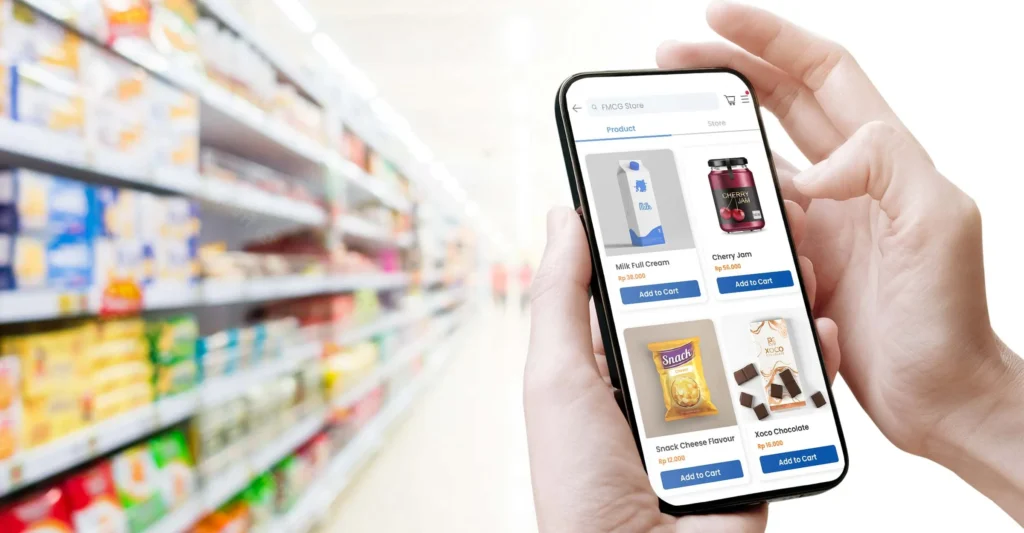
Social commerce — purchasing directly through social media platforms without leaving the app — is growing rapidly in Indian FMCG. Furthermore, Instagram Shopping, Facebook Shops, and WhatsApp Business catalogs all reduce friction between product discovery and purchase completion.
Setting up shoppable posts ensures that consumers who discover your product through social content can purchase immediately while intent is highest. Moreover, social commerce data provides valuable insights about which content formats and products drive actual purchases rather than just engagement metrics. Consequently, FMCG brands with integrated social commerce consistently convert social media awareness into measurable revenue more efficiently than those relying on indirect traffic to eCommerce platforms.
Strategy 7: Community Building Around Brand Values
The most durable FMCG social media presence is built around a community united by shared values rather than product purchases. Furthermore, brands that build communities around cooking, wellness, sustainability, or family values attract audiences who stay engaged between purchase cycles.
Mamaearth’s parenting community, Patanjali’s wellness philosophy following, and Paper Boat’s nostalgia community all demonstrate how FMCG brands create loyal audiences that follow brand content as a lifestyle interest rather than a brand promotion. Moreover, community members organically advocate for the brand within their own networks. Consequently, community-driven FMCG brands achieve lower customer acquisition costs and higher lifetime values than those focused purely on transactional marketing.
Content Formats That Work for FMCG
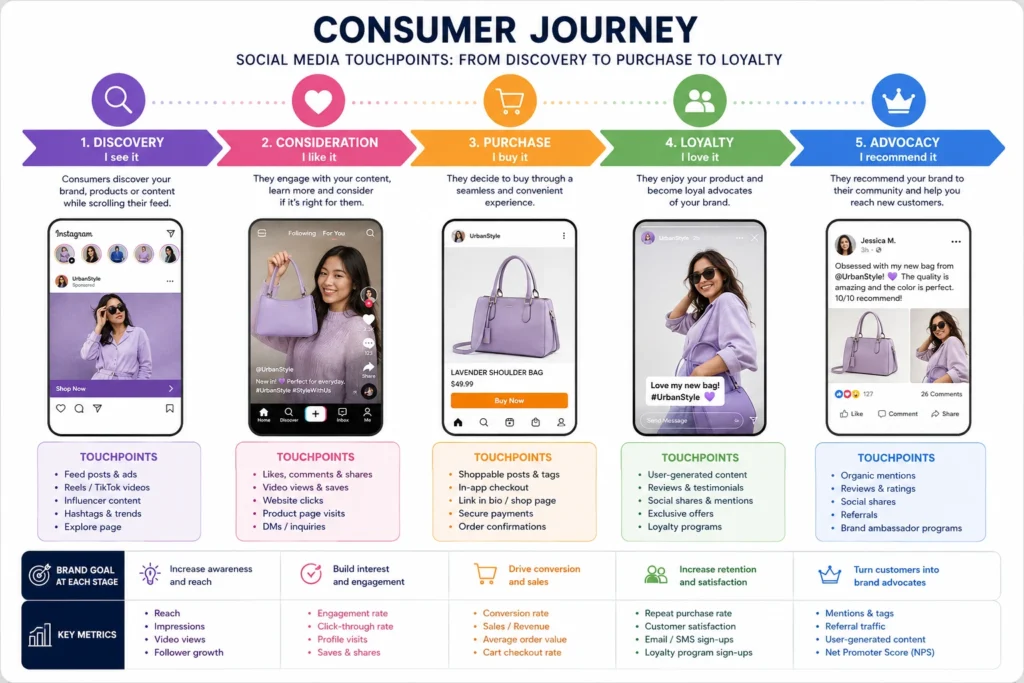
Different content formats serve different stages of the FMCG purchase journey. Furthermore, understanding which formats work at each stage helps brands invest content production budget where it generates the strongest return.
Discovery stage content:
✅ Short recipe videos and Reels
✅ Before-and-after transformation posts
✅ Festival and seasonal themed content
✅ Trending audio and challenge participation
Consideration stage content:
✅ Ingredient transparency and educational posts
✅ Comparison content and product demonstrations
✅ Customer testimonials and real reviews
✅ Influencer usage and recommendation content
Purchase stage content:
✅ Limited time offers and seasonal promotions
✅ Shoppable posts with direct purchase links
✅ WhatsApp Business exclusive deals
✅ Bundle and gifting package promotions
Loyalty stage content:
✅ Recipe series and usage inspiration
✅ Community challenges and UGC campaigns
✅ Behind-the-scenes brand content
✅ New product launches for existing customers
Measuring FMCG Social Media Success
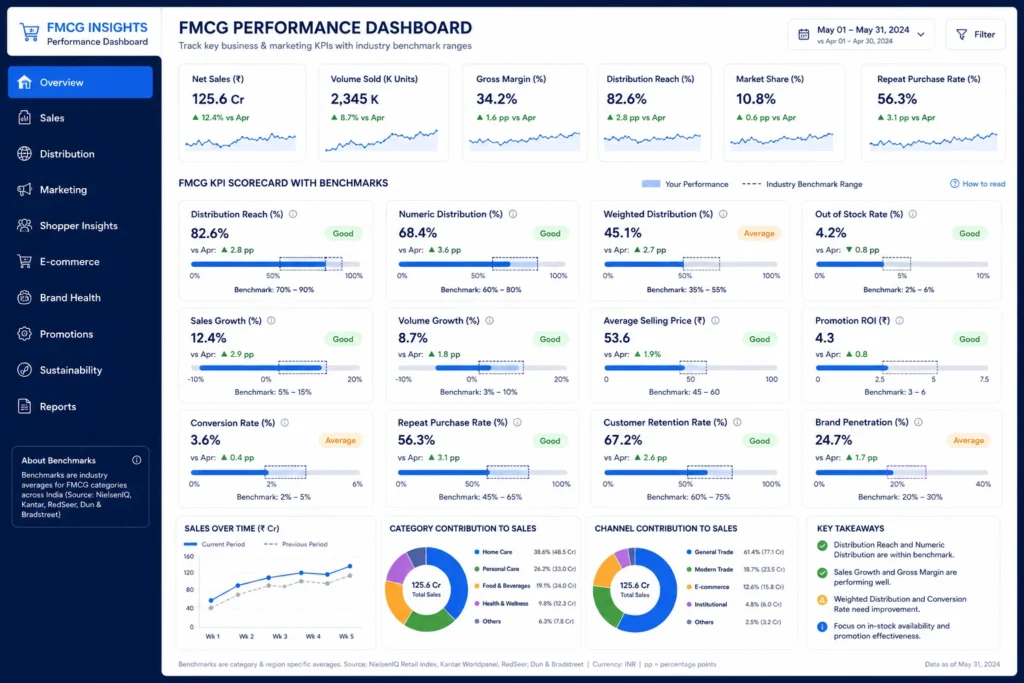
Many FMCG brands measure social media success through vanity metrics — follower counts and likes — rather than business metrics that connect to actual growth. Furthermore, effective social media measurement tracks the metrics that indicate real commercial impact.
Metrics That Actually Matter for FMCG
Reach and Impressions — How many unique consumers see your content. Furthermore, expanding reach into new audience segments indicates growing brand awareness.
Engagement Rate — Percentage of people who interact with your content after seeing it. Moreover, a 3-5% engagement rate indicates content resonating strongly with your audience.
Share and Save Rate — People share content they find genuinely useful or entertaining and save content they intend to act on later. Furthermore, high share rates indicate organic amplification that extends paid reach significantly.
Conversion Rate from Social — The percentage of social media visitors who complete a purchase. Moreover, tracking this by platform and content type reveals which channels drive actual revenue rather than just engagement.
Cost Per Acquisition — How much social media investment generates each new customer. Consequently, FMCG brands tracking CPA by channel can optimize budget allocation toward the platforms and content types generating customers most efficiently.
Conclusion
The FMCG brands gaining market share fastest are not necessarily those with the biggest budgets or the most distribution points. Furthermore, they are the brands that show up consistently and authentically in the social media feeds, influencer recommendations, and community conversations of their target consumers.
Social media success for FMCG is not complicated — but it requires consistency, platform-specific strategy, genuine community investment, and patience to build the compounding brand equity that drives sustainable growth.
Moreover, the brands that start building strong social media foundations today create advantages that are difficult for competitors to overcome later. Consequently, every month of consistent, strategic social media investment builds assets — audience, content, influencer relationships, and brand recognition — that deliver exponentially increasing returns over time.
Start with the right platforms. Build genuine community. Invest in influencer relationships. Create content your audience actually wants to see. Consequently, your FMCG brand’s social media presence becomes one of your most valuable and sustainable competitive advantages.
Frequently Asked Questions (FAQs)