Cybersecurity is among the most critical issues of our time, one that affects individual activities and business activities, as well as government processes.
Furthermore, the advancement of technology makes threats to our systems almost unstoppable, evolving constantly in sophistication and scale. Consequently, understanding and mitigating these risks has become genuinely essential for realizing security and protecting sensitive information — whether you manage a personal device or an enterprise network.
Cyber threats can compromise the integrity, confidentiality, or availability of information and systems through various vulnerabilities. Furthermore, they come in different forms, including software vulnerabilities, human mistakes, and intentional attacks. Consequently, to come up with an appropriate means of defense, it is necessary first to understand the nature of these threats and their genuine mechanisms.
In this guide, we walk through the top 10 cyber threats currently shaping the digital security landscape. Furthermore, for each one, we explain exactly how it works and precisely what you can do to defend against it.
Top 10 Cyber Threats to Watch Out For
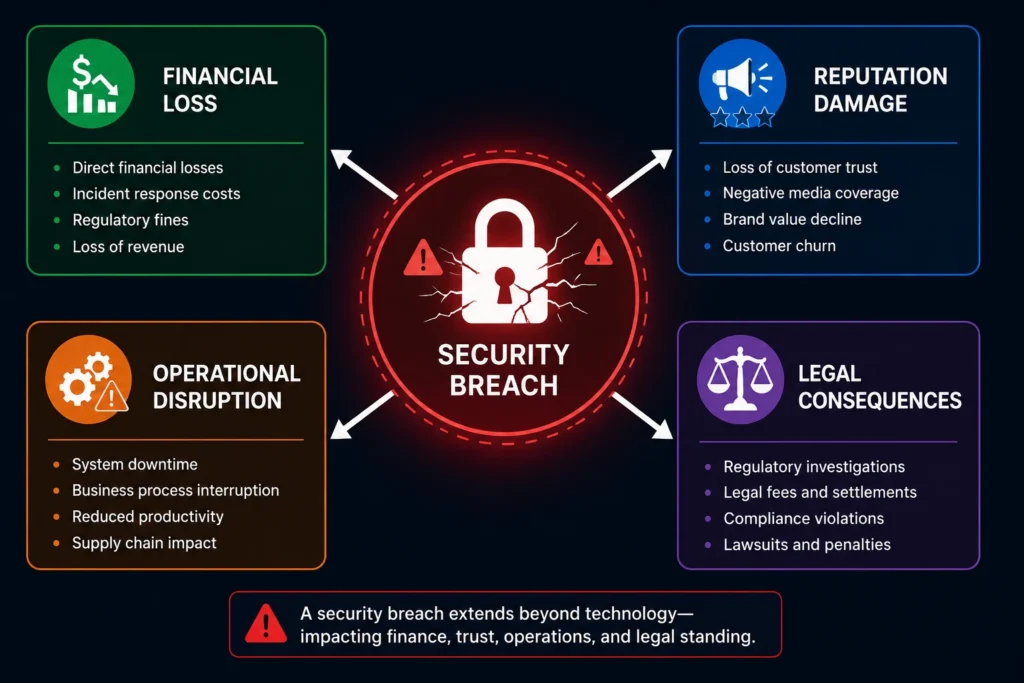
Furthermore, cyber security threats refer to the potential damages a single individual or an entire organization can face. Consequently, understanding the genuine scope of these consequences motivates taking prevention genuinely seriously.
Financial Losses
Furthermore, cyber security threats can bring about massive financial consequences for both individuals and organizations — direct damage through theft, fraud, or extortion, alongside indirect costs like system downtime that halts operations and lost productivity.
Reputation Damage
Furthermore, reputation is among the most valued possessions of any organization. Consequently, when customers and partners become aware of a breach, they lose confidence in that organization’s ability to protect their data — often leading to customer attrition that outlasts the technical recovery itself.
Operational Disruption and Legal Consequences
Furthermore, attacks can render digital operations incapable of continuing, delaying deadlines and halting service delivery entirely. Moreover, tighter data protection legislation worldwide means organizations face heavy fines and potential litigation following a breach, on top of the technical and reputational damage already sustained.
Top 10 Cyber Threats to Watch Out For
1. Social Engineering
Social engineering is a process by which an attacker manipulates people for confidential data or actions, ultimately leading to security violations. Furthermore, this differs from traditional hacking because it exploits human psychology rather than technical security loopholes — through fake legitimate-looking phishing emails, pretexting, and baiting.
Why it matters: Furthermore, social engineering attacks can bypass even the most excellent security systems by exploiting the human factor directly, making technical defenses alone insufficient.
Prevention tip: Regular employee training on recognizing phishing attempts and suspicious requests remains the most effective defense against this genuinely human-targeted threat.
2. Third-Party Exposure
Third-party exposure is the risk associated with using vendors, suppliers, or service providers whose weaker security measures can act as an entry point for cybercriminals. Furthermore, when a third-party partner gets compromised, this often extends the compromise directly to the organization they are connected with.
Why it matters: Furthermore, your own security posture is only as strong as the weakest vendor in your supply chain.
Prevention tip: Consequently, strong vetting and ongoing monitoring of third-party partners, ensuring their security requirements match your own organization’s standards, genuinely reduces this exposure.
3. Configuration Mistakes
Configuration errors result from poor setup of systems, applications, or devices — including not changing default settings, misconfigured firewalls, and exposed administrative interfaces. Furthermore, a common example involves cloud storage buckets configured to be publicly accessible, causing critical information leakage.
Why it matters: Furthermore, these mistakes create significant opportunities for attackers without requiring any sophisticated hacking technique whatsoever.
Prevention tip: Consequently, regular auditing and compliance with configuration management best practices help organizations avoid this genuinely preventable vulnerability category.
4. Artificial Intelligence Cyber Threats
Furthermore, cybercriminals increasingly integrate artificial intelligence to make their attacks smarter and more effective. AI-driven threats range from massive, personalized phishing campaigns to using AI specifically to find and exploit system vulnerabilities. Moreover, AI can push malware development further by making it capable of learning from its environment and adapting to evade detection.
Why it matters: Furthermore, AI-powered attacks scale and adapt far faster than traditional, manually crafted threats ever could.
Prevention tip: Consequently, AI-powered defensive tools that match this sophistication, alongside continuous security awareness training, help organizations keep pace with this rapidly evolving threat category.
5. DNS Tunneling
DNS tunneling is a technique attackers use to evade traditional security countermeasures by encapsulating malicious data within DNS queries and responses. Furthermore, since DNS forms core internet functionality, cybercriminals embed data in this traffic to escape detection by standard security systems, whether stealing data or maintaining command-and-control communication for botnets.
Why it matters: Furthermore, DNS traffic often receives less security scrutiny than other traffic types, making this an effective evasion technique.
Prevention tip: Consequently, advanced monitoring and analysis specifically of DNS traffic patterns helps detect and prevent this genuinely stealthy threat.
6. Insider Threats
Insider threats come from within the organization — employees, contractors, or business partners with authorized access to systems and data. Furthermore, these can be malicious, such as a disgruntled employee using data for personal gain, or inadvertent, where careless action leads to a security breach.
Why it matters: Furthermore, insider threats prove genuinely difficult to identify because they originate from previously trusted individuals with legitimate access already granted.
Prevention tip: Consequently, strong access controls, constant monitoring of user activities, and fostering a genuine security-alert culture within the organization help curb this threat category.
7. State-Sponsored Attacks
State-sponsored attacks involve cyber agencies or nation-states pursuing political, military, or economic intentions. Furthermore, this group poses genuine danger due to their sophistication and the backing of state resources, potentially carrying out critical infrastructure attacks, government or corporate data theft, or dedicated espionage campaigns.
Why it matters: Furthermore, the resources and patience behind state-sponsored attacks often exceed what conventional organizational defenses were originally designed to withstand.
Prevention tip: Consequently, organizations in critical infrastructure or sensitive sectors specifically benefit from threat intelligence sharing and defense-in-depth strategies tailored to this elevated threat level.
8. Ransomware
Ransomware is a subset of malware that tampers with data and makes it inaccessible until a ransom gets paid. Furthermore, ransomware attacks prove catastrophic on both personal and organizational levels, resulting in severe financial loss and operational unavailability, alongside potential permanent data loss when backups do not exist.
Why it matters: Furthermore, recent ransomware has improved significantly, with attackers conducting deep reconnaissance before demanding genuinely higher ransoms.
Prevention tip: Consequently, good cyber hygiene, regular backups, employee training, and strong endpoint security together provide the most effective protection against this consistently damaging threat.
9. Trojan Horses
A Trojan horse is malware that looks legitimate and motivates people to download and open it. Furthermore, once installed, a Trojan can steal data, create a backdoor for future attacks, or install additional malware — commonly propagating through phishing emails, malicious websites, or bundled software.
Why it matters: Furthermore, Trojans work through deception specifically, making them genuinely hard to detect through technical means alone.
Prevention tip: Consequently, proper antivirus software, user awareness regarding safe downloads, and accurate email filtering together defend against this deception-based threat.
10. Drive-By Cyber Attacks
A drive-by attack occurs when a user unknowingly downloads malware simply by visiting an infected website. Furthermore, these attacks exploit vulnerabilities in web browsers or plugins, automatically triggering malicious code download without any deliberate action or consent from the user.
Why it matters: Furthermore, unlike most other attack forms requiring some user activity like clicking a link, drive-by attacks can affect even the most careful, security-conscious users.
Prevention tip: Consequently, keeping software consistently updated, using web security tools, and avoiding suspicious sites together provide meaningful defense against this genuinely passive threat.
7 Prevention Practices That Defend Against All 10 Threats
Furthermore, while each threat above has specific defenses, seven foundational practices genuinely strengthen your protection across every category simultaneously.
Regular updates and patching — Furthermore, fix regular dates to update software, hardware, and firmware so the most recent patches close known vulnerabilities before attackers exploit them.
Strong authentication practices — Furthermore, multi-factor authentication and proper password policies reduce the possibility of unauthorized access significantly across every threat category involving credential compromise.
Employee training — Furthermore, periodic security training familiarizes staff with phishing, social engineering, and other threats in common use, addressing the human element that technical defenses alone cannot cover.
Data encryption — Furthermore, encrypting sensitive data both at rest and in transit keeps it secure from unauthorized access and theft even when other defenses fail.
Network security measures — Furthermore, firewalls, intrusion detection systems, and intrusion prevention systems monitor and secure network traffic continuously.
Regular backups — Furthermore, maintaining current backups of critical data and systems ensures fast recovery in the event of ransomware or other data loss incidents.
Incident response planning — Furthermore, developing and practicing an incident response plan lets your organization respond effectively and minimize compromise when an attack does eventually occur.
Quick Reference: All 10 Threats at a Glance
| Threat | Primary Method | Key Defense |
|---|
| Social Engineering | Human psychology manipulation | Employee training |
| Third-Party Exposure | Vendor security weaknesses | Vendor vetting & monitoring |
| Configuration Mistakes | Default/exposed settings | Regular configuration audits |
| AI Cyber Threats | AI-powered attacks | AI-powered defense tools |
| DNS Tunneling | Hidden data in DNS traffic | DNS traffic monitoring |
| Insider Threats | Authorized access misuse | Access controls & monitoring |
| State-Sponsored Attacks | Nation-state resources | Threat intelligence sharing |
| Ransomware | Data encryption for ransom | Backups & endpoint security |
| Trojan Horses | Disguised malicious software | Antivirus & safe download habits |
| Drive-By Attacks | Passive malware download | Updated software & web s |
Conclusion
Cyber security threats demand proactive efforts, proper strategies, and consistent, disciplined practices rather than a one-time security review completed and forgotten.
Furthermore, from social engineering and third-party exposure through AI-driven attacks, ransomware, and drive-by downloads, these ten threats represent the genuine landscape organizations and individuals face today. Moreover, understanding how each one works — rather than treating cybersecurity as an abstract concern — gives you the practical foundation needed to defend against it effectively.
Therefore, individuals and businesses alike should keep these attacks at bay by having strong measures in place and staying genuinely up-to-date on evolving threat information. Consequently, combining the specific defenses covered for each threat with the seven foundational prevention practices in this guide builds a genuinely resilient security posture — protecting your data, your reputation, and your operations in an increasingly connected digital world.
Frequently Asked Questions (FAQs)