If you are still asking whether Laravel can handle serious production applications, you are asking the wrong question.
Furthermore, Laravel already powers well over 600,000 live websites globally, with more than 80,000 companies actively building on it today. These are not side projects or GitHub experiments — they are SaaS platforms serving millions of users, fintech applications processing real financial data, and media platforms handling enormous traffic loads every single day.
The real question worth asking is different — why do CTOs and engineering teams keep choosing Laravel, even years after flashier frameworks entered the market? Furthermore, the answer comes down to fast time-to-market, built-in authentication and queue systems, a strong surrounding ecosystem, straightforward scaling with modern infrastructure, and clean architecture that makes hiring and onboarding developers genuinely easier.
In this guide, we break down 8 real websites built with Laravel across different industries — SaaS, fintech, education, and more. Furthermore, each example demonstrates a specific reason Laravel remains a genuinely serious choice for production applications, not just a framework for beginners learning PHP.
Why Laravel Wins Even in a Crowded Framework Market
Before exploring the examples, understand what makes Laravel specifically well-suited to the kind of applications featured in this guide.
Laravel Is a Business Velocity Tool, Not Just a Framework
Laravel is not simply “a good framework” in the abstract. Furthermore, it is production-ready, genuinely scalable across industries, trusted by real businesses handling real transactions, and demonstrably capable of supporting millions of users on a single platform. Consequently, the businesses in this guide did not choose Laravel because it was trendy — they chose it because it let them move faster without sacrificing the architecture quality that scaling later requires.
What Laravel Provides Out of the Box
Built-in authentication scaffolding, queue management for background jobs, caching layers, and a mature package ecosystem mean development teams spend less time rebuilding foundational infrastructure and more time on features that actually differentiate their product. Furthermore, this directly explains why fast-growing startups and established enterprises alike choose Laravel when time-to-market genuinely matters.
8 Best Websites Built with Laravel
Laracasts is a leading learning platform for developers, offering tutorials on Laravel, PHP, Vue.js, and more. Built entirely on Laravel, it demonstrates the framework’s capability to manage membership systems, video streaming, and user subscriptions seamlessly.
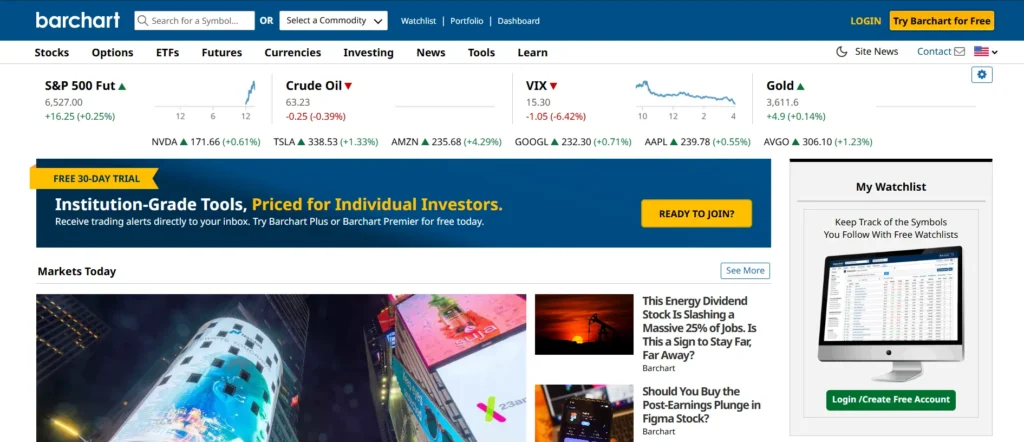
Website: barchart.com Industry: Financial market data and analytics Scale: Serves traders and financial professionals globally Why Laravel: Handling large datasets and real-time updates reliably
Barchart delivers real-time financial market data, analytics, and trading tools across global markets — stocks, forex, and commodities alike. Furthermore, its user base consists of traders and financial professionals who depend entirely on accurate, fast, reliable data delivery for decisions that carry real financial consequences.
Laravel supports the backend systems handling Barchart’s large datasets and real-time updates. Moreover, this fintech use case demonstrates that Laravel is not limited to simpler content platforms — it genuinely handles the performance and reliability demands of data-intensive financial applications where speed and accuracy are non-negotiable. Consequently, Barchart proves Laravel’s capability in one of the most demanding application categories that exists.
Key Takeaway: Laravel supports data-intensive, real-time fintech applications where reliability and speed directly affect user trust and financial outcomes.
Startups.co is a platform dedicated to helping entrepreneurs with funding, mentorship, and growth strategies. Using Laravel, it manages millions of users while offering smooth interactions between investors and startups.
Alphacoders provides wallpapers, artwork, and fan content for creative communities. Laravel’s robust content management features allow it to manage high-resolution images and deliver them quickly to global audiences.
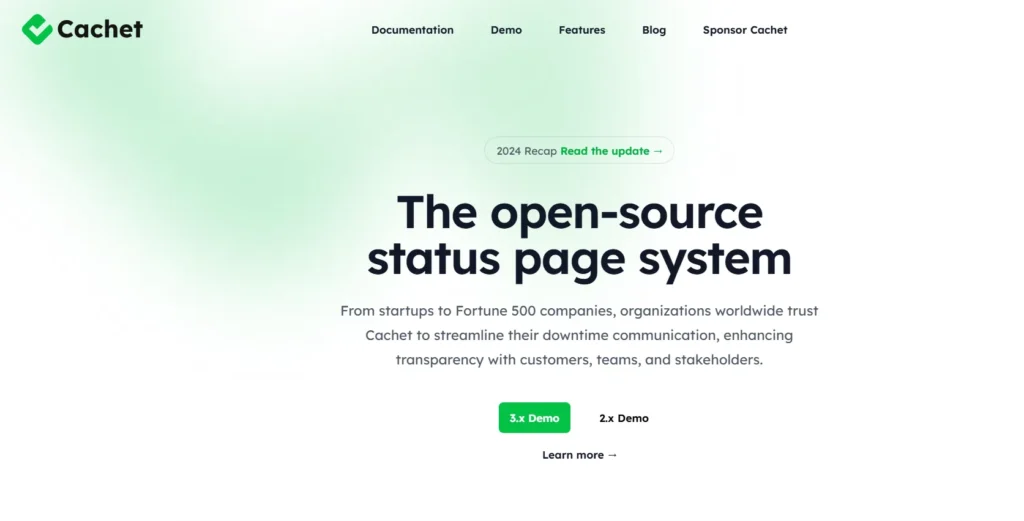
Cachet is an open-source status page system built with Laravel. It allows businesses to communicate downtime and service health updates, demonstrating Laravel’s ability to manage real-time applications.
Website: alison.com Industry: Online education Scale: 20M+ learners across 190+ countries Why Laravel: Managing massive user bases and certification workflows at global scale
Alison is one of the largest free online learning platforms in the world, offering courses, diplomas, and certifications spanning business, IT, health, and personal development. Furthermore, serving more than 20 million learners across over 190 countries makes scalability an absolute, non-negotiable requirement rather than a nice-to-have feature.
Laravel helps Alison manage its enormous user base, course delivery infrastructure, and certification workflows efficiently. Moreover, the platform demonstrates that Laravel scales genuinely well for content-heavy, high-concurrency educational platforms serving a truly global, diverse audience. Consequently, Alison proves that Laravel handles both the content management complexity and the user scale that serious edtech platforms demand.
Key Takeaway: Laravel handles content-heavy platforms with millions of users and complex certification logic without buckling under scale.
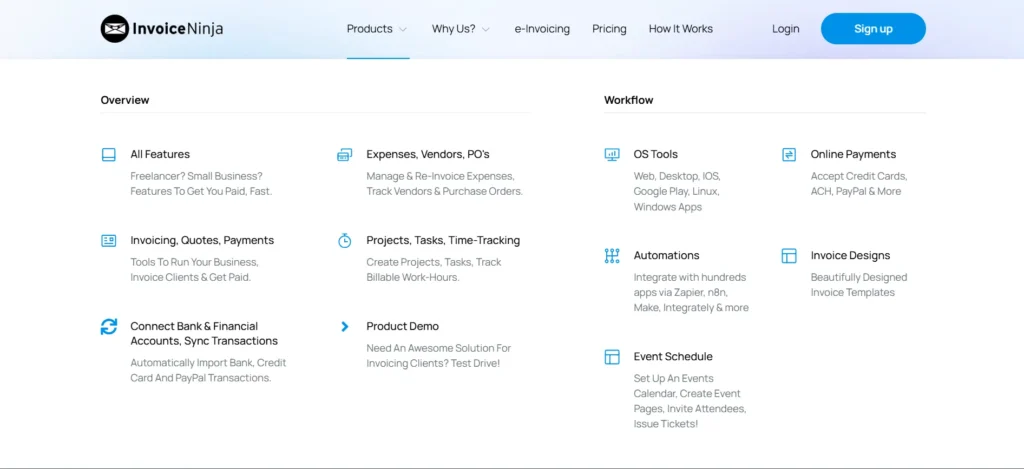
Website: invoiceninja.com Industry: SaaS invoicing and payments Scale: 170,000+ businesses worldwide Why Laravel: Multi-tenant architecture, permission systems, and billing workflow reliability
Invoice Ninja is a genuinely widely used SaaS invoicing and payments platform, allowing businesses to create invoices, track expenses, manage clients, and accept payments — all core financial operations that cannot afford downtime or bugs.
Furthermore, Laravel powers Invoice Ninja’s multi-tenant architecture, which is exactly the kind of core requirement that separates a serious SaaS product from a simple web app. Moreover, permission systems and billing workflows — both genuinely complex to build correctly — run on Laravel’s mature authentication and authorization tools rather than requiring custom-built infrastructure from scratch. Consequently, Invoice Ninja demonstrates Laravel’s genuine strength for multi-tenant SaaS products handling sensitive financial data at scale.
Key Takeaway: Laravel’s built-in support for multi-tenancy and permissions makes it a natural fit for SaaS billing and invoicing platforms.
8. MyRank
MyRank is an Indian education platform that helps students prepare for competitive exams. Built with Laravel, it provides personalized learning, mock tests, and progress tracking features.
What These 8 Examples Prove About Laravel
Looking across all eight examples, a clear pattern emerges regarding what Laravel genuinely delivers at production scale.
Laravel Handles Genuinely Diverse Industry Requirements
These examples span education, SaaS billing, fintech data, entertainment, nonprofit operations, travel booking, regulated lending, and B2B distribution. Furthermore, this diversity demonstrates that Laravel is not a framework specialized for one narrow use case — it flexes to serve fundamentally different business models and technical requirements equally well.
Scale Is Not a Limiting Factor
From Alison’s 20 million learners to Invoice Ninja’s 170,000 business customers, these platforms operate at scales that would expose architectural weaknesses in a poorly designed framework quickly. Furthermore, Laravel’s continued use across these high-scale platforms confirms it genuinely handles serious production traffic and data volume.
Security and Compliance-Sensitive Industries Trust Laravel
Neighborhood Lender’s regulated lending environment and World Vision’s donation processing both demonstrate Laravel’s suitability for applications where security failures carry serious real-world consequences. Furthermore, this trust from compliance-sensitive industries speaks directly to the maturity of Laravel’s built-in security architecture.
Should You Choose Laravel for Your Next Project?
Laravel suits a genuinely wide range of project types based on the examples in this guide.
Choose Laravel if you are building:
✅ A SaaS platform requiring multi-tenant architecture and subscription billing
✅ A content-heavy platform needing to scale to millions of users
✅ A fintech or data-intensive application requiring real-time reliability
✅ A marketplace connecting multiple vendors with complex pricing logic
✅ A regulated application where security and compliance are non-negotiable
✅ A B2B platform built around extensive API integrations
Furthermore, Laravel’s combination of built-in authentication, queue management, caching, and a mature package ecosystem means development teams spend less time on foundational infrastructure and more time building the features that actually differentiate their product in the market.
Laravel vs Other Frameworks: What Actually Sets It Apart
Understanding why these eight companies chose Laravel specifically — rather than Django, Ruby on Rails, or a Node.js-based stack — helps clarify what genuinely differentiates it in a genuinely crowded framework market.
Laravel vs Django
Django, built on Python, offers similarly strong built-in tooling and a mature ecosystem. Furthermore, the meaningful difference often comes down to team familiarity and hiring pools — PHP remains one of the most widely known server-side languages globally, which means Laravel-skilled developers are generally easier to find and onboard quickly. Moreover, Laravel’s Eloquent ORM and Blade templating tend to feel more approachable for teams transitioning from simpler PHP backgrounds, while Django’s “batteries-included” philosophy sometimes imposes more rigid structural conventions.
Laravel vs Ruby on Rails
Rails pioneered many conventions that Laravel later adopted and refined, and the two frameworks share genuine philosophical similarities around developer happiness and rapid development. Furthermore, Laravel has benefited from launching later, allowing it to learn from Rails’ successes and avoid some of its adoption friction. Consequently, many teams find Laravel’s learning curve slightly gentler while offering comparable productivity gains for building complex applications quickly.
Laravel vs Node.js and Express
Node.js-based stacks offer genuine advantages for real-time applications requiring persistent connections, like chat systems or live dashboards. Furthermore, Laravel has closed much of this gap through tools like Laravel Echo and broadcasting support, letting it handle real-time features without abandoning PHP entirely. Moreover, for teams prioritizing a unified, opinionated structure over the flexibility (and occasional chaos) of assembling a custom Node.js stack from individual packages, Laravel’s cohesive approach often wins out.
The Common Thread Among These 8 Companies
Furthermore, none of the companies in this guide chose Laravel purely on technical merit alone — they chose it because it matched their team’s existing skills, their timeline pressure, and their need for a framework mature enough to trust with genuinely serious production traffic. Consequently, the “best” framework question always depends on specific team and project context rather than one universally correct answer.
Common Architectural Patterns Across These Laravel Platforms
Looking across Alison, Invoice Ninja, Barchart, and the other examples in this guide, certain architectural patterns appear consistently — patterns worth understanding if you are planning your own Laravel-based project.
Queue Systems for Handling Heavy Background Work
Furthermore, platforms like Invoice Ninja processing billing workflows and TourRadar managing booking confirmations both rely heavily on background job processing rather than making users wait for slow operations to complete in real time. Laravel’s built-in queue system, supporting drivers like Redis and Amazon SQS, lets these platforms handle email notifications, PDF generation, and payment processing asynchronously. Consequently, users experience fast, responsive interfaces even when significant backend work happens behind the scenes.
Caching Layers for High-Traffic Reliability
Furthermore, 9GAG’s ability to absorb unpredictable viral traffic spikes depends heavily on aggressive caching strategies that reduce database load during sudden demand surges. Laravel’s cache facade supports multiple backends — Redis, Memcached, and database caching — letting teams choose the right caching strategy for their specific traffic patterns. Moreover, this flexibility means platforms can start with simple caching and scale to more sophisticated distributed caching as traffic genuinely demands it.
API-First Design for Multi-Channel and B2B Needs
Furthermore, Deltanet Travel’s B2B distribution model and increasingly common mobile app companions to web platforms both depend on well-structured API architecture. Laravel’s API resource classes and Sanctum authentication package make building secure, well-documented APIs significantly more straightforward than assembling equivalent functionality from scratch. Consequently, platforms built with API-first thinking from the beginning avoid the costly retrofitting that adding API access to a tightly coupled application later typically requires.
Multi-Tenancy for SaaS Business Models
Furthermore, Invoice Ninja’s ability to serve 170,000+ separate businesses from one codebase depends on careful multi-tenant architecture — ensuring each customer’s data stays completely isolated while sharing the same underlying application infrastructure. Laravel’s package ecosystem includes mature multi-tenancy solutions that handle this isolation reliably, saving teams from building this genuinely complex requirement from first principles.
What This Means for Your Own Laravel Project
Furthermore, if your project shares characteristics with any of these eight examples — heavy background processing, unpredictable traffic patterns, multi-channel API needs, or multi-tenant SaaS requirements — these same architectural patterns likely apply to your build as well. Consequently, studying how established, high-scale Laravel platforms solved these exact problems gives you a genuinely reliable starting point rather than reinventing solutions to problems the Laravel community has already solved thoroughly.
Conclusion
Furthermore, Laravel’s combination of built-in authentication, queue management, caching, and a mature package ecosystem means development teams spend less time on foundational infrastructure and more time building the features that actually differentiate their product in the market.
Furthermore, none of these companies chose Laravel because it was the trendy option. They chose it because it let them move fast without sacrificing the architectural discipline that scaling to millions of users eventually demands.
Therefore, if you are evaluating frameworks for a genuinely serious production application — whether SaaS, fintech, marketplace, or content platform — the real-world evidence from these eight production websites confirms Laravel deserves serious consideration.
Frequently Asked Questions (FAQs)