Trade shows used to be where manufacturing deals started. Furthermore, an in-person sales call used to be the moment a buyer formed their first real impression of your company.
Nearly 70% of a B2B buyer’s journey now happens online before they ever contact your sales team. Furthermore, engineers researching a new supplier want technical specifications, 3D models, and detailed data before speaking to anyone. Purchasing managers and C-level decision-makers run their own separate mental checklist while evaluating the same website. Consequently, your manufacturing website now carries the weight that a trade show booth, a sales rep, and a technical brochure used to carry together.
Yet many manufacturing websites still function as digital placeholders — outdated, hard to navigate, and unable to represent the actual quality of the company behind them. Furthermore, a recent survey found that 57% of B2B marketers seek website redesigns specifically because of outdated content or positioning.
In this guide, we break down 10 of the best manufacturing website designs. Furthermore, each example demonstrates specific, applicable lessons for attracting engineers, purchasers, and executives alike. Consequently, whether you run a small precision parts shop or a global industrial supplier, this guide gives you a clear direction for your own website.
What Makes a Manufacturing Website Actually Work?
Before exploring the examples, understand what separates high-performing manufacturing websites from generic digital brochures:
| Factor | What It Means |
|---|
| Clear Positioning | A homepage statement that instantly explains what you do and why it matters. |
| Technical Depth | Fast access to specifications, data sheets, and 3D models for engineers. |
| Dual-Audience Navigation | Separate but overlapping navigation paths for technical and executive visitors. |
| Trust Signals | Case studies, client logos, and testimonials that build credibility. |
| Lead Capture | Multiple conversion points beyond a simple “Contact Sales” form. |
10 Best Manufacturing Website Designs
GE Aerospace’s website is a brilliant example of corporate storytelling in the manufacturing space. It opens with immersive visuals and a sleek, intuitive layout that guides users effortlessly through complex topics such as engineering advancements, sustainability initiatives, and aerospace manufacturing solutions. The clean typography, bold imagery, and strategically placed CTAs make it a high-converting industrial website.
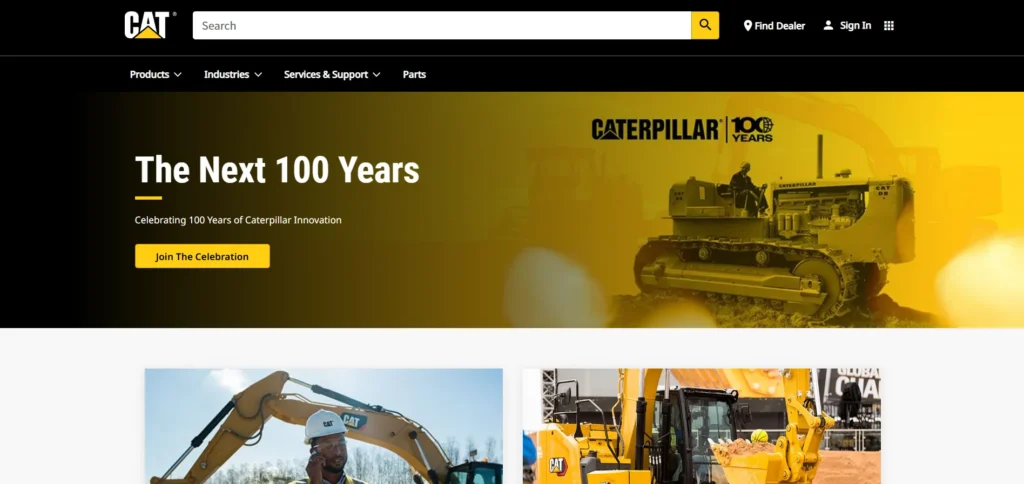
Caterpillar continues to lead with its robust and modern web design. Its 2025 redesign features high-resolution videos, dynamic menus, and an exceptional product filtering system. With a global reach, it also handles multilingual content gracefully. The mobile experience is particularly optimized for field engineers and B2B buyers who need quick access to specs and manuals.
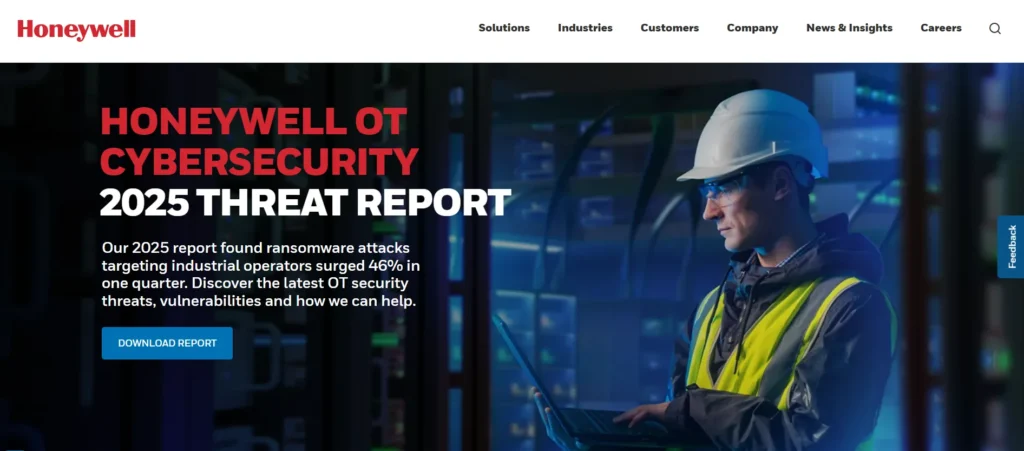
Honeywell’s website fuses manufacturing excellence with cutting-edge digital experience. Its smart use of animations, case studies, and industry-specific pages caters to multiple sectors like aerospace, healthcare, and logistics. The “Solutions” navigation hub is particularly effective for B2B visitors seeking specific services.
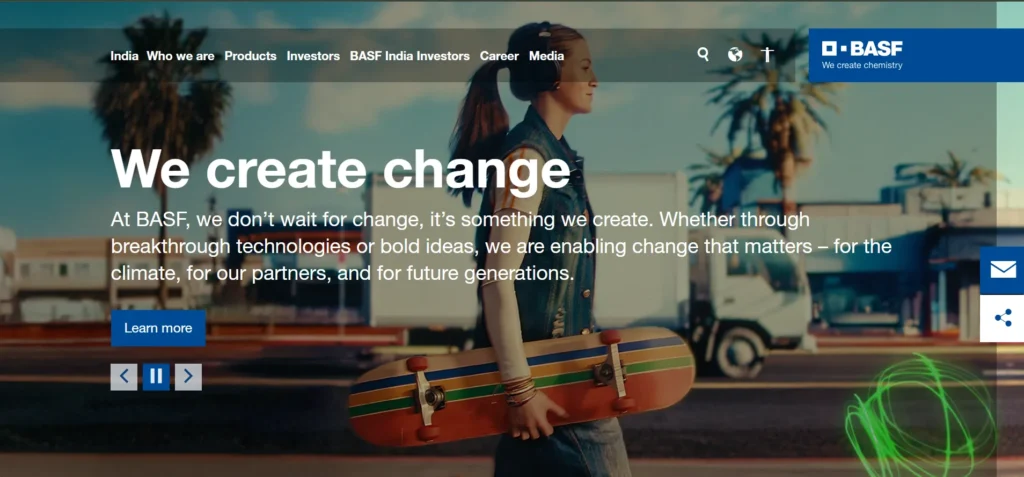
BASF’s website showcases how a chemical manufacturer can stay both professional and engaging. With elegant design, modular content blocks, and plenty of white space, it provides clarity around their sustainability commitments, product innovations, and global reach. Their “Virtual Lab” experience is a standout feature.
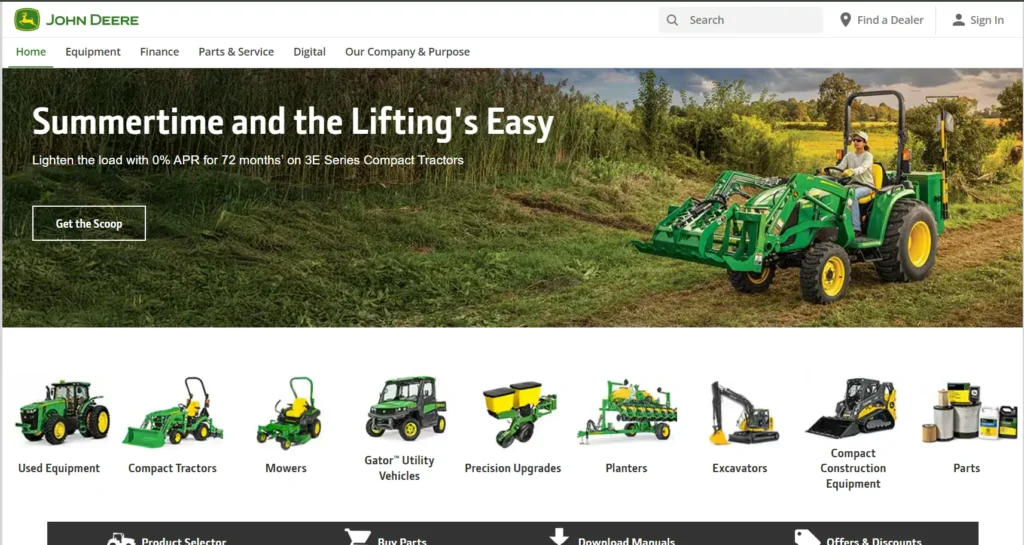
John Deere’s website is a perfect blend of ruggedness and modernity—just like its equipment. The user journey is well-thought-out, particularly for product browsing and dealer locator tools. Their responsive site ensures seamless interaction across all devices, which is critical in agriculture and construction sectors.
3M’s site stands out for how it organizes an extensive product portfolio without overwhelming the visitor. With AI-driven search functionality and customer-focused navigation, it serves industries ranging from healthcare to electronics. Their use of customer success stories and innovation highlights adds credibility and SEO value.
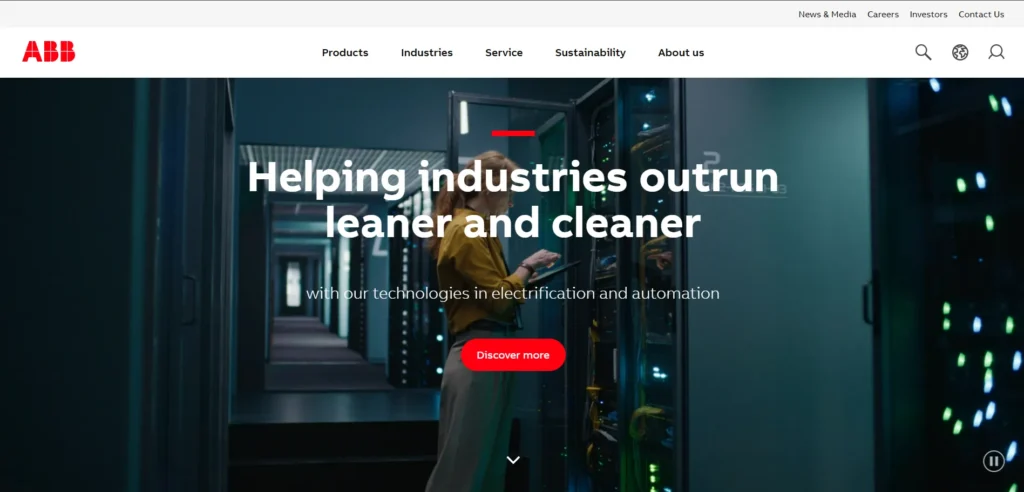
ABB leverages digital transformation not only in its products but in its website experience. The 2025 design emphasizes automation, robotics, and sustainability. Features like dynamic search, tailored industry pages, and a robust insights section (with whitepapers and webinars) drive user engagement and organic traffic.
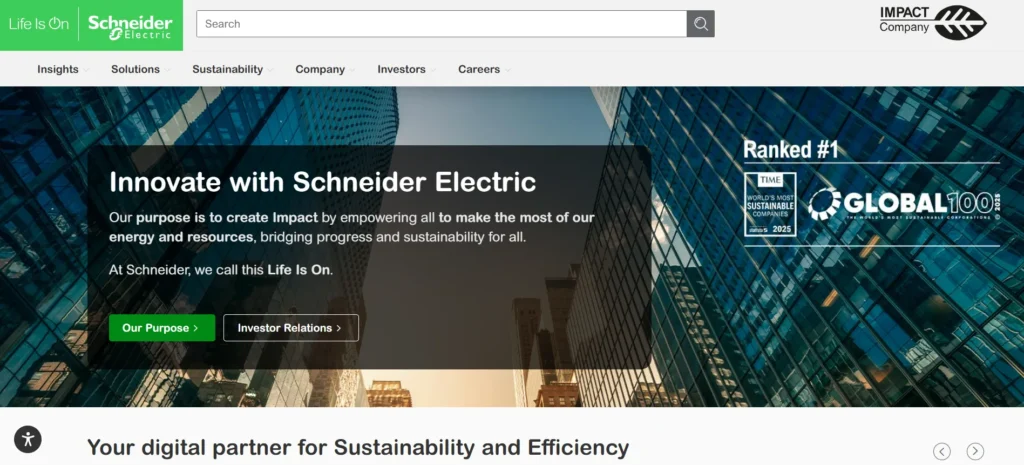
Schneider Electric’s website offers an enterprise-level experience with a strong focus on energy management and smart systems. It’s designed for global audiences with easy access to resources, tools, and sustainability metrics. Their customer-centric UX supports various industries including buildings, data centers, and manufacturing.
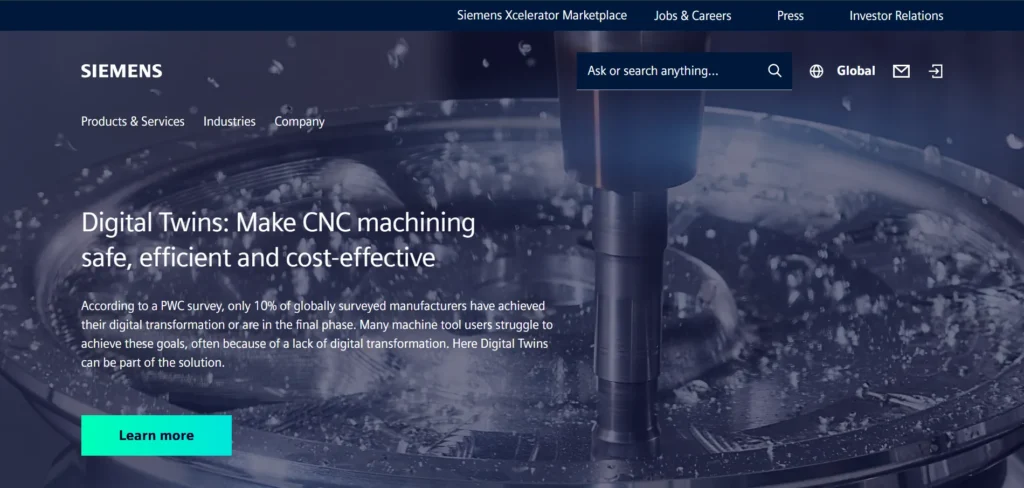
Siemens delivers one of the most comprehensive and forward-thinking manufacturing websites in 2025. As a global leader in industrial automation, electrification, and digitalization, Siemens’ website is engineered to cater to both technical users and C-suite decision-makers.
Its Digital Industries section is a standout, offering personalized content based on industry (energy, automotive, healthcare, etc.) and user roles (engineers, CTOs, procurement teams). The mega menu is deep yet intuitive, helping users find product documentation, case studies, whitepapers, and software demos with ease.
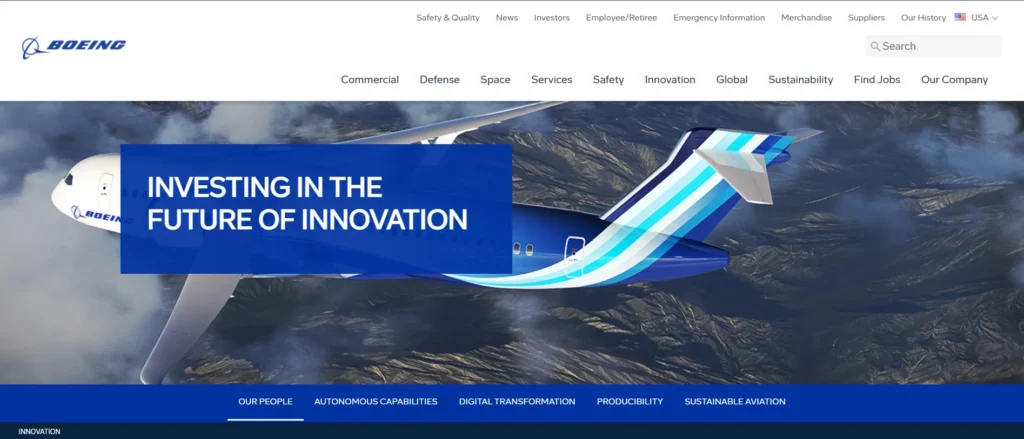
Boeing’s manufacturing website is more than just a corporate front—it’s a visual journey into aerospace engineering excellence. The 2025 iteration features immersive storytelling, showcasing innovations in commercial aircraft, defense systems, and space exploration. It uses high-resolution media, interactive 3D models, and video-driven pages to highlight aircraft design, sustainability milestones, and advanced materials technology. Boeing’s use of an extensive newsroom, press center, and innovation portal keeps the website content-rich and SEO-strong, with continual updates that improve search visibility.
For procurement officers, government clients, and B2B suppliers, Boeing offers secure portals and technical resources, all underpinned by a fast, mobile-first architecture optimized for performance and global audiences.
5 Design Principles Every Manufacturing Website Needs
1. Lead With a Clear Positioning Statement
Every high-performing example in this guide states clearly, within the homepage hero section, exactly what the company does and why it matters. Furthermore, visitors who cannot understand your value proposition within seconds move on to a competitor’s site immediately. Consequently, your positioning statement deserves as much strategic attention as your product engineering.
2. Build Dual Pathways for Technical and Executive Audiences
Engineers want specifications, 3D models, and data sheets. Furthermore, purchasing managers and executives want case studies, reliability signals, and business risk reassurance. Consequently, the strongest manufacturing websites provide clear, separate pathways that let each audience self-select into the content that actually serves their evaluation process.
3. Filtering Is Not Optional for Product-Heavy Manufacturers
Manufacturers with extensive product catalogs — like Halco with its hook and loop fasteners or Micro Weld with its welding equipment — succeed specifically because robust filtering lets buyers find exactly what they need quickly. Furthermore, a visitor who cannot locate the right product within a few clicks assumes a competitor will make it easier. Consequently, filtering investment directly protects lead quality.
4. Case Studies Build Trust That Specifications Alone Cannot
Technical specifications prove capability. Furthermore, case studies prove that capability translated into real results for a real customer facing a real problem. Consequently, manufacturers who invest in detailed case studies alongside technical content consistently convert skeptical, high-value buyers more effectively than those relying on specifications alone.
5. Page Speed and Mobile Experience Matter for B2B Too
Manufacturing buyers increasingly research on mobile devices — between meetings, on the factory floor, or while traveling. Furthermore, a slow-loading manufacturing website with heavy unoptimized product images loses exactly the engaged, time-pressed buyers most likely to convert. Consequently, performance optimization is as critical for B2B manufacturing sites as it is for any consumer eCommerce store.
Building Your Manufacturing Website on WordPress
Several examples in this guide — including SuperMax Tools — run successfully on WordPress. Furthermore, the platform’s flexibility makes it well-suited to manufacturing companies that need dual-audience navigation, technical resource libraries, and eCommerce functionality within one system.
Essential WordPress tools for manufacturing websites:
- Theme: Astra or Kadence — lightweight and fully customizable
- Product Filtering: WooCommerce with filter plugins for spec-based search
- Case Studies: Custom post types for organized, filterable case study libraries
- SEO: Rank Math — technical content SEO and schema markup
- Performance: WP Rocket — essential for image and data-heavy product pages
- Security: Wordfence — protects proprietary technical content and customer data
Moreover, WordPress ownership means your technical content, case study library, and lead data all remain under your control permanently. Consequently, manufacturers building on WordPress invest in infrastructure that scales alongside company growth rather than requiring a platform migration later.
Conclusion
The 10 manufacturing websites in this guide succeed because they understand something fundamental about how buying decisions happen today — the research, the evaluation, and much of the trust-building now happen online before a single sales conversation begins.
Furthermore, none of these lessons require unlimited budget — Air-Cure proves that smart strategy outperforms scale, and SuperMax Tools proves that WordPress delivers enterprise-quality results without enterprise-level cost.
Therefore, apply the lessons most relevant to your specific manufacturing business. Start with your positioning statement. Build clear pathways for your different buyer types. Add the case studies and technical resources that build genuine trust. Consequently, your manufacturing website becomes the qualified lead generation asset that modern B2B buying behavior demands.
Frequently Asked Questions (FAQs)