

Nearly 80% of internet users have searched for health or medical information online.
Furthermore, that number represents something more serious than typical eCommerce browsing behavior. A visitor researching symptoms, comparing treatment options, or looking for a specialist is often anxious, vulnerable, and in genuine need of clear, trustworthy information — not marketing copy dressed up as medical guidance.
This creates specific design challenges the healthcare industry faces more acutely than almost any other. Furthermore, healthcare branding tends to look remarkably similar across competitors — blue tones, stock photography of smiling doctors, generic taglines — making genuine differentiation difficult. Moreover, the industry is heavily regulated, pushing many organizations toward playing it safe rather than building genuinely engaging websites. Accessibility gets overlooked despite being both a legal requirement and a core ethical obligation. And healthcare websites typically carry a larger-than-normal volume of content that needs organizing without overwhelming visitors.
Despite these challenges, certain healthcare organizations consistently get it right. In this guide, we break down 10 of the best healthcare website designs and the specific lessons each one teaches. Furthermore, whether you run a hospital, a clinic, a telehealth platform, or a health information resource, these examples give you a clear, applicable direction.
Building your healthcare website on WordPress? Read: How to Start a WordPress Website Step by Step
What Makes a Healthcare Website Actually Trustworthy?
Before exploring the examples, understand the five factors that separate genuinely effective healthcare websites from generic medical brochures:
| Factor | What It Means |
|---|---|
| Simplicity | Clear navigation without overwhelming menus or competing options. |
| Search Functionality | Fast, accurate discovery of conditions, treatments, and providers. |
| Accessibility | WCAG-compliant design serving users of every ability. |
| Authentic Imagery | Real photography over generic stock, building genuine credibility. |
| Content Quality | Expert-reviewed, regularly updated information patients can trust. |
10 Best Healthcare Website Designs
Apollo’s website remains the gold standard in Indian healthcare. With advanced features like AI-powered symptom checkers, teleconsultation booking, and multi-language support, Apollo combines trust with technology. The homepage is streamlined with clear CTAs, patient testimonials, and video consult links.
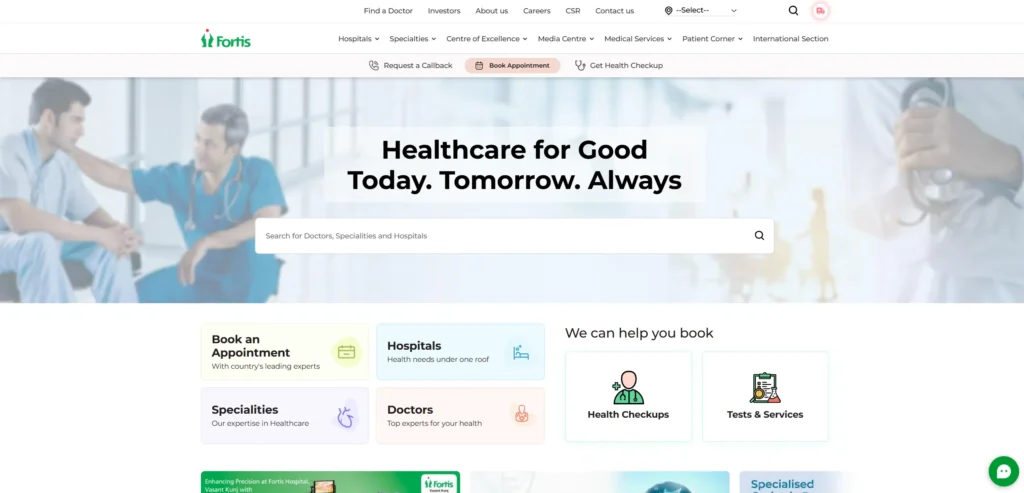
Fortis Healthcare’s website in 2025 offers a sleek, calming interface with instant doctor search and specialty-wise filters. Their digital content is rich in patient education resources and blog content that boosts SEO and engagement.
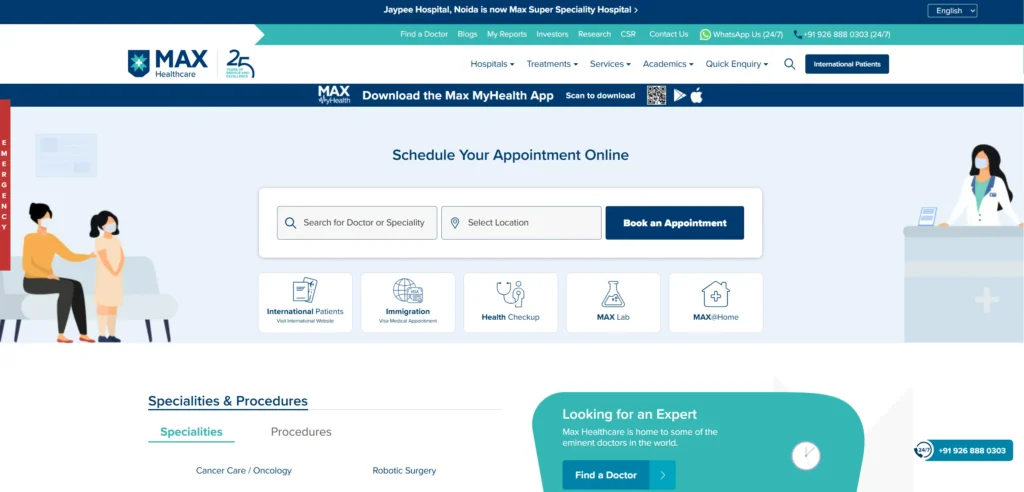
Practo has evolved from an appointment booking app to a full-service digital health platform. Its website reflects this with smooth navigation, crisp icons, and intuitive booking flows across doctors, tests, and medicines.
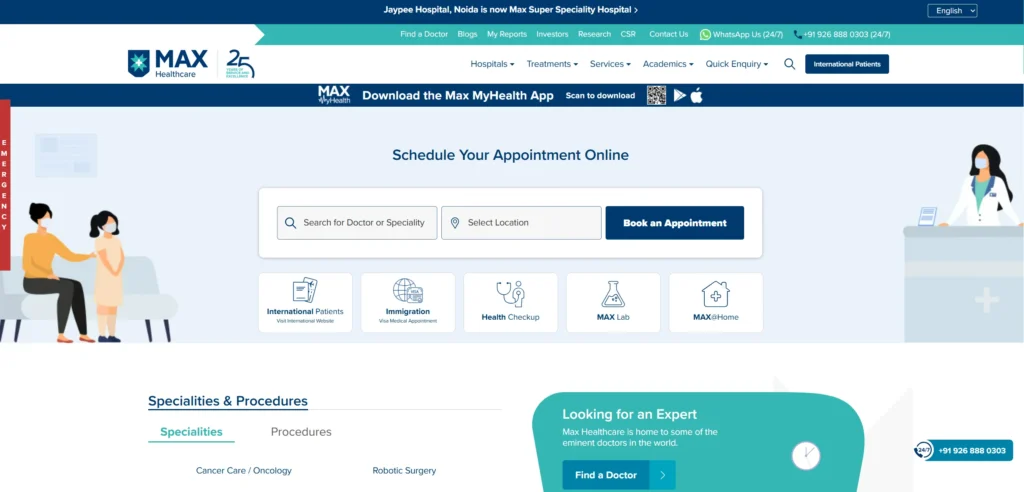
Max’s 2025 site offers immersive features like virtual hospital tours, personalized health dashboards, and easy international patient services. The bold use of blue-white themes improves readability and trust.
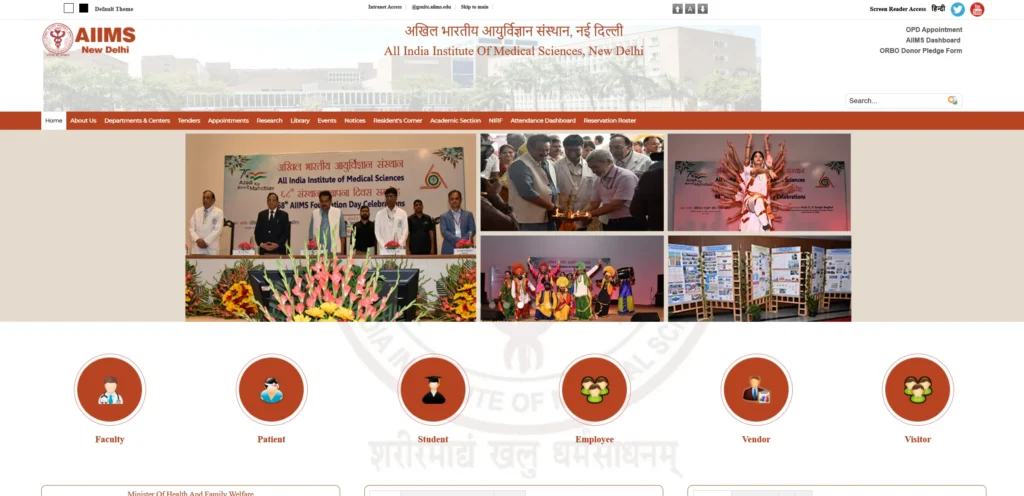
While government websites are typically outdated, AIIMS has stepped up with a new 2025 interface. It includes digital OPD registration, medical research publications, and integrated patient records for Delhi citizens.
Tata Health brings simplicity and modern UX to telemedicine. Its minimalist website is user-first, offering clear access to doctors, family health plans, and digital prescriptions.
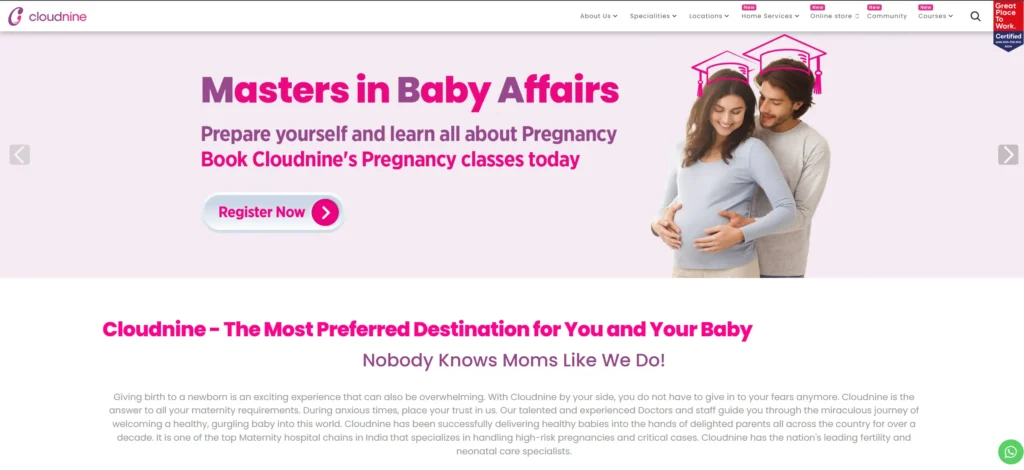
Cloudnine excels in women & child healthcare, and their website reflects that. Soft colors, emotionally resonant imagery, and smooth navigation make it a top choice for maternity and pediatric care seekers.
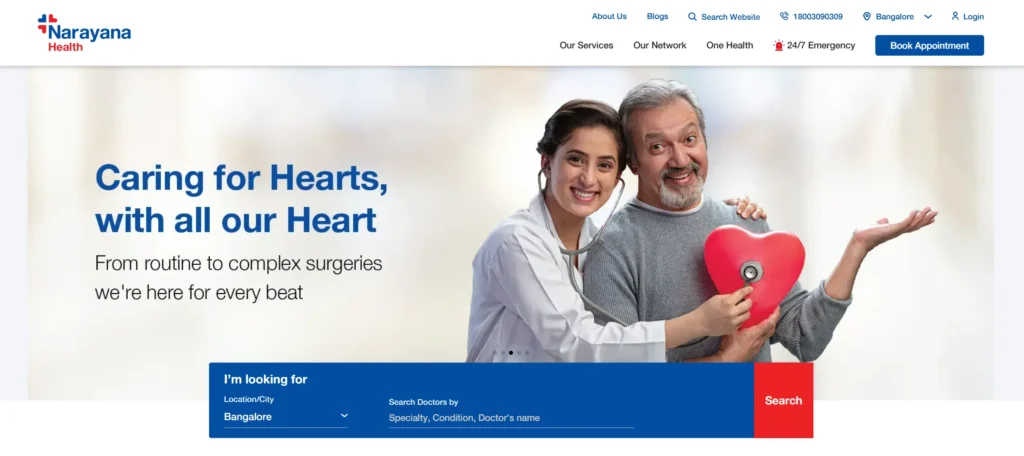
Focused on affordability and access, Narayana’s site is loaded with doctor videos, treatment cost estimators, and multilingual support, making it ideal for Tier 2 and rural patients.
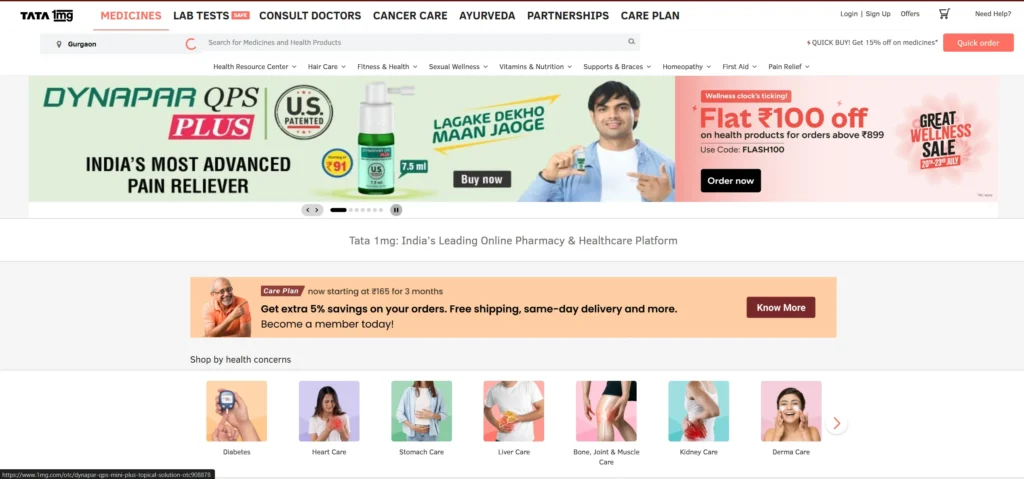
Primarily a pharmacy and lab aggregator, 1mg’s website now includes AI tools for health queries, drug interaction checkers, and full patient profiles. It’s sleek, SEO-rich, and fast-loading.
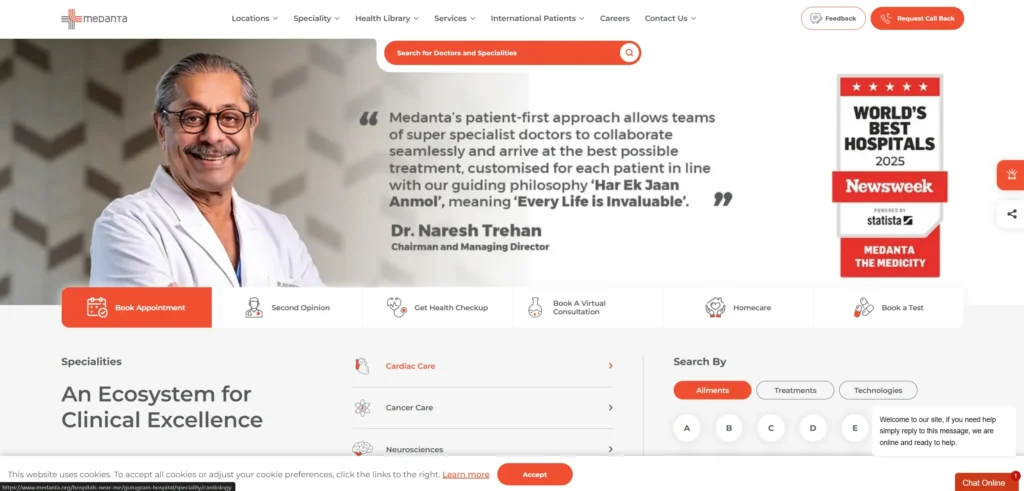
Medanta focuses on multi-specialty excellence. Their site includes 3D visuals of procedures, expert talk videos, and comprehensive specialty pages that make it highly educational and trustworthy.
5 Design Principles Every Healthcare Website Needs
1. Only Include Features That Are Genuinely Useful
A successful healthcare website offers more than basic information. Furthermore, interactive tools like symptom checkers, appointment scheduling, and telemedicine access enhance genuine user engagement. Consequently, every feature should earn its place by solving a real patient need rather than existing for its own sake.
2. Keep Navigation and Search Simple
Navigation should be intuitive and effortless, with a clear menu structure and prominently placed calls-to-action. Furthermore, a powerful, user-friendly search function ensures visitors find what they need without clicking through multiple navigation layers during moments of genuine urgency.
3. Content Quality Determines Long-Term Trust
Effective, high-quality content remains the cornerstone of any healthcare website’s success. Furthermore, ongoing production of fresh, credible content supports organic search visibility while comprehensive information about services and conditions fosters genuine patient trust. Moreover, multimedia elements — videos, infographics, interactive presentations — convey complex medical information more accessibly than text alone.
Fast-loading content matters for anxious, urgent searches. Read: 12 Best Speed Optimization Tips for Your WooCommerce Store
4. Accessibility Is Ethical and Legal, Not Optional
Ensuring your website serves users with disabilities is both an ethical responsibility and, in many jurisdictions, a legal requirement. Furthermore, adhering to WCAG guidelines ensures users with various disabilities can genuinely use your website rather than being excluded from critical health information.
5. Avoid Visual Clutter Through Clean Design
Clutter-free, visually appealing design is vital for healthcare websites specifically. Furthermore, consistent branding, readable fonts, and adequate color contrast all contribute to a professional appearance. Moreover, mobile responsiveness is essential since a significant share of healthcare research now happens on smartphones and tablets.
5 Common Healthcare Website Mistakes That Damage Patient Trust
Knowing what works matters. Furthermore, knowing what actively drives anxious visitors away matters just as much — because in healthcare, a single frustrating experience can mean a patient never returns, or worse, delays care they genuinely need.
Mistake 1: Overloading Navigation With Every Department
Many healthcare organizations attempt to represent every department, service line, and specialty in the main navigation simultaneously. Furthermore, this creates the exact 20-item navigation menu problem that athenahealth deliberately avoided. Consequently, visitors facing overwhelming menu choices often abandon their search entirely rather than working through unclear options during a moment of genuine medical concern.
Mistake 2: Relying on Generic Stock Photography
Smiling doctors in white coats, diverse hands stacked together, and stethoscopes on clipboards have become such visual clichés that they now signal inauthenticity rather than professionalism. Furthermore, Maven Clinic’s investment in original photography demonstrates exactly why this matters — genuine imagery builds credibility that recycled stock photos actively undermine. Consequently, replacing generic stock images with authentic photography of actual facilities and providers is often the single highest-impact, most cost-effective improvement a healthcare website can make.
Mistake 3: Burying Appointment Booking Behind Multiple Clicks
A visitor who has decided to book an appointment represents the highest-value action any healthcare website can capture. Furthermore, forcing that visitor through phone numbers, contact forms, and multiple page transitions before reaching an actual booking system loses exactly the converted intent that took effort to build. Consequently, prominent, one-click access to scheduling — visible from the homepage and every service page — protects conversion at the most critical moment.
Mistake 4: Ignoring Mobile-Specific Health Search Behavior
Health searches increasingly happen on mobile devices, often during moments of genuine urgency — a parent researching a child’s symptoms at 2 AM, someone checking side effects before taking medication. Furthermore, healthcare websites that were designed desktop-first and merely adapted for mobile frequently fail exactly these urgent, time-sensitive searches through slow loading or cramped, hard-to-tap interfaces. Consequently, mobile performance deserves priority treatment for healthcare specifically, not just general best practice compliance.
Mistake 5: Publishing Content Without Clear Medical Review
Health content without visible authorship or medical review creates immediate credibility questions for informed visitors. Furthermore, Healthline’s consistent practice of expert-reviewed content demonstrates why this matters — visitors researching serious health topics actively look for signals that information has been verified by qualified professionals. Consequently, every piece of health content should display clear authorship, review dates, and reviewer credentials rather than appearing as anonymous, unverified text.
Why Telehealth Integration Is Now a Baseline Expectation
Patient expectations around virtual care have shifted permanently. Furthermore, visitors researching healthcare providers increasingly expect telehealth options to be visible and accessible directly from the website — not buried as an afterthought or requiring a separate app download discovered only after booking.
Healthcare websites that clearly communicate virtual visit availability, pricing, and the technology required capture patients who specifically prioritize convenience. Furthermore, One Medical’s integration of app-based care access directly into their website messaging demonstrates this expectation well — visitors immediately understand that convenience is core to the care model, not an occasional add-on service.
Moreover, clearly explaining what conditions suit telehealth versus in-person visits helps manage patient expectations before booking, reducing the frustration of an inappropriate virtual appointment being rescheduled to in-person care. Consequently, healthcare organizations planning website updates should treat telehealth visibility as a core navigation and homepage element rather than a secondary service buried deep within the site structure.
Building a Healthcare Website on WordPress
WordPress provides a genuinely strong, accessible foundation for healthcare websites of every size — from solo practitioners to hospital networks.
Essential WordPress tools for healthcare websites:
- Theme: Accessibility-ready themes like Astra or GeneratePress that support WCAG compliance
- Appointment Booking: Amelia or Simply Schedule Appointments for patient scheduling
- Security: Wordfence — critical for websites handling sensitive patient data
- SSL: Non-negotiable for HIPAA-adjacent data protection considerations
- SEO: Rank Math — helps condition and treatment pages rank for relevant patient searches
- Performance: WP Rocket — ensures fast loading for urgent health information searches
Moreover, WordPress ownership means your patient education content, appointment data, and site configuration remain fully under your organization’s control.
SSL is essential for any website handling patient information. Read: Do You Need SSL for Your WordPress Website?
Conclusion
The 10 healthcare websites in this guide succeed because they understand something fundamental about their visitors — people searching for health information are often anxious, sometimes urgent, and always deserving of clarity rather than confusion.
Furthermore, every one of these approaches is achievable regardless of your organization’s size — the underlying principles of simplicity, accessibility, authentic content, and respectful design apply whether you run a single clinic or a national hospital network.
Therefore, study which of these ten approaches aligns most closely with your specific healthcare organization and patient audience. Consequently, your website becomes what healthcare visitors genuinely need — a clear, trustworthy first step toward better health decisions.
Frequently Asked Questions (FAQs)
What makes a healthcare website trustworthy?
A trustworthy healthcare website combines simple, uncluttered navigation, robust search functionality, WCAG accessibility compliance, authentic (non-stock) photography, and expert-reviewed content. Furthermore, transparency about physician credentials and treatment information builds the confidence that anxious, health-seeking visitors specifically require.
Why is accessibility so important for healthcare websites?
Healthcare information often serves the exact populations — elderly users, people with disabilities, visually impaired visitors — who benefit most from accessible design. Furthermore, WCAG compliance is both an ethical obligation and, in many regions, a legal requirement. Consequently, healthcare websites that skip accessibility exclude precisely the audiences who need reliable health information most urgently.
Should healthcare websites use video content?
Yes — but with visitor control as the priority. Furthermore, video works well for facility tours, provider interviews, and treatment explanations. However, autoplay video should be avoided entirely, since anxious healthcare visitors need control over their own browsing pace rather than unexpected audio or motion.
How important is website search for healthcare organizations?
Extremely important — often more critical than for other industries. Furthermore, visitors researching symptoms or conditions frequently arrive with urgent, specific questions. Consequently, a robust, well-organized search function that groups results logically saves critical time and reduces the frustration that comes with searching for health information while anxious.
Is WordPress suitable for hospital and clinic websites?
Yes. WordPress handles healthcare websites of every scale, from solo practitioners to large hospital networks, particularly when paired with accessibility-focused themes and appropriate security plugins. Furthermore, its flexibility supports appointment booking, patient education content libraries, and SEO-optimized condition pages without requiring expensive custom development.