Shopify, BigCommerce, Wix eCommerce, Squarespace — every platform promises to be the easiest, the fastest, and the most powerful option available. Furthermore, every one of them charges a monthly subscription fee regardless of whether your store makes a single sale.
WooCommerce takes a completely different approach.
It is free, open-source, and built directly on top of WordPress — the platform already powering 43% of the entire internet. Moreover, over 6.6 million online stores worldwide run on WooCommerce, giving it a 37% market share among all eCommerce platforms globally.
In this guide, we cover the top 11 reasons why WooCommerce is the right choice for building your online store. Furthermore, we compare it honestly against alternatives so you can make an informed decision — not just a popular one.
What Is WooCommerce?
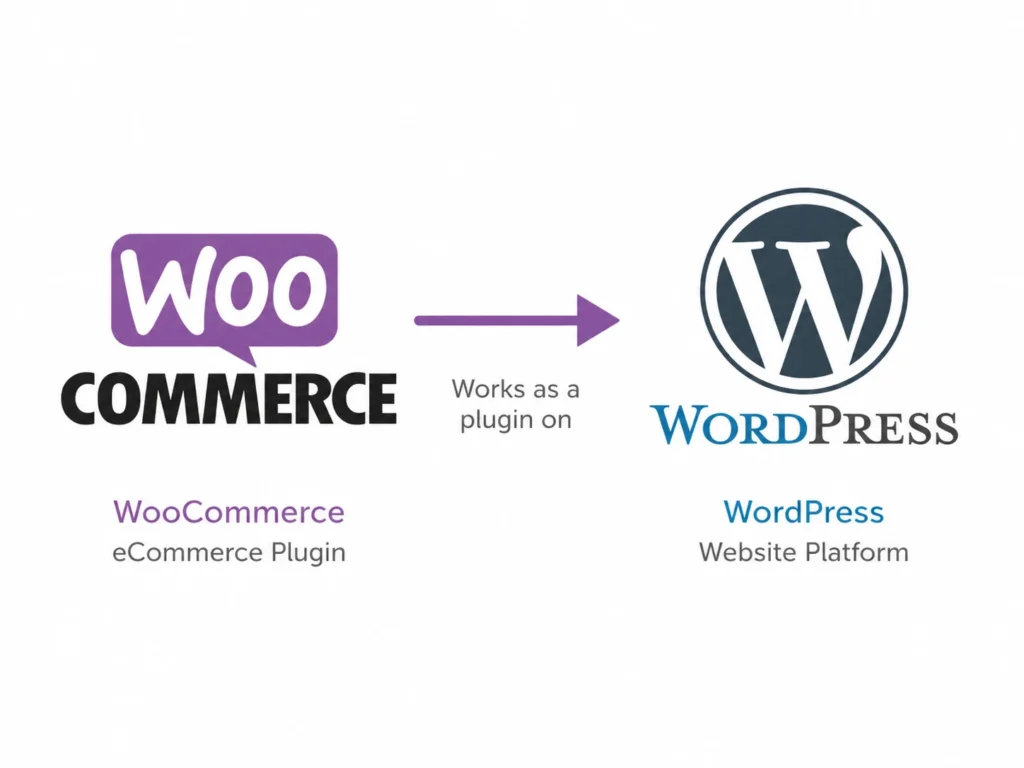
WooCommerce is a free WordPress plugin that transforms any WordPress website into a fully functional online store. Furthermore, it handles everything a modern eCommerce business needs — product listings, shopping cart, checkout, payment processing, shipping management, and order tracking.
Because it runs on WordPress, WooCommerce inherits everything WordPress offers — thousands of themes, 60,000+ plugins, a massive developer community, and complete content management capabilities.
WooCommerce vs Competitors at a Glance
| Feature | WooCommerce | Shopify | BigCommerce |
|---|
| Base Cost | Free | $39/month | $39/month |
| Transaction Fees | None | 0.5–2% | None |
| Hosting | You choose | Included | Included |
| Ownership | Complete | Limited | Limited |
| Customization | Unlimited | Moderate | Moderate |
| Plugin Ecosystem | 60,000+ | ~8,000 | ~1,000 |
The cost difference alone makes WooCommerce worth serious consideration. Consequently, let us explore exactly why so many store owners choose it.
Why Use WooCommerce?
WooCommerce is one of the most popular eCommerce solutions for WordPress, allowing users to create and manage online stores with ease. It provides essential features such as product management, order tracking, inventory control, shipping options, and secure payment integrations. Whether you’re starting a small online shop or managing a growing business, WooCommerce offers the flexibility needed to scale.
Another major advantage of WooCommerce is its open-source nature. Store owners have complete control over their website, data, and customization options. With thousands of themes and plugins available, you can tailor your online store to match your brand and business requirements.
Below, we’ll explore the key benefits of WooCommerce and why it remains a preferred choice for businesses worldwide.
History of WooCommerce
WooCommerce was launched in 2011 by developers Mike Jolley and James Koster as a powerful eCommerce plugin for WordPress. Its goal was to provide an easy and flexible way for WordPress users to sell products online.
In 2015, WooCommerce was acquired by Automattic, the company behind WordPress.com. This acquisition accelerated the platform’s growth and development, helping it become one of the leading eCommerce solutions available today. Since then, WooCommerce has continued to evolve with regular updates, improved performance, and enhanced features for online merchants.
How Does WooCommerce Work?
WooCommerce functions as a plugin that transforms a standard WordPress website into a fully operational online store. After installation, users can add products, configure payment gateways, set shipping methods, manage inventory, and customize the shopping experience.
The plugin integrates seamlessly with WordPress, allowing store owners to manage content and eCommerce operations from a single dashboard. Customers can browse products, add items to their cart, complete purchases securely, and receive order updates—all within the same website.
Because of its flexibility and extensive ecosystem of extensions, WooCommerce can support businesses of all sizes, from local stores to large-scale online retailers.
11 Benefits of Using WooCommerce
1. WooCommerce Is Completely Free
The most immediate reason millions of store owners choose WooCommerce is straightforward — the plugin itself costs nothing.
Download it, install it, and start building your store without paying a single monthly fee to the platform. Furthermore, unlike Shopify or BigCommerce where you pay $39 or more every month before earning your first sale, WooCommerce only requires you to pay for hosting and a domain name.
Your total WooCommerce startup cost typically looks like this:
- Domain name — ₹800 to ₹1,500 per year
- WordPress hosting — ₹2,500 to ₹25,000 per year
- WooCommerce plugin — ₹0
- Free theme — ₹0
Consequently, a fully functional online store can launch for a fraction of what closed platforms charge. Moreover, you never pay transaction fees to WooCommerce itself — every rupee your customer pays goes directly to you.
2. You Can Sell Absolutely Anything
WooCommerce places no restrictions on what you can sell or how you sell it. Furthermore, most competing platforms limit certain product types or require expensive plan upgrades for specific selling features.
WooCommerce handles all of these natively:
- Physical products — clothing, electronics, food, handmade goods
- Digital downloads — ebooks, music, software, templates, courses
- Variable products — multiple sizes, colors, or configurations
- Subscription products — weekly deliveries, monthly memberships
- Bookings and appointments — service businesses and consultants
- Affiliate products — earning commissions on external products
Moreover, extensions and plugins expand these capabilities further. Consequently, as your business model evolves, WooCommerce adapts with it rather than forcing you to migrate to a different platform.
3. WooCommerce Is Highly Customizable
Every business is different. A handmade jewelry store has completely different needs from a software company selling digital licenses. Furthermore, both have different requirements from a restaurant taking online orders.
WooCommerce handles all three without compromise because it gives you complete customization control.
- Product pages — layout, fields, tabs, and display options
- Checkout flow — add, remove, or rearrange checkout fields
- Cart behavior — one-page checkout, mini cart, cart notices
- Emails — design and content of every automated customer email
- Pricing rules — bulk discounts, role-based pricing, seasonal sales
Furthermore, hundreds of WooCommerce-specific extensions add specialized functionality for any niche or business model. Consequently, your store functions exactly how your business operates — not how a platform designer assumed all businesses work.
4. Seamless WordPress Integration
WooCommerce’s most powerful advantage is something competitors simply cannot offer — native WordPress integration.
Your store and your content live in the same place. Blog posts, landing pages, product guides, and customer reviews all exist within the same WordPress dashboard. Furthermore, SEO plugins like Rank Math and Yoast work across your entire website — products, blog posts, and pages — through one unified configuration.
Moreover, WordPress’s content management capabilities mean your product descriptions, category pages, and buying guides benefit from the same powerful editor that professional publishers use. Consequently, content marketing and eCommerce become a single unified strategy rather than two separate systems that need connecting.
5. WooCommerce Scales With Your Business
Starting small does not mean staying small. WooCommerce scales from a five-product handmade goods store to a catalog of thousands of products serving hundreds of thousands of customers.
Furthermore, because you choose your own hosting, you control your server resources directly. Upgrade your hosting plan when traffic increases. Move to cloud hosting when orders spike. Add dedicated databases when your catalog grows large. Consequently, scaling decisions happen on your timeline and within your budget — not according to a platform’s tier structure.
WooCommerce stores at every scale:
- Small stores — 1 to 100 products, shared hosting
- Growing stores — 100 to 5,000 products, managed WordPress hosting
- Large stores — 5,000+ products, VPS or cloud hosting
- Enterprise — custom infrastructure, dedicated servers
6. Flexible Payment Gateway Support
Accepting payment from customers in their preferred method directly affects conversion rates. WooCommerce supports 100+ payment gateways through extensions and native integrations.
Popular payment options for Indian stores:
- Razorpay — UPI, net banking, cards, wallets, EMI
- PayU — comprehensive Indian payment methods
- Cashfree — fast settlement times, clean API
- PayPal — international customers and global transactions
- Stripe — card processing for international markets
- Cash on Delivery — built into WooCommerce natively
Furthermore, WooCommerce charges zero transaction fees of its own. Payment gateway fees go directly to the gateway provider — not to WooCommerce. Consequently, your payment processing costs stay transparent and predictable.
7. Complete Shipping Management
Getting products to customers efficiently is as important as selling them. WooCommerce provides comprehensive shipping management built directly into the core plugin.
Shipping features included for free:
- Shipping zones by geographic region
- Flat rate shipping per order or per item
- Free shipping above minimum order thresholds
- Local pickup for in-person collection
- Real-time shipping rate calculation via extensions
Moreover, shipping extensions connect WooCommerce to courier services for live rate calculation, label printing, and order tracking. Furthermore, flexible shipping rules let you offer different rates to different customer segments — wholesale buyers, local customers, or members.
8. Powerful Built-In Analytics
Understanding your store’s performance drives better business decisions. WooCommerce includes a dedicated analytics dashboard that tracks the metrics that matter most.
WooCommerce Analytics shows you:
- Total revenue and net revenue trends
- Orders by status — pending, processing, completed, refunded
- Top-selling products and categories
- Customer lifetime value and purchase frequency
- Stock levels and low-stock alerts
- Coupon usage and discount impact
Furthermore, WooCommerce connects to Google Analytics for deeper traffic and behavior analysis. Moreover, the analytics dashboard presents this data visually inside your WordPress dashboard — without switching between multiple tools. Consequently, you make inventory, pricing, and marketing decisions based on real data rather than guesswork.
9. WooCommerce Takes Security Seriously
Security concerns stop many business owners from selling online. Furthermore, handling customer payment data and personal information creates real responsibility that your platform must support.
WooCommerce addresses security through multiple layers:
- Regular security updates from the WordPress and WooCommerce core teams
- SSL compatibility — HTTPS encryption for all checkout transactions
- PCI compliance support through certified payment gateways
- Role-based access — limit what different team members can access
Additional security through WordPress plugins:
- Wordfence and Sucuri for malware scanning and firewall protection
- Two-factor authentication for admin accounts
- Automated daily backups through UpdraftPlus
Moreover, WooCommerce benefits from WordPress’s enormous security community — thousands of developers actively identifying and patching vulnerabilities. Consequently, security issues get resolved significantly faster than on closed platforms with smaller development teams.
10. A Massive Community and Support Ecosystem
When you choose WooCommerce, you join a community of over 6.6 million store owners, thousands of developers, and hundreds of specialized agencies worldwide.
What the WooCommerce community provides:
- Official documentation — comprehensive guides for every feature
- Community forums — answers to virtually every question already documented
- YouTube tutorials — video walkthroughs for every skill level
- Freelance developers — affordable WooCommerce specialists available globally
- Agencies — full-service WooCommerce development and support
- Facebook groups and Reddit communities — peer support from fellow store owners
Furthermore, because WooCommerce runs on WordPress, you also benefit from the broader WordPress community — one of the largest open-source communities in existence. Consequently, finding help, hiring talent, or discovering solutions never requires starting from scratch.
11. WooCommerce Is Built for Growth
Perhaps the most important reason to choose WooCommerce is the long-term strategic advantage it provides.
You own your store completely — the files, the database, the customer data, and the design. Furthermore, no platform policy change, price increase, or product discontinuation can force you to rebuild or migrate. Consequently, the investment you make in building, optimizing, and growing your WooCommerce store compounds over time.
Closed platforms create long-term risks:
- Monthly fees increase with store growth
- Platform policy changes affect your selling capabilities
- Migrating away means rebuilding everything from scratch
- Customer data stays trapped in the platform’s system
WooCommerce gives you permanence:
- Your store belongs to you permanently
- Move hosting providers without losing anything
- Export all data whenever you need it
- Build on the same foundation indefinitely
Moreover, WordPress and WooCommerce both receive continuous development and improvement. Consequently, your store benefits from platform improvements without paying for them separately.
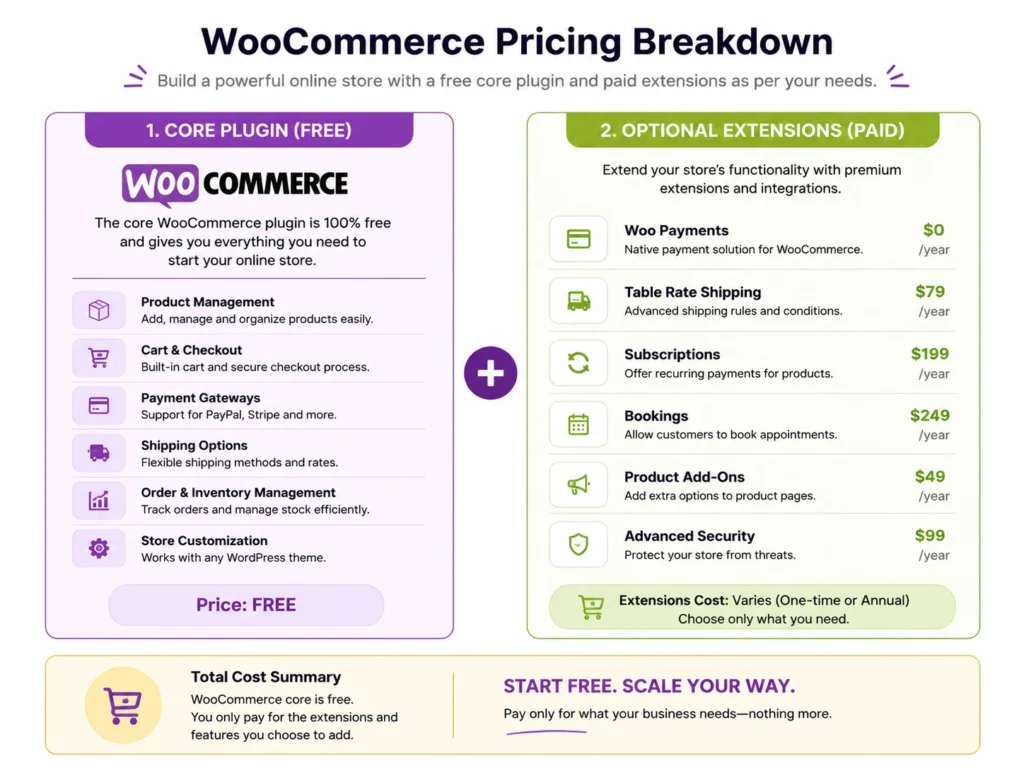
WooCommerce Pricing Breakdown
Understanding what WooCommerce actually costs helps you budget realistically.
| Cost Component | Price Range |
|---|
| WooCommerce Plugin | Free |
| WordPress Hosting | ₹2,500 – ₹25,000/year |
| Domain Name | ₹800 – ₹1,500/year |
| SSL Certificate | Free (most hosts) |
| WordPress Theme | Free – ₹8,000 |
| Payment Gateway | Per-transaction fee only |
| Premium Extensions | ₹3,000 – ₹20,000/year |
| Total (Basic Store) | ₹8,000 – ₹30,000/year |
Compare this to Shopify’s Basic plan at $39/month (approximately ₹3,200/month or ₹38,400/year) — and Shopify additionally charges transaction fees on every sale. Furthermore, Shopify’s feature restrictions often push growing stores toward more expensive plans.
Consequently, WooCommerce delivers more capability at lower cost — especially for stores that grow beyond basic selling requirements.
Is WooCommerce Right for You?
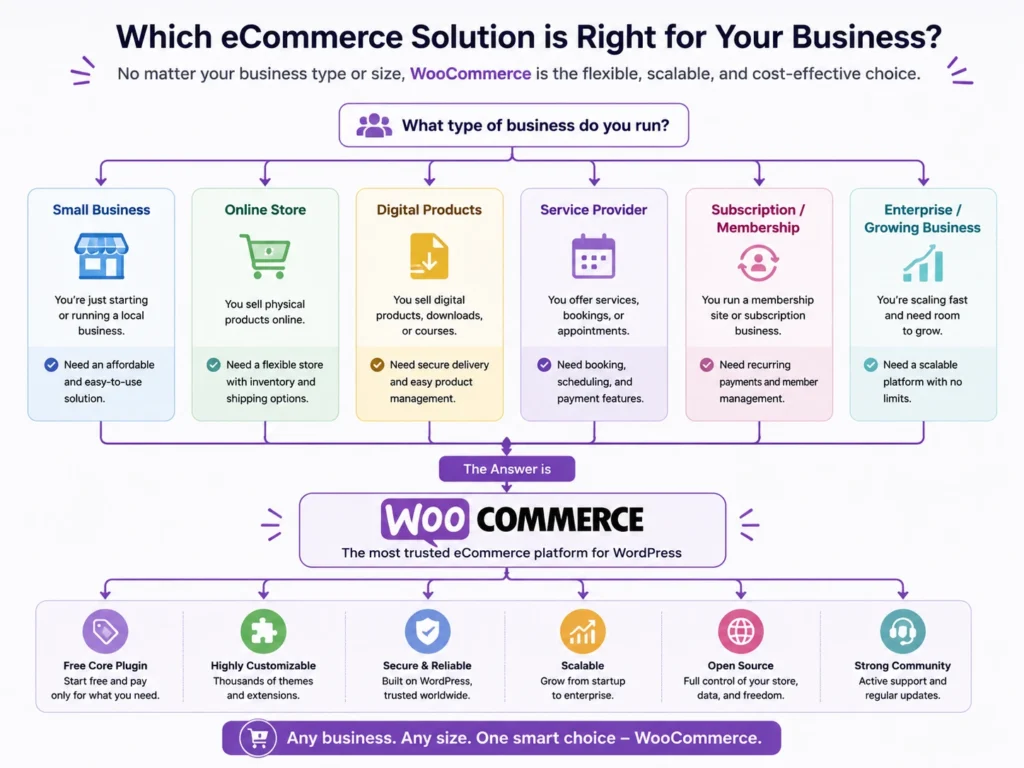
WooCommerce suits a wide range of businesses and sellers:
Choose WooCommerce if you:
- Want complete ownership and control of your store
- Already use or plan to use WordPress
- Sell physical products, digital downloads, or both
- Want to avoid monthly platform subscription fees
- Need flexibility to customize your store’s functionality
- Plan to scale your store significantly over time
- Want to combine content marketing with eCommerce
Consider alternatives if you:
- Want a hosted solution with zero server management
- Need a store running within hours with minimal setup
- Have no interest in managing WordPress updates and maintenance
For most businesses serious about long-term eCommerce growth, WooCommerce provides the best combination of cost, capability, and control available.
Conclusion
The 11 reasons in this guide explain something the numbers already confirm — WooCommerce has earned its position as the world’s most popular eCommerce platform.
It costs nothing to start. It scales without limits. It gives you complete ownership. Furthermore, it integrates with the most powerful content management system available. Consequently, every investment you make in your WooCommerce store builds lasting business value rather than rental equity in someone else’s platform.
Moreover, the combination of WordPress and WooCommerce gives you tools that no closed platform matches at any price point — content marketing, SEO control, payment flexibility, and complete customization all working together.
Therefore, if you are serious about building an online store that grows with your business and stays under your control — WooCommerce is the right choice.
Frequently Asked Questions (FAQs)