Patients choosing a plastic surgeon make one of the most personal and high-stakes decisions of their lives.
They research extensively before contacting anyone. Furthermore, they visit multiple websites, compare surgeons, read reviews, and study before-and-after galleries — all before making a single phone call. Consequently, the design quality of your website directly determines whether prospective patients call your practice or a competitor’s.
A plastic surgery website carries a unique burden. It must communicate clinical expertise and medical credibility. Moreover, it must feel luxurious, warm, and personal simultaneously. Furthermore, it needs to load fast, look perfect on mobile, capture patient inquiries, and comply with healthcare advertising guidelines — all without sacrificing visual quality.
In this guide, we analyse the 10 best plastic surgery website designs available. Furthermore, each example teaches specific design lessons about trust, conversion, and patient experience. Consequently, whether you are building a new practice website or redesigning an existing one, this guide gives you a clear direction for every major design decision.
What Makes a Great Plastic Surgery Website?
Before exploring the examples, understand the five factors that determine plastic surgery website success:
| Factor | What It Means |
|---|
| Clinical Trust | Credentials, certifications, board affiliations, and years of experience. |
| Visual Quality | Professional photography, before/after galleries, and a consistent brand aesthetic. |
| Patient Experience | Easy navigation, clear service pages, and accessible online booking. |
| Performance | Fast loading speed, GTmetrix A grade, and Core Web Vitals compliance. |
| Conversion Design | Consultation CTAs, chatbots, contact forms, and financing information. |
Keep these five factors in mind as you explore each example below. Furthermore, notice how different practices prioritize different elements based on their target patient demographic.
10 Best Plastic Surgery Website Designs
1. Beverly Hills Aesthetics
Beverly Hills Aesthetics website exudes luxury, catering to an upscale clientele with a clean, high-end design. The homepage immediately highlights key procedures, surgeon credentials, and a seamless booking system. The use of high-quality imagery and minimalistic layouts ensures a premium feel.
2. Miami Plastic Surgery
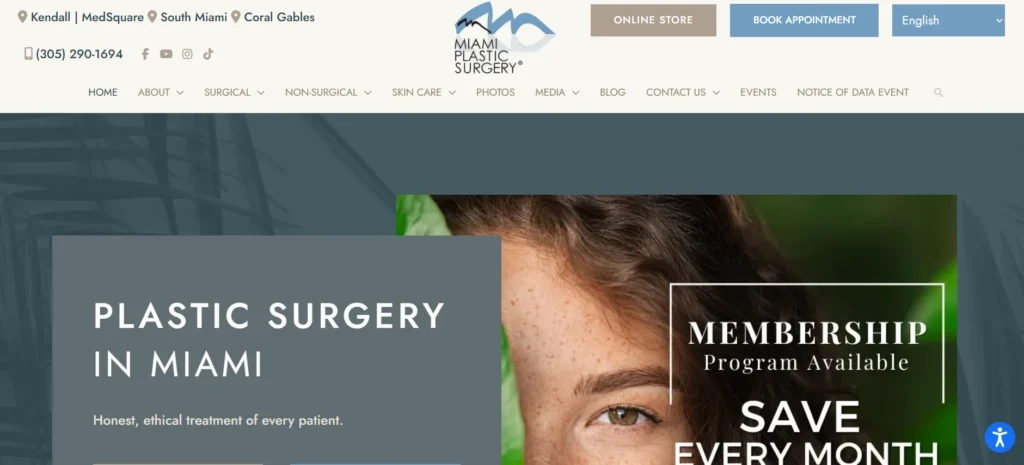
Miami Plastic Surgery website is vibrant and engaging, reflecting Miami’s energetic vibe. The design is visually rich, with bold colors, high-res images, and clear CTAs for consultations. The procedure pages are well-organized, making it easy for patients to find information.
3. Bellevue Aesthetic
Bellevue Aesthetic, a prominent German cosmetic surgery clinic, distinguishes itself through its bilingual website, catering to both German-speaking and English-speaking audiences. The site’s default language is German, with an intuitive option for visitors to switch to English. The warm earth tones chosen for the website’s color palette contribute to a positive user experience, enhancing engagement and retention. One notable feature of Bellevue Aesthetic’s website is its appointment booking functionality, which empowers visitors to conveniently schedule appointments online.
4. Visage Surgical Institute
Visage has a nice website with a sharp color scheme, very nice pictures, and a chatbot that allows you to ask questions. It also allows you to book a 3D simulation or video consultation. These features make it clear that Visage offers an array of ways to help you.
5. Ela Plastic Surgery
Ela Plastic Surgery is a website for Dr. Lopez, who is a Diplomat of the American Board of Plastic Surgery. Her approach to plastic surgery is personal, attentive and focused.
6. Care Plastic Surgery
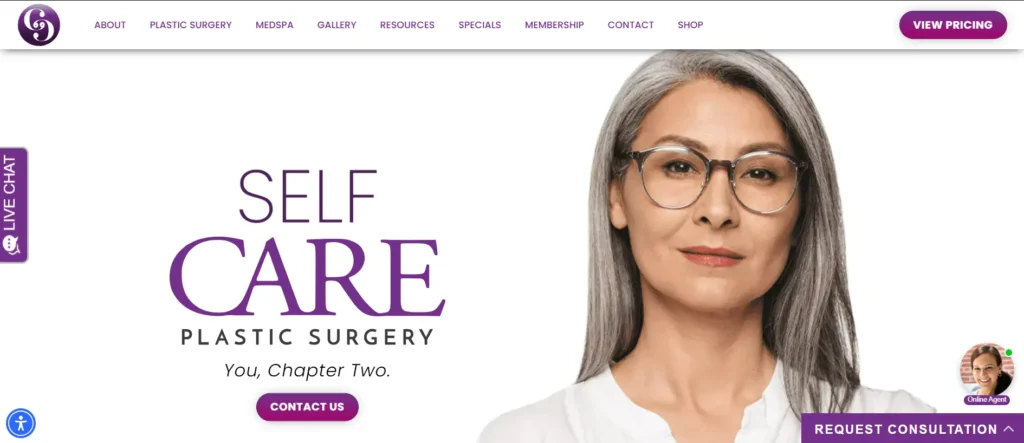
Care Plastic Surgery have a nice and organized look with a basic color scheme. Adding in some nice boxy fonts helps maintain that professional design. Contact information of this business is always visible due to their sticky header, which was a great choice. Including an online agent allows customers to get any simple questions right away. It was a smart idea to include a “transformation photo gallery”.
7. Liu Plastic Surgery
Liu Plastic Surgery is modern layout, contemporary typography, and high-quality imagery, Liu Plastic Surgery’s simple site exudes elegance and yet is true to its purpose which is marketing, promoting its service, and gathering trust. Their website is easy to navigate and all call-to-actions are well placed.
8. Dream Medical Group by Dr. Kenneath Kim
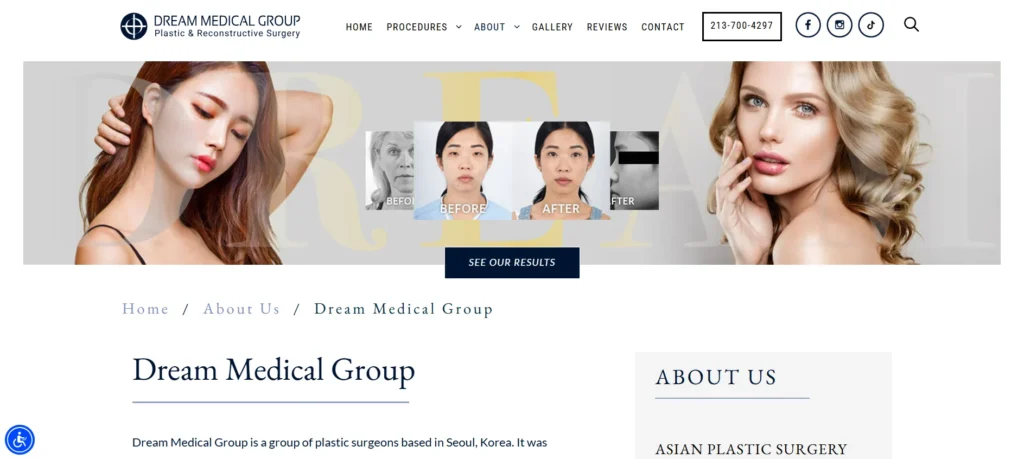
Dr. Kenneth Kim is a top-rated plastic surgeon in Los Angeles who specializes in nose and eye surgery. It looks professional because of its crisp black-and-white color scheme and excellent graphics. The homepage features three slideshow photographs of stunning women. We adore the creative use of moving image effects in their elegantly designed before and after surgical photos.
9. Rowe Aesthetics
The Rowe Aesthetics website is completely white, save for a gorgeous woman. The design does such an excellent job of focusing on the person that it catches anyone’s attention. The rest of the website is simple and understated — in a good way.
10. Dr. Jennifer Walden
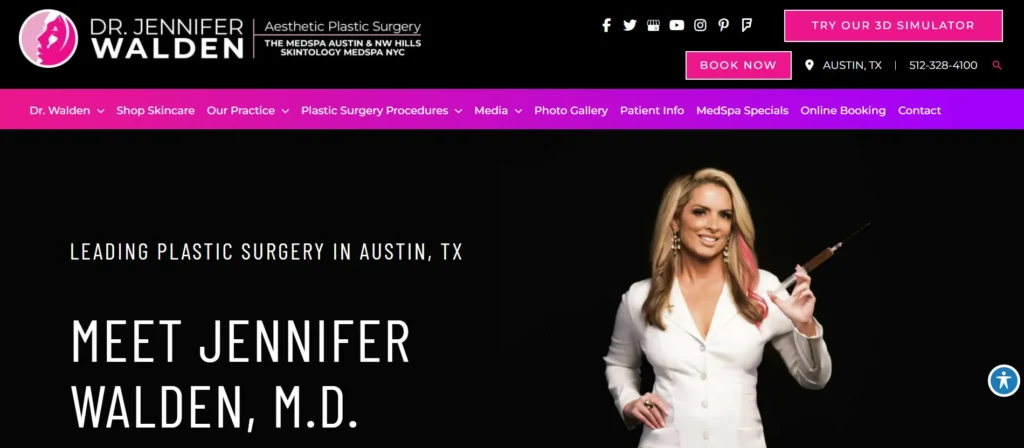
Dr. Walden’s website stands out with its sophisticated yet approachable design. The layout is intuitive, with separate sections for surgical and non-surgical treatments. The before-and-after slider is particularly effective in showcasing results.
8 Design Principles Every Plastic Surgery Website Needs
1. Professional Photography Is Non-Negotiable
Amateur photography on a plastic surgery website communicates the opposite of what the practice intends. Furthermore, professional photography of the surgeon, clinic environment, and staff creates the first impression that determines whether patients continue exploring or leave immediately. Consequently, professional photography investment is the highest-ROI design decision most practices can make.
2. Before-and-After Galleries Must Load Fast
Gallery pages often contain the highest image density of any website. Furthermore, unoptimized galleries create slow loading pages that frustrate patients exactly when they are most engaged with your content. Consequently, image compression, lazy loading, and proper gallery plugin selection all matter enormously for the pages patients care about most.
3. Mobile Optimization Affects Patient Acquisition
Most plastic surgery research happens on smartphones — often privately, away from family or colleagues. Furthermore, a website that breaks on mobile loses patients who are actively looking for a surgeon. Moreover, Google’s mobile-first indexing means mobile performance directly affects search rankings. Consequently, mobile optimization is simultaneously a user experience and an SEO investment.
4. Consultation CTAs Should Appear Throughout
A prospective patient ready to book a consultation should never need to scroll back to the top of a page to find the contact button. Furthermore, consultation CTAs embedded after procedure descriptions, at the bottom of gallery pages, and in a persistent header navigation dramatically increase inquiry conversion rates. Consequently, accessibility of your contact path directly affects how many website visitors become consultation bookings.
5. Trust Signals Must Appear Early
Board certifications, fellowship training, hospital affiliations, media appearances, and patient testimonials all reduce the anxiety patients feel before contacting a surgeon they have never met. Furthermore, displaying these signals within the first screen of your homepage — not buried on a secondary page — establishes credibility before visitors have any reason to doubt.
6. Page Speed Directly Affects Patient Acquisition
GTmetrix A grade websites consistently attract more organic traffic and generate more patient inquiries than slower competitors. Furthermore, slow loading pages increase bounce rates — which signals poor user experience to Google and reduces search rankings over time. Consequently, performance optimization is a patient acquisition strategy, not merely a technical nicety.
7. SSL and Security Are Patient Safety Signals
Patients share sensitive personal information when booking consultations — name, contact details, and sometimes medical history. Furthermore, a “Not Secure” browser warning immediately raises concern about practice professionalism. Consequently, SSL is not optional for any healthcare website collecting patient information.
8. Financing Information Reduces Inquiry Barriers
Many patients delay contacting practices because they are uncertain whether they can afford the procedures they are interested in. Furthermore, transparent financing information — payment plans, medical financing options, consultation costs — removes this barrier and increases the volume of inquiries from qualified patients. Consequently, practices that display financing options prominently consistently see more consultation bookings than those that require patients to ask about affordability.
Why WordPress Powers the Best Plastic Surgery Websites
Many of the best plastic surgery websites — including Shafer, Rowe, Sieber, and several others in this guide — run on WordPress. Furthermore, WordPress provides the combination of design flexibility, plugin ecosystem, and SEO capability that healthcare practices need.
WordPress advantages for plastic surgery websites:
✅ Complete control over before-and-after gallery presentation
✅ SEO plugins (Rank Math, Yoast) for local patient search visibility
✅ Appointment booking plugins integrated with practice management systems
✅ Caching plugins (WP Rocket) for GTmetrix A performance
✅ Security plugins (Wordfence) for patient data protection
✅ HIPAA-compliant form plugins for sensitive patient information
Moreover, WordPress’s open architecture means integrations with patient management software, telemedicine platforms, and CRM systems are achievable without custom development. Consequently, practices choosing WordPress build on a foundation that grows with their digital needs rather than constraining them.
Conclusion
The ten plastic surgery websites in this guide share one fundamental quality — they earn patient trust before asking for anything.
Professional photography communicates quality. Before-and-after galleries provide evidence. Credentials surface naturally throughout the browsing experience. Video and community content build personal connection. Furthermore, exceptional performance ensures patients actually experience this trust-building content rather than abandoning slow pages before it loads.
Moreover, the practices that invest in genuinely excellent website design consistently outperform competitors in organic patient acquisition, consultation conversion rates, and long-term practice growth.
Therefore, use these examples as inspiration specific to your practice’s positioning, patient demographic, and specialization. Furthermore, identify which design principles apply most directly to your situation. Consequently, your practice website becomes a genuine patient acquisition asset rather than a digital business card that impresses nobody and converts even fewer.
Frequently Asked Questions (FAQs)