Top 10 Must-Have WordPress Plugins for Your Websites

Top 10 Must-Have WordPress Plugins
WordPress is the world’s most popular website platform — powering over 43% of all websites on the internet. But a WordPress website alone is not enough.
Without the right plugins, your site will be slow, unsecured, invisible on Google, and hard to manage. Plugins are what turn a basic WordPress install into a powerful, high-performing website.
The problem? There are 59,000+ plugins available on WordPress.org. Choosing the right ones can feel overwhelming — especially for beginners. That is why we put together this practical guide.

In this blog, you will find the top 10 must-have WordPress plugins that every website owner should install — whether you are just starting a WordPress website or already running an established one.

What Are WordPress Plugins?

WordPress plugins are small software add-ons that extend the functionality of your website. You install them directly from your WordPress dashboard — no coding required.
Think of plugins like apps on your phone. Your phone works without extra apps, but apps make it smarter, faster, and more useful.

The same applies to WordPress plugins. They add features like:

  • SEO optimization tools
  • Contact forms
  • Website security
  • Speed and performance improvements
  • Backup and restore options

Top 10 WordPress Plugins List

We have listed the top 10 must-have WordPress plugins for your WordPress Site that aid you to extend your business. So, without further ado, here is the first Plugin:

1. Yoast SEO

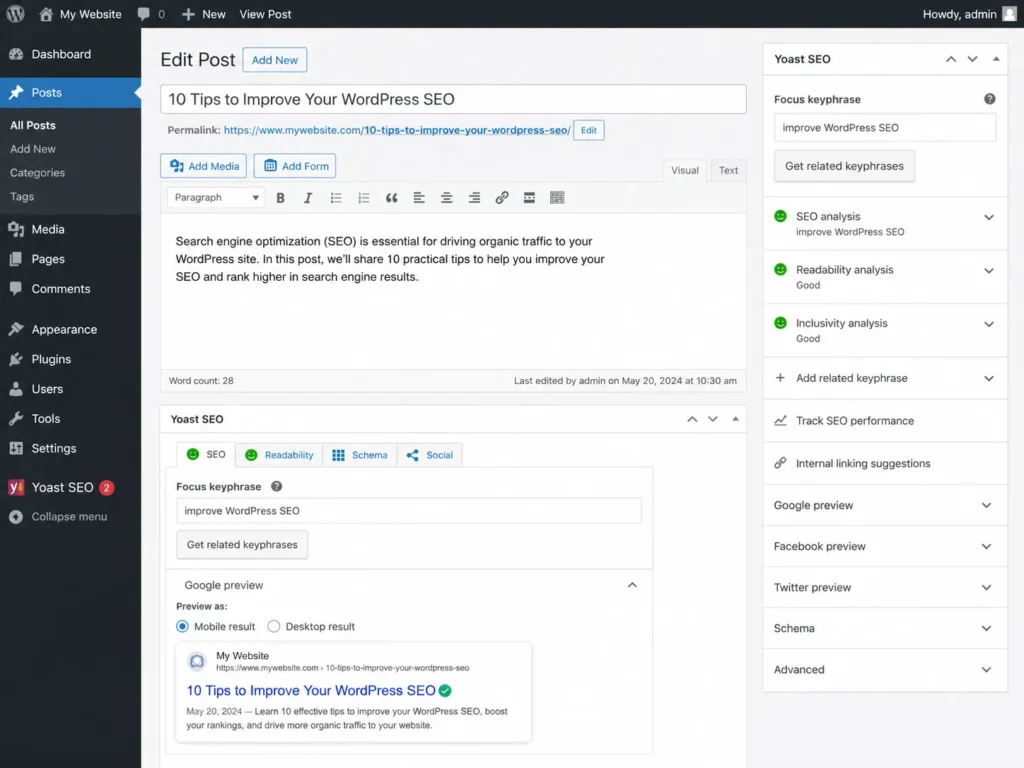
If you want your website to appear on Google, Yoast SEO is the first plugin to install. It gives you real-time SEO feedback as you write — checking your focus keyword, meta description, readability, and more. Even beginners can follow its simple green/orange/red indicators.

Key Features:

  • Focus keyword analysis
  • Auto XML sitemap generation
  • Meta title and description editing
  • Readability score checker
  • Schema markup (structured data)
  • Breadcrumb navigation support
  • Canonical URL management
WordPress dashboard showing Yoast SEO plugin settings and SEO optimization panel

Why Use It:

Yoast SEO does not just help you rank. It teaches you how to write better content. Every blog post you publish gets checked before it goes live.

Pricing: Free | Premium plan available for advanced features

2. WP Rocket

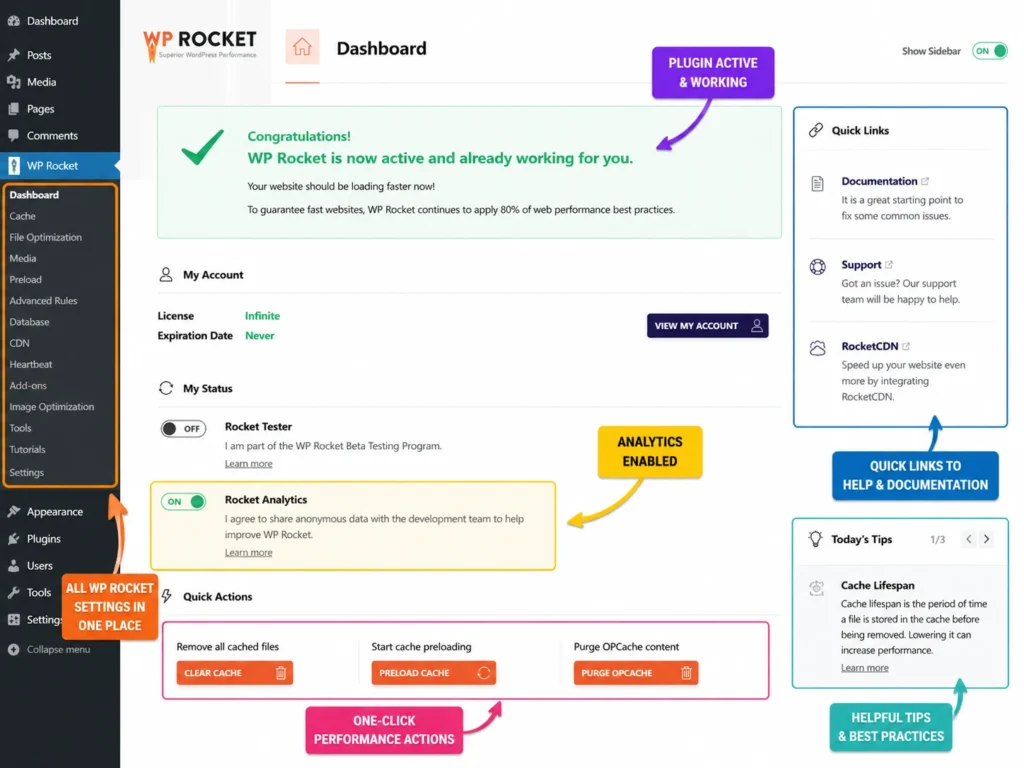
A slow website loses visitors. Studies show that even a 1-second delay reduces conversions by 7%. WP Rocket is the most powerful caching and performance plugin for WordPress. It works right out of the box — no complex configuration needed.

Key Features:

  • Page caching and cache preloading
  • CSS and JavaScript minification
  • Lazy loading for images and videos
  • Database optimization
  • CDN integration support
  • Critical CSS generation
WP Rocket plugin dashboard in WordPress with cache and performance settings

Why Use It:

WP Rocket improves your Google PageSpeed score and Core Web Vitals — which directly affects your search ranking. It is the easiest way to make a WordPress site noticeably faster.

If you are running a WooCommerce store, this plugin becomes even more critical. Check out our guide on WooCommerce speed optimization tips for more detailed steps.

Pricing: Paid plugin — starts at $59/year for one site

3. Wordfence Security

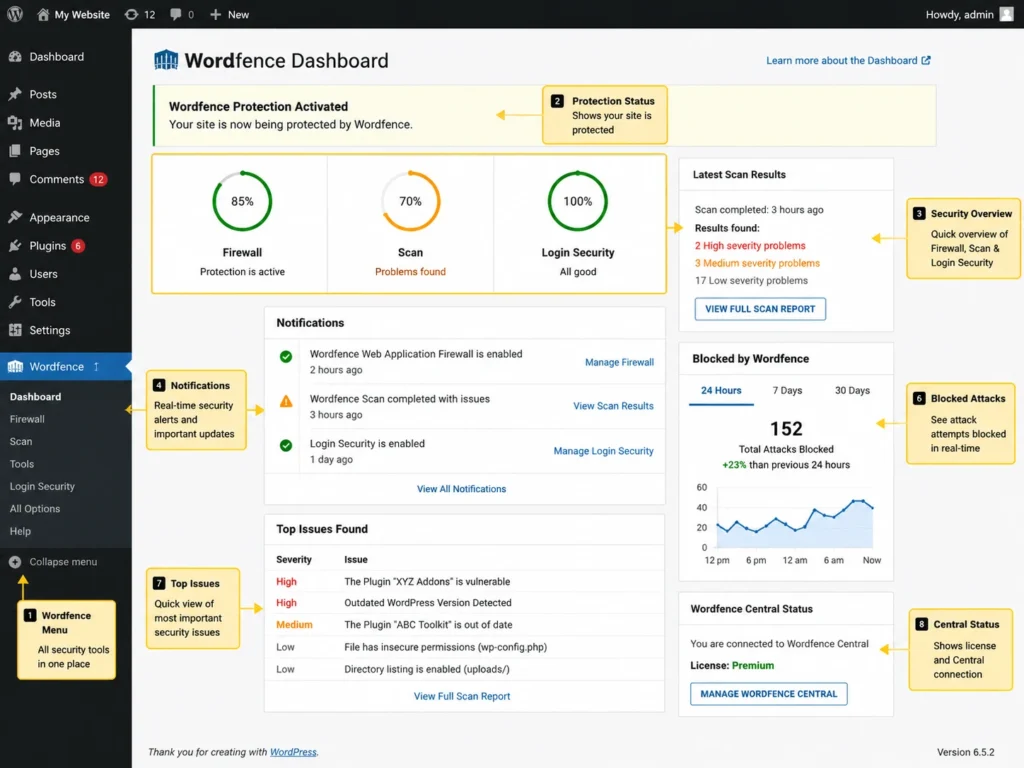
WordPress websites are one of the most targeted platforms for hacking attempts. One security breach can destroy years of work. Wordfence is the most trusted WordPress security plugin — used by millions of site owners worldwide.

Key Features:

  • Web Application Firewall (WAF)
  • Real-time malware scanner
  • Login security with two-factor authentication (2FA)
  • Brute force attack protection
  • Live traffic monitoring
  • IP blocking and country blocking
WordPress dashboard displaying Wordfence Security plugin with highlighted security features and scan overview

Why Use It:

Wordfence monitors your site 24/7 and sends email alerts when suspicious activity is detected. Its free version is more powerful than most paid security plugins.

Also, if you have not added SSL to your site yet, make sure you read our guide on whether you need SSL for your WordPress website — security starts there.

Pricing: Free (core protection) | Premium for real-time threat feed

4. WooCommerce

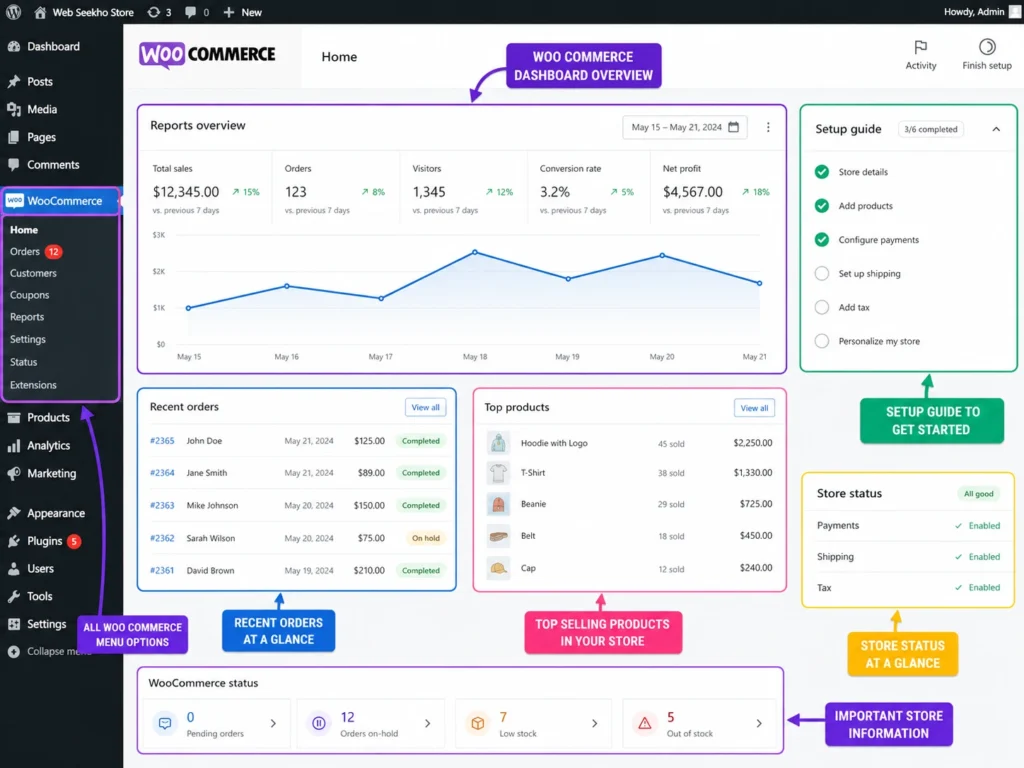
Want to sell products or services directly from your WordPress website? WooCommerce is the world’s #1 eCommerce plugin — and it is completely free to start. It turns any WordPress site into a fully functional online store in minutes.

Key Features:

  • Physical and digital product listings
  • Secure payment gateways (Razorpay, PayPal, Stripe)
  • Order management and inventory tracking
  • Coupon and discount system
  • Mobile-responsive checkout
  • 700+ extensions available
WooCommerce store dashboard showing orders sales and analytics

Why Use It:

WooCommerce gives you complete control over your store — product pages, cart, checkout, shipping, taxes — everything. It works with most WordPress themes and integrates with hundreds of third-party tools.

Pricing: Free core plugin | Paid extensions available

5. Elementor

Want to design beautiful pages without writing a single line of code? Elementor is the most popular drag-and-drop page builder for WordPress. It lets you create professional-looking layouts visually — what you see is what you get.

Key Features:

  • Live drag-and-drop visual editor
  • 100+ free design widgets
  • 300+ pre-built page templates
  • Mobile responsive editing controls
  • WooCommerce builder (Pro)
  • Custom header and footer builder (Pro)
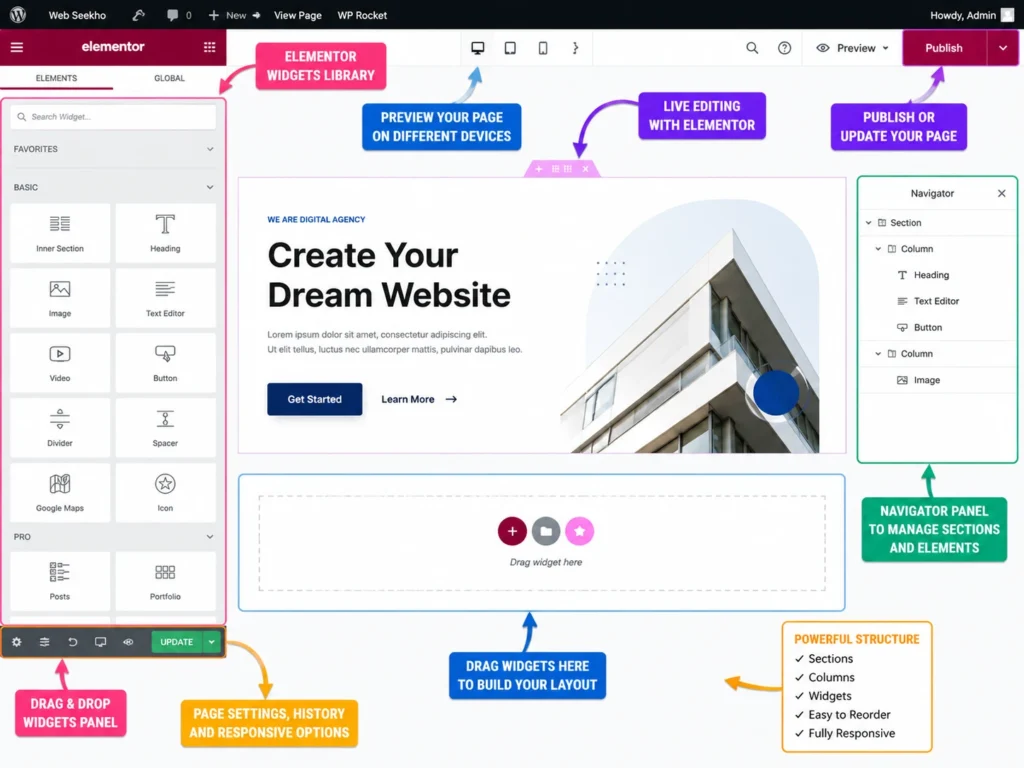
Elementor page builder editor for creating WordPress website layouts

Why Use It:

Elementor makes website design accessible to everyone. No developer needed. You can build landing pages, homepages, service pages — everything visually.

Before choosing a page builder, it helps to compare options. We have covered this in detail in our Elementor vs Divi vs Gutenberg comparison guide.

Pricing: Free version available | Elementor Pro for advanced features

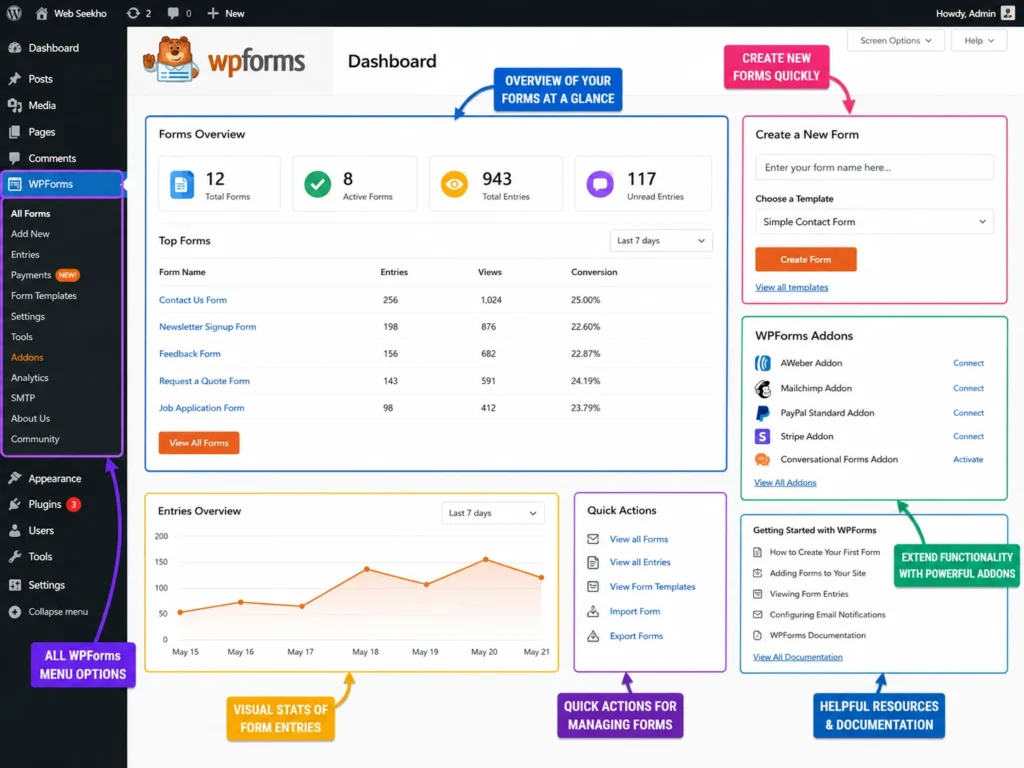
6. WPForms

Every website needs a way for visitors to get in touch. WPForms is the easiest and most beginner-friendly form builder plugin for WordPress.

Key Features:

  • Drag-and-drop form builder
  • Pre-built templates (contact, newsletter, payment, survey)
  • Spam protection via CAPTCHA and Honeypot
  • Email notifications and auto-confirmations
  • Conditional logic for dynamic forms
  • Stripe and PayPal integration (Pro)
WPForms WordPress plugin dashboard with forms overview and entries

Why Use It:

WPForms is fast, lightweight, and GDPR-ready. It takes less than 5 minutes to create a working contact form and add it to any page.

Pricing: Free version available | Pro plans for advanced form types

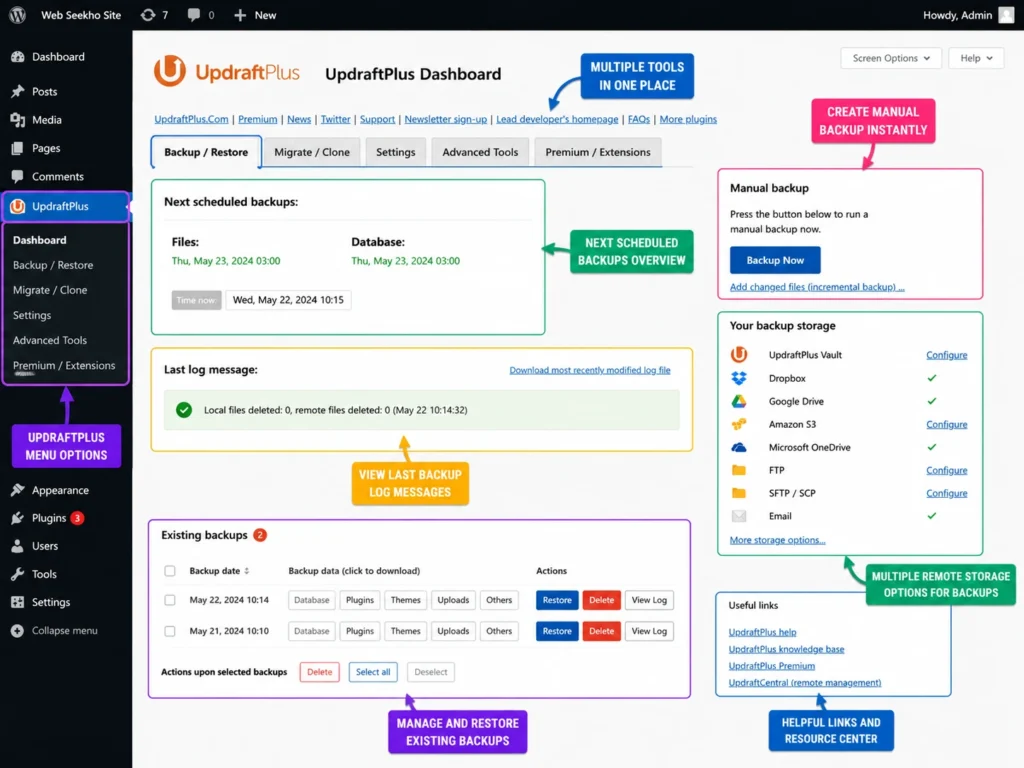
7. UpdraftPlus

Imagine your website getting hacked or your server crashing — and you have no backup.
That is a nightmare no website owner should experience. UpdraftPlus is the #1 rated WordPress backup plugin, trusted by over 3 million website owners. It automatically saves a copy of your entire site to cloud storage.

Key Features:

  • Scheduled automatic backups (daily, weekly, monthly)
  • Cloud storage support — Google Drive, Dropbox, Amazon S3
  • One-click restore
  • Backup before plugin or theme updates
  • Site migration support
UpdraftPlus WordPress backup plugin dashboard with scheduled backups

Why Use It:

Backups are your last line of defense. UpdraftPlus makes it completely automated — you set it up once and it runs in the background, keeping your data safe.

Pricing: Free version (very capable) | Premium for real-time backup and migration

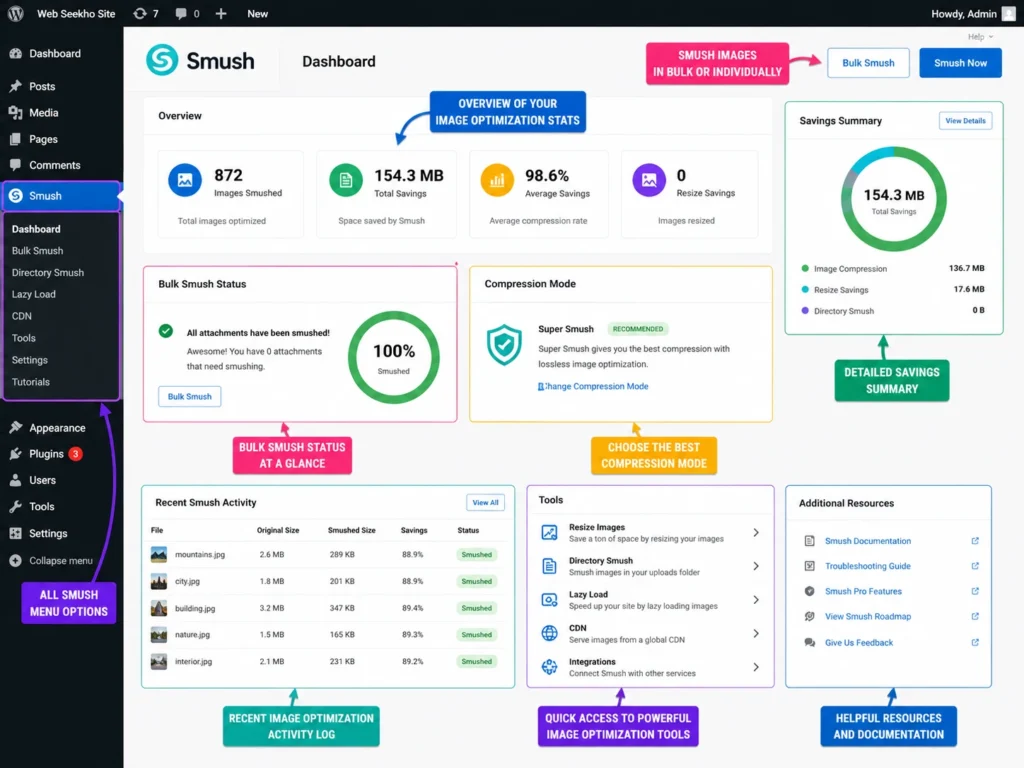
8. Smush

Images are the number one reason websites load slowly. Smush automatically compresses and optimizes every image you upload to WordPress — without any visible quality loss.

Key Features:

  • Bulk image compression (all existing images at once)
  • Lossless and lossy compression options
  • Lazy load for images
  • WebP image conversion
  • CDN integration (Pro)
  • Incorrect image size detection
Smush plugin dashboard displaying image compression and optimization statistics

Why Use It:

Unoptimized images can add seconds to your page load time. Smush handles this automatically — every image you upload gets compressed instantly. Faster images mean better SEO and a better user experience.

Pricing: Free version handles unlimited images | Smush Pro for CDN and WebP

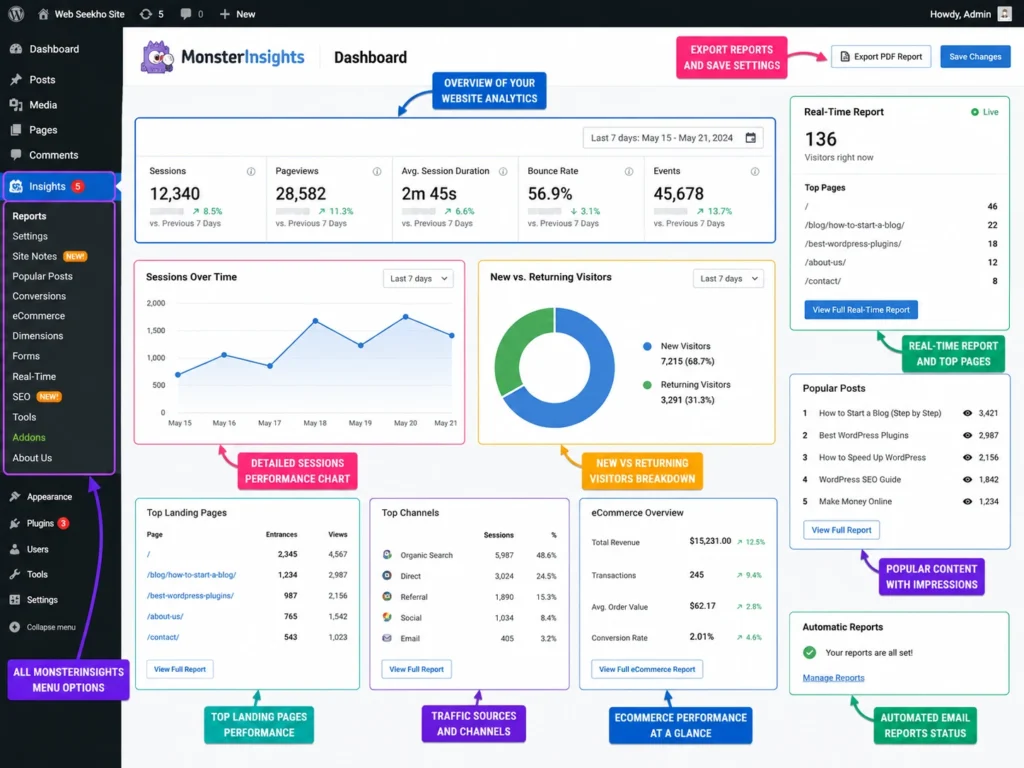
9. MonsterInsights

You cannot improve what you do not measure.MonsterInsights connects your WordPress site to Google Analytics 4 (GA4) — without needing to touch a single line of code. All your traffic data appears directly inside your WordPress dashboard.

Key Features:

  • GA4 integration (no code required)
  • Real-time traffic stats inside WordPress
  • WooCommerce eCommerce tracking
  • Form conversion tracking
  • Custom dimensions and events
  • GDPR compliance tools
MonsterInsights analytics dashboard showing website traffic and reports

Why Use It:

MonsterInsights shows you exactly where your visitors come from, which pages they visit, how long they stay, and what they click. This data helps you make smarter decisions about your content and marketing.

Pricing: Free lite version | Pro plans for advanced reports

10. Duplicator

Moving your WordPress website to a new hosting provider? Creating a staging site? Cloning a site for a client? Duplicator makes all of this simple — even for non-technical users.

Key Features:

  • Complete site packages (files + database)
  • Professional installer script
  • Scheduled backups
  • Multisite support
  • Cloud storage integration (Pro)
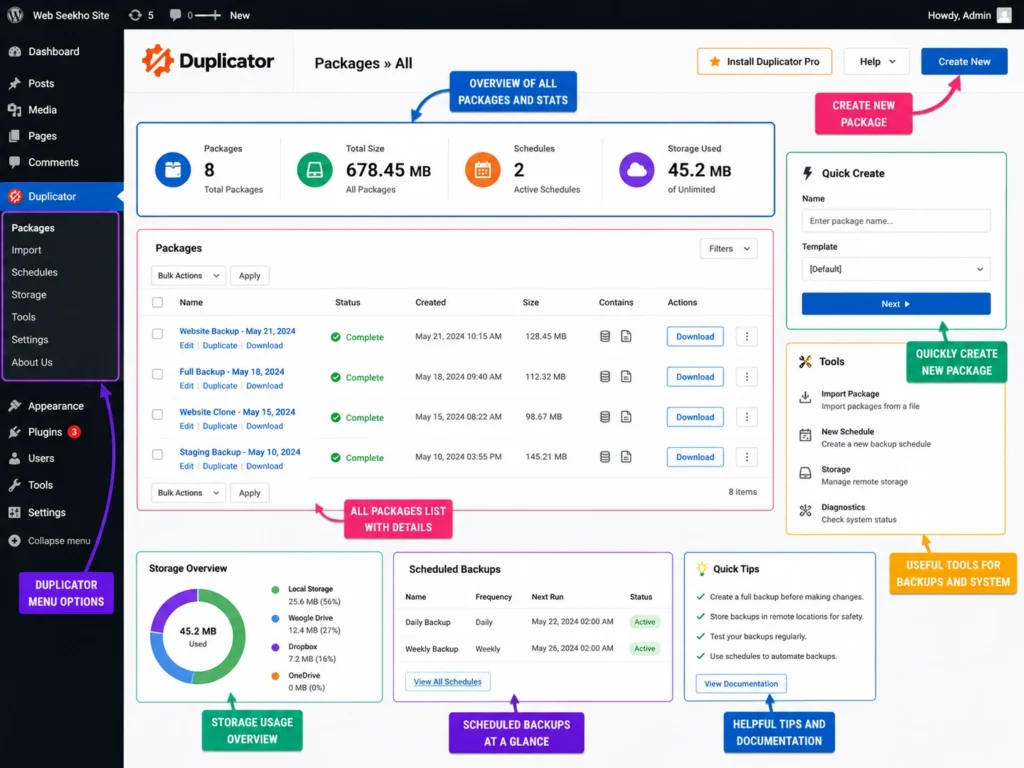
Duplicator WordPress migration plugin dashboard with backup packages

Why Use It:

Duplicator is the most reliable way to move a WordPress site without breaking anything. Developers use it, agencies use it, and beginners love how straightforward it is.

Understanding the full cost of building a WordPress website helps you plan which premium plugins are worth paying for.

Pricing: Free for basic migration | Duplicator Pro for large sites

Quick Tips Before Installing WordPress Plugins

Installing plugins is easy. Installing the right plugins the right way is what matters.

Follow these simple rules:

  • Install only what you need. More plugins = more load on your server. Keep it lean.
  • Always update your plugins. Outdated plugins are the #1 cause of WordPress security issues.
  • Check ratings and reviews. Look for 4+ stars, 1,000+ reviews, and recent updates.
  • Test on staging first. Never install a new plugin directly on your live site without testing.
  • Delete inactive plugins. Even inactive plugins can create vulnerabilities.

How to Choose the Right WordPress Theme Alongside Your Plugins

Plugins work best when paired with a well-coded, lightweight theme.
A bloated theme cancels out all the performance gains from your speed plugins. Before adding these plugins to your site, make sure you have chosen the right theme.

Also, if you are looking for design inspiration before building your site, check out these best WordPress website design examples.

Conclusion

The right WordPress plugins can completely transform your website — making it faster, safer, more visible on Google, and easier to manage.
# Plugin Best For
1 Yoast SEO On-page SEO
2 WP Rocket Speed & Caching
3 Wordfence Security Security & Firewall
4 WooCommerce Online Store
5 Elementor Page Builder
6 WPForms Contact Forms
7 UpdraftPlus Backups
8 Smush Image Optimization
9 MonsterInsights Google Analytics
10 Duplicator Site Migration

Frequently Asked Questions (FAQs)

Which is the best WordPress plugin for beginners?

For beginners, Yoast SEO and WPForms are the best starting plugins. Yoast SEO helps your content rank on Google with simple green/orange/red indicators, and WPForms lets you create a contact form in under 5 minutes — no coding needed. Both have strong free versions that work perfectly for new websites.
There is no fixed number, but 10 to 15 well-chosen plugins is a healthy range for most websites. The key rule is — install only what you actually need. Too many plugins slow down your site, create security risks, and cause conflicts. Always delete plugins you are not actively using.
Yes — free plugins from the official WordPress.org repository are generally safe, as they go through a review process. However, always check the plugin’s last update date, active installs (1,000+ is a good sign), and user ratings (4+ stars). Avoid downloading plugins from unknown third-party websites.
Poorly coded or too many plugins can slow down your site — but the right plugins actually make it faster. For example, WP Rocket and Smush are plugins specifically designed to improve speed. The solution is not to avoid plugins, but to choose lightweight, well-maintained ones and remove anything inactive.

Wordfence Security is the most trusted free WordPress security plugin. It includes a firewall, malware scanner, login protection, and real-time monitoring. For extra protection, make sure your site also has SSL enabled — read our full guide on Do You Need SSL for WordPress Website.

Table of Contents

Scroll to Top